
Overview
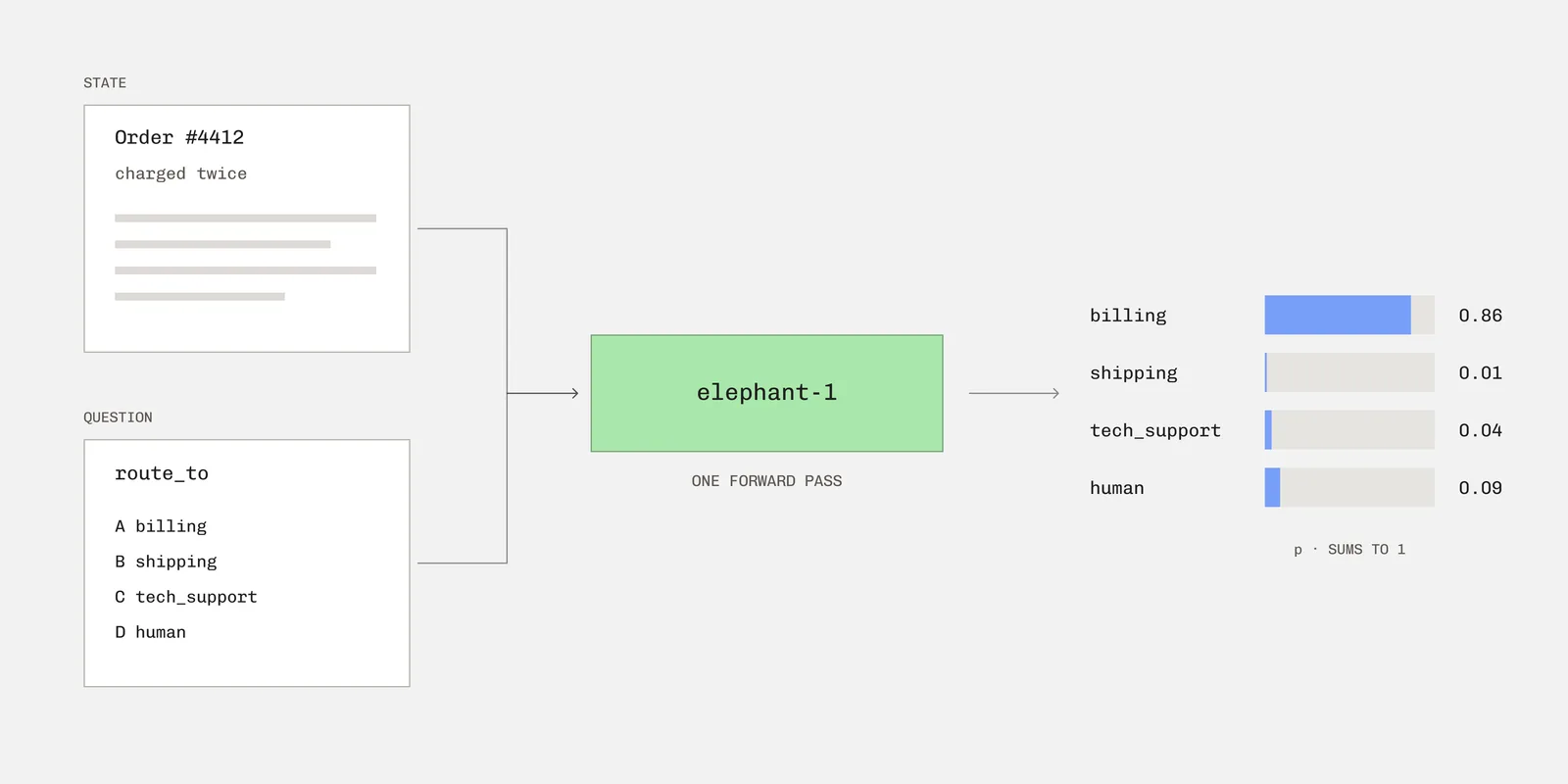
elephant-1 is a 9B-parameter decision model from Base Labs, the research lab at Baseten, announced on October 21, 2026 alongside the 27B mammoth-1. It is post-trained from Qwen3.5-9B. Instead of writing text, it reads a state — text, optionally with images — and a set of typed questions (noul for yes/no, choice for one of several named options, score for ordered levels), and returns a calibrated probability for every option, answering all the questions from one shared-prefix prefill. Its model card pitches it for quick, cheaper decisions. The weights are on Hugging Face under the MIT license, and Baseten serves it on its Model APIs.
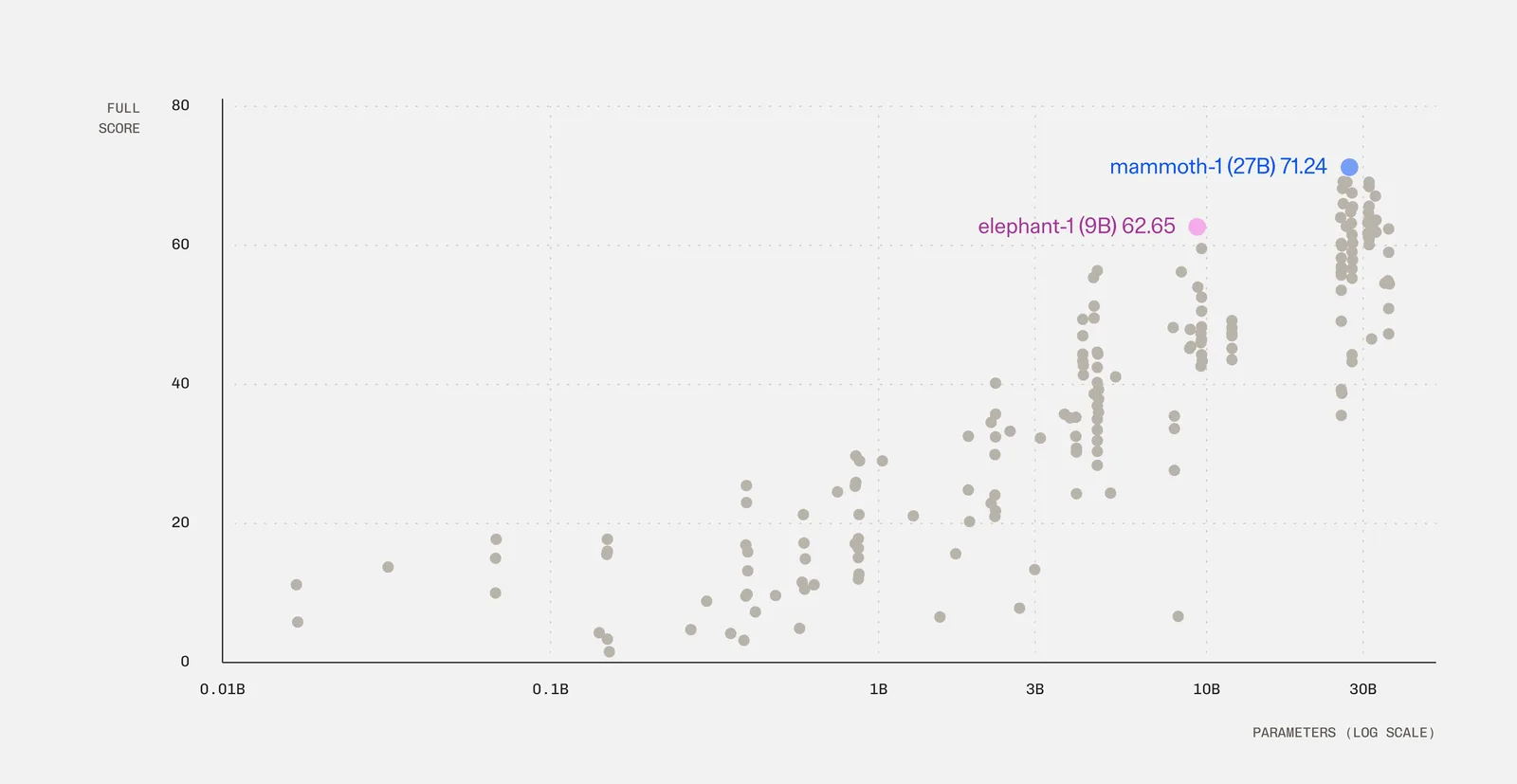
On the Jev Decision Index 0.4 elephant-1 scores 62.65, which its model card calls the best model under 15B and tied eighth of 208 models; it narrowly trails mammoth-1 (71.24) in every public area and beats Jev 1.14 (62.2) in all five. On Base Labs' replica of the Artificial Analysis Decision Index it scores 65.2, level with Liquid AI's d1-ultra (65) and just behind mammoth-1 (65.9).
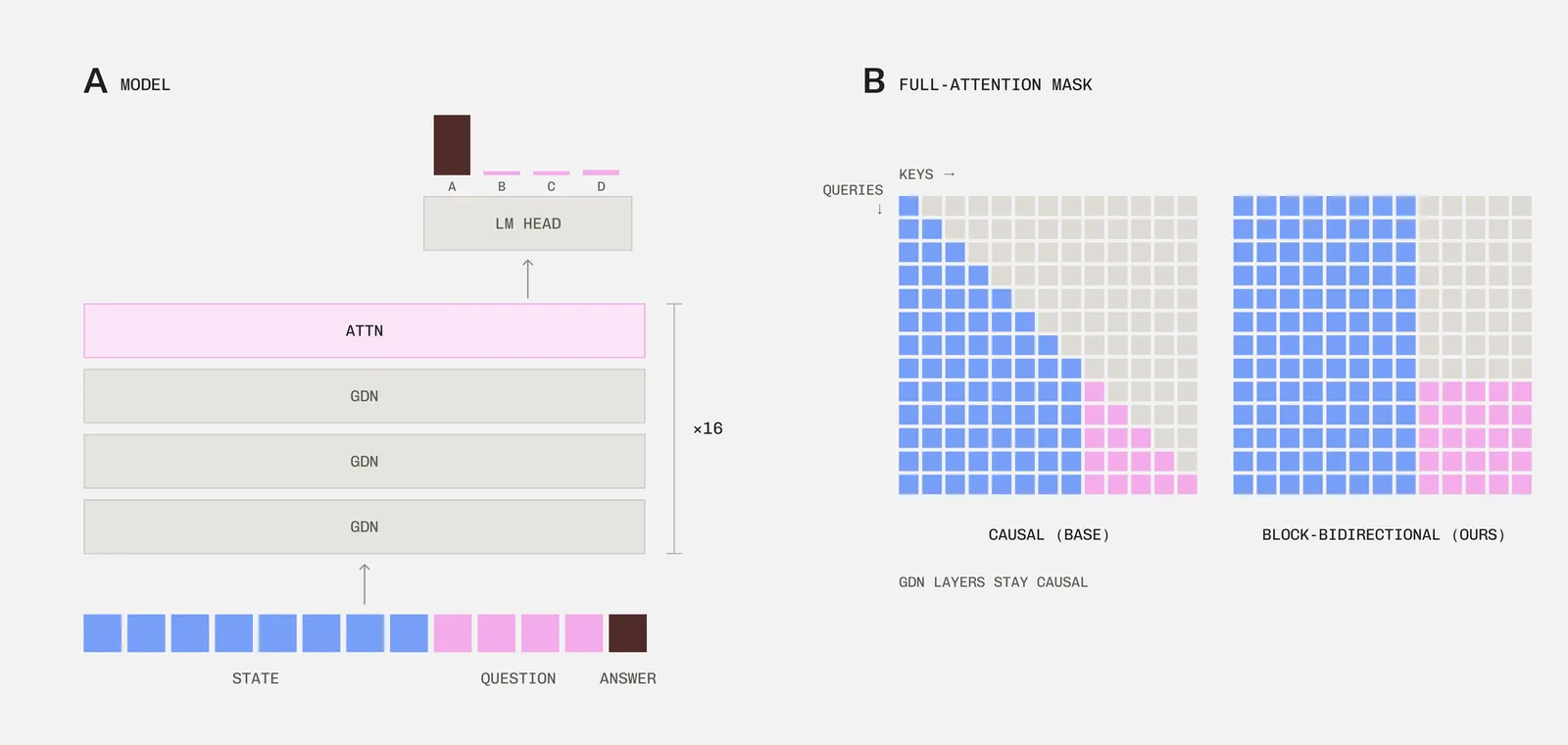
It shares mammoth-1's recipe: a full fine-tune of the language model with the vision encoder frozen, a block-bidirectional mask on the full-attention layers, and the same 6.21M-example decision data mix, trained with cross-entropy plus a Brier calibration term and a trained "I don't know" option. The technical report used the 9B model to develop that mix, tracking its public-split index from 45.5 on the first 254k-row mix to 74.0 on the final one. elephant-1 trained for one epoch of 5,546 steps on 16 nodes of 8 H100 GPUs. Inputs are capped at 16,384 tokens, and longer requests are refused rather than truncated.
On Baseten Model APIs the model id is decision-models/baseten-elephant-9b-latest at the /v1/systemone endpoint of inference.baseten.co, with zero data retention by default and the model card offered a free first week, through October 27, 2026. The Hugging Face repository ships setup.sh for self-hosting on one CUDA GPU and a Python DecisionEngine for local calls.
| Released | 2026-10-21 |
|---|---|
| License | MIT |
| Weights | Open weights |
| Parameters | 9B |
| Context | 16K |
| Architecture | Qwen3.5-9B fully fine-tuned with the vision encoder frozen; the full-attention layers use a block-bidirectional mask while the Gated DeltaNet layers stay causal, and every question is answered from one shared-prefix prefill. |
| Modalities | Text, Vision |
| Status | Open weights on Hugging Face; hosted on Baseten Model APIs |
Benchmarks
Decision benchmarks as published on the elephant-1 model card
| Benchmark | elephant-1 | mammoth-1 | Perplexity Decider v1.2 | Jev 1.14 | Cloudflare Clef | d1-ultra |
|---|---|---|---|---|---|---|
| Jev Decision Index 0.4 | 62.65 | 71.24 | 69.42 | 62.2 | 55.7 | — |
| Artificial Analysis Decision Index (Base Labs replica) | 65.2 | 65.9 | — | — | — | 65 |
This model's scores
Scores on a 0–100 scale (25-point gridlines); higher is better. Each benchmark links to its published source.
Strengths
- 62.65 on the Jev Decision Index 0.4, the best score under 15B on its model card
- Beats Jev 1.14 in all five public Decision Index areas
- 65.2 on Base Labs' replica of the Artificial Analysis Decision Index, level with d1-ultra
- Text and image states, with a probability for every option
- Every question about a state answered from one shared-prefix prefill
- MIT-licensed 9B weights that self-host on one CUDA GPU
Best for
- Reach for elephant-1 for high-volume routing, triage and moderation, where a 9B model keeps each decision fast and cheap.
- Reach for it as an agent guardrail or judge that returns calibrated probabilities rather than text to parse.
- Reach for it to ask several yes/no, choice and score questions about one text or image state in a single call.
- Step up to mammoth-1 when a task needs broader general knowledge; its model card scores it 71.24 against 62.65 on the Jev index.
- Look elsewhere when you need generated text, or for inputs longer than 16,384 tokens.
How to access
| Provider | Model ID |
|---|---|
| Baseten Model APIs ↗ | decision-models/baseten-elephant-9b-latest |
| Hugging Face (weights) ↗ | baselabs/elephant-1 |
mammoth / elephant (decision models) — every version
The full lineage of the mammoth / elephant (decision models) line, newest first. Every version has its own page — click any to compare specs, benchmarks and pricing.
| Version | Released | Context | License |
|---|---|---|---|
| mammoth-1current | 2026-10-21 | 16K | MIT |
| elephant-1 | 2026-10-21 | 16K | MIT |
FAQ
What is elephant-1?
A 9B-parameter decision model from Base Labs at Baseten, released October 21, 2026 and post-trained from Qwen3.5-9B. It answers typed yes/no, choice and score questions about a text or image state with a calibrated probability for every option.
How well does it score?
62.65 on the Jev Decision Index 0.4, which its model card calls the best model under 15B and tied eighth of 208. On Base Labs' replica of the Artificial Analysis Decision Index it scores 65.2, level with d1-ultra at 65.
Should I use elephant-1 or mammoth-1?
Baseten positions elephant-1 for quick, cheaper decisions and the 27B mammoth-1 for tasks that need broader general knowledge. mammoth-1 scores 71.24 on the Jev Decision Index 0.4 against 62.65 for elephant-1; on the Artificial Analysis replica they are close, 65.9 against 65.2.
How do I call it?
On Baseten Model APIs, POST a state and questions to https://inference.baseten.co/v1/systemone with the model id decision-models/baseten-elephant-9b-latest. To self-host, download baselabs/elephant-1 from Hugging Face, run its setup.sh on a CUDA GPU, and call the bundled DecisionEngine.
What license are the weights under?
MIT, per the Hugging Face model card and the Baseten library page.