Anthropic · 2026-07-27 · major
Claude shared chats surfaced in Google Search — Anthropic patches missing noindex tag
Hundreds of shared Claude conversations were indexed by Google and Bing after a missing noindex tag on claude.ai/share pages. Exposed content included resumes, API keys, medical notes, and legal notes. Anthropic added the tag on July 27.
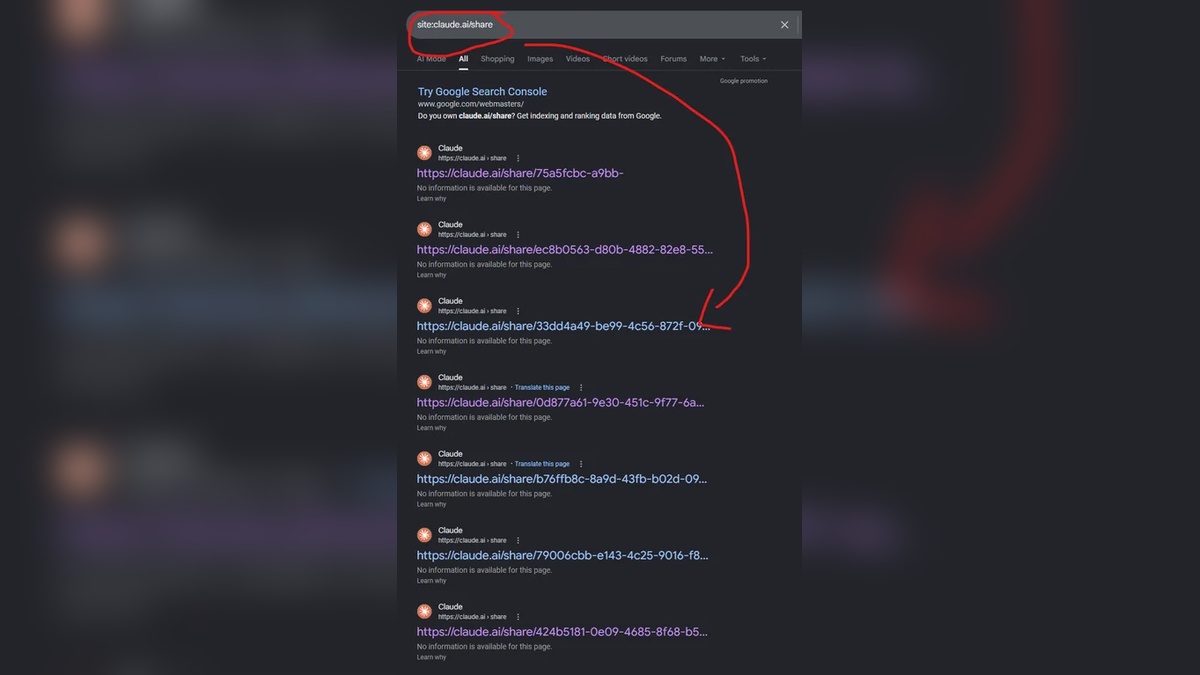
A missing meta tag on Claude's shared-conversation pages let Google and Bing index private chats.
Quick facts
| Product | Claude — shared conversation links (claude.ai/share) |
|---|---|
| Issue | Missing noindex meta tag let Google and Bing index shared chats |
| First noticed | Reddit post on 2026-07-25 |
| Data exposed | Resumes with real names and phone numbers, API keys, crypto wallet details, medical notes, legal correspondence |
| Anthropic fix | noindex tag added; delisting largely complete by 2026-07-27 |
| Bing status | Still surfacing some links after Google delisting |
| Spokesperson | Gabby Curtis (Anthropic) |
What is it?
Anthropic's shared-conversation feature lets Claude users publish a chat to a public claude.ai/share URL. Those pages carried no noindex directive, so once a link appeared on any public site — a tweet, a forum, a Slack export — search engines were free to crawl and rank it. A Reddit post on July 25 showed that site:claude.ai/share returned hundreds of strangers' conversations.
How does it work?
Anthropic's robots.txt blocks crawlers from discovering share URLs on their own, but a bare noindex tag was missing from the share page itself. Once a URL leaked onto any indexable site, Google and Bing indexed the target. Researchers found conversations containing resumes with real names and phone numbers, API keys, crypto wallet details, a lawyer's notes on an ethics case, medical diagnoses, and internal company planning documents.
Why does it matter?
This is a class of privacy failure users cannot easily audit — the chat was shared, so nothing looked wrong, but the audience quietly expanded to anyone typing the right Google query. Anthropic spokesperson Gabby Curtis stressed the company does not send search engines chat directories or sitemaps; the exposure came from users sharing links publicly. Anthropic added the noindex tag on July 27 and Google delisting is largely complete, but cached copies, screenshots, and third-party scrapes gathered during the window are permanent.
Frequently asked questions
- How did Google index Claude's shared chats?
- Claude's public share pages (claude.ai/share/...) shipped without a noindex meta tag. Anthropic's robots.txt blocked crawlers from discovering URLs on their own, but once a share link appeared on any public page — a tweet, forum post, or Slack export — Google and Bing crawled and indexed the target. Users could then find strangers' chats with site:claude.ai/share.
- What kind of data was exposed in the indexed Claude chats?
- Indexed Claude conversations included resumes with real names and phone numbers, API keys, cryptocurrency wallet details, a lawyer's notes on a potential ethics case, medical information including diagnoses and treatments, and internal corporate planning documents and strategic briefs. Roughly 600 conversations were seen indexed before Anthropic's fix landed.
- Did Anthropic fix the Claude shared-chat indexing bug?
- Yes. Anthropic added the missing noindex meta tag on July 27, 2026, and by that afternoon Google had begun delisting Claude share URLs — a site:claude.ai/share query now returns no results. Bing was still surfacing some links after the Google fix, and cached copies, screenshots, and third-party scrapes captured during the exposure window remain outside anyone's control.
- Should I delete or unpublish my Claude shared conversations?
- If you shared a Claude conversation, Anthropic's fix stops new search-engine indexing but does not delete the underlying share URL. Anyone who saved or bookmarked a link can still open it until you flip that specific conversation from Public back to Private inside Claude. Review your shared chats and unshare any that contain personal data, credentials, or sensitive work.