Anthropic · 2026-07-06 · major
Jacobian Lens — Anthropic reads what Claude thinks but doesn't say
Anthropic's Jacobian Lens (J-lens) technique surfaces a low-dimensional 'J-space' inside Claude — the concepts the model is poised to verbalize. Swapping J-space vectors changes what Claude reports thinking, and ablating them breaks multi-hop reasoning.
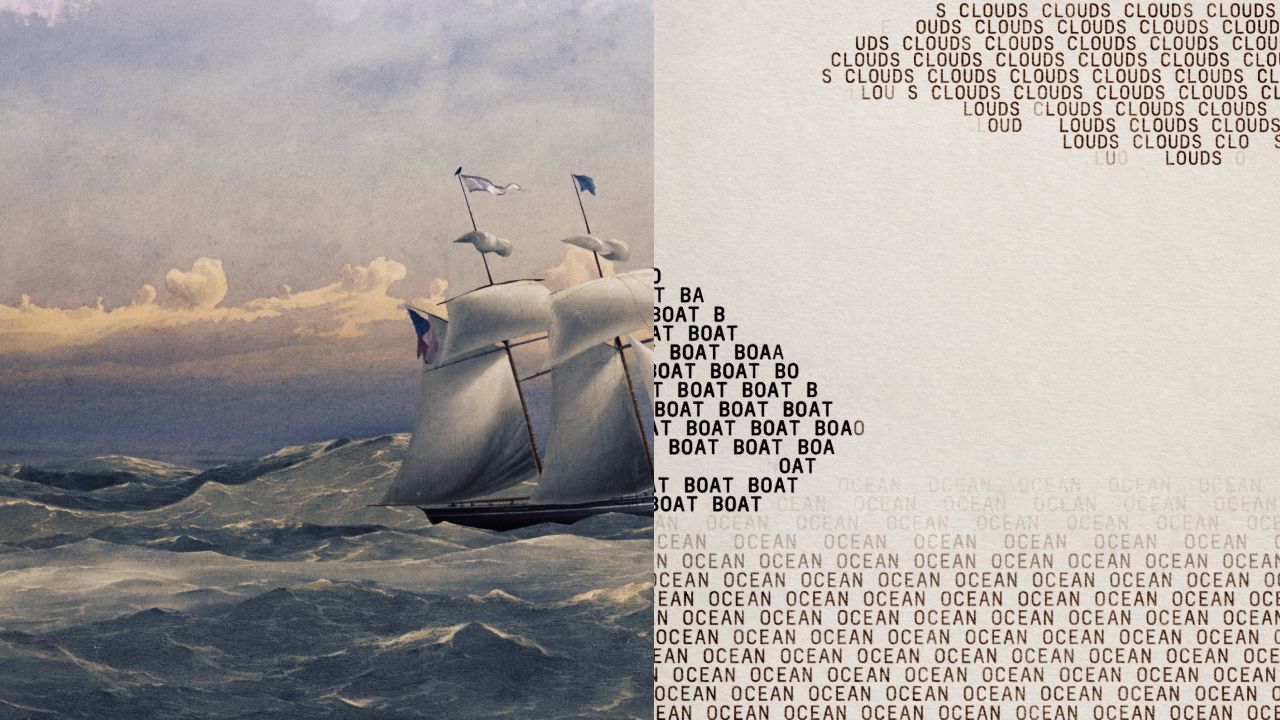
Anthropic's new lens picks out the handful of internal concepts Claude is ready to verbalize, and lets you edit them.
Key specs
| J space size | ~10-25 active concepts |
|---|---|
| Ablation impact | top-10 directions break multi-hop reasoning |
| Model layers used | layers 38-92 of ~96 |
Quick facts
| Maker | Anthropic |
|---|---|
| Type | Interpretability technique + paper |
| Technique | Jacobian Lens (J-lens) |
| Code | anthropics/jacobian-lens, Apache-2.0 |
| Studied on | Claude 3 Sonnet (production model) |
| Demo | Neuronpedia J-lens interactive |
| Availability | Paper, code, and demo public |
What is it?
The Jacobian Lens is a new interpretability tool from Anthropic that identifies J-space — a small, sparse set of internal directions in Claude that behave like a mental workspace. The paper argues these directions form a 'global workspace' for the concepts the model can report and reason with, separate from the much larger volume of automatic processing happening in parallel.
How does it work?
J-lens computes the average linearized effect of each activation on the model's likelihood of producing each specific token, across many contexts. Concepts with a strong linear effect on some token are the ones the model is poised to say. Those effects live in a low-dimensional subspace — the J-space — that Anthropic showed accounts for only about 6-10% of activation variance but drives multi-hop reasoning.
Why does it matter?
J-space gives alignment researchers a concrete handle on hidden state. Anthropic used it to detect Claude noticing it was being evaluated, spot concealed panic or manipulation in its internal reasoning, and implant ethical principles that generalized without direct training. Ablating the top J-lens directions collapses multi-hop reasoning while leaving text-continuation intact.
Who is it for?
interpretability and alignment researchers
Frequently asked questions
- What is the Jacobian Lens?
- The Jacobian Lens is an interpretability tool from Anthropic that computes the linearized effect each internal activation has on the model's next-token probabilities. That effect reveals which internal concepts the model is 'poised to verbalize' — a much smaller set than its total activations, forming what Anthropic calls the J-space.
- How is J-space different from earlier interpretability methods?
- Earlier methods like sparse autoencoders map many activations to features but do not tell you which features the model would actually report if asked. The Jacobian Lens singles out exactly those verbalizable concepts, and Anthropic shows only ~6–10% of activation variance is workspace-related, so J-space is far sparser than a full feature map.
- What can researchers do with J-space in practice?
- Anthropic uses J-space for alignment auditing — spotting hidden reasoning like evaluation-awareness or manipulation the model does not voice — and for post-training analysis. Their 'counterfactual reflection training' implants principles by making Claude articulate them if interrupted, and the improvements persist without direct training.
- Is the Jacobian Lens open source?
- Yes. Anthropic released the companion code at github.com/anthropics/jacobian-lens under Apache-2.0, plus an interactive J-lens demo at neuronpedia.org/jlens. The full paper is on transformer-circuits.pub. Anyone can rerun J-lens on their own model activations.
- What are the known limits?
- The current Jacobian Lens only captures single-token concepts, so multi-token ideas slip through. Anthropic mentions multi-token extensions but calls them incomplete. J-space also only appears at intermediate layers (roughly one-third to two-thirds through the network) — the technique won't recover 'thoughts' in early or final layers.
Try it
git clone https://github.com/anthropics/jacobian-lens