Mistral AI · 2026-07-08 · major
Robostral Navigate — Mistral's first embodied model, 8B, single RGB camera
Robostral Navigate is Mistral AI's first embodied model. The 8B network takes a single RGB camera feed plus a plain-language instruction and steers a robot through unseen offices, buildings, and outdoor scenes at 76.6% on R2R-CE unseen.
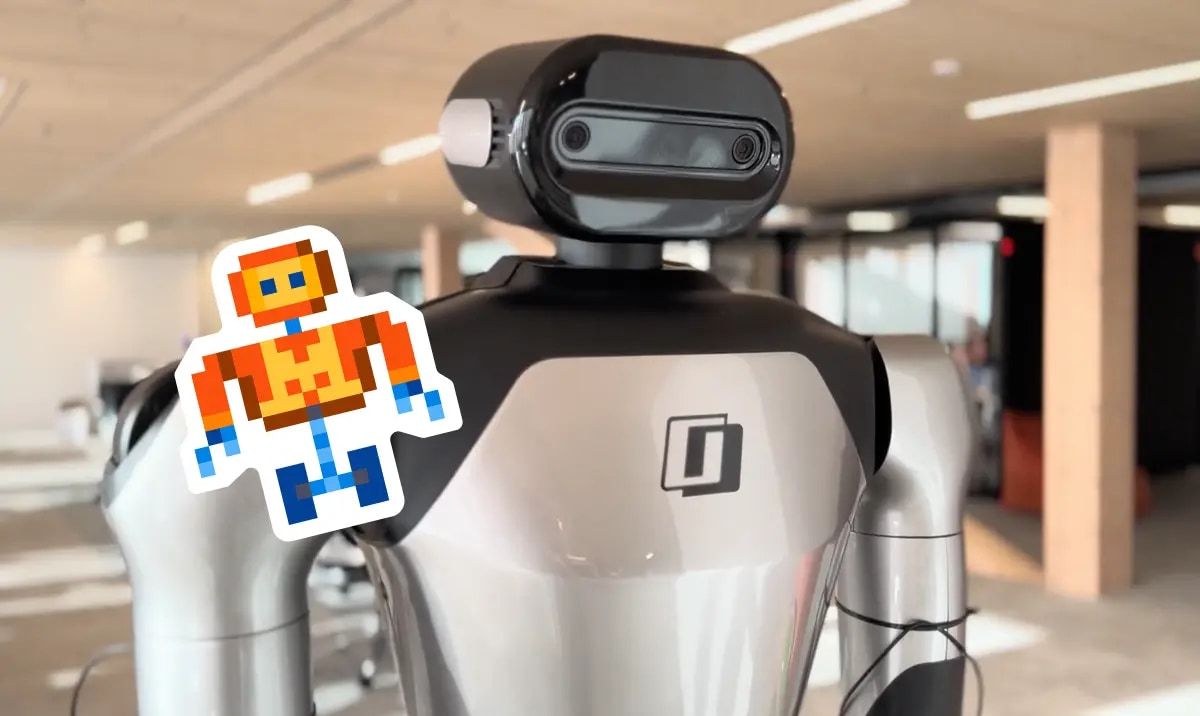
Mistral's first embodied model steers wheeled, legged, and flying robots from a single RGB camera and a plain-language instruction.
Key specs
| Parameters | 8B |
|---|---|
| R2 r ce unseen | 76.6% |
Quick facts
| Maker | Mistral AI |
|---|---|
| Model size | 8B parameters |
| Input | Single RGB camera + text instruction |
| R2R-CE (unseen) | 76.6% success |
| R2R-CE (seen) | 79.4% success |
| Robots supported | Wheeled, legged, flying |
| Training data | ~400K simulated trajectories, 6,000 scenes |
What is it?
Robostral Navigate is an 8B model that reads one RGB camera feed and a natural-language instruction, then moves a robot through complex environments. Mistral calls it their first embodied AI system, and the pitch is that a single commodity camera can carry the workload usually assigned to LiDAR-plus-multi-camera rigs.
How does it work?
Given the task and past observations, the policy predicts where the robot should move next by pointing at target coordinates in the current camera view, together with the desired final orientation. When the target is out of frame, it falls back to metric displacements in the robot's local frame. Training used ~400,000 simulated trajectories across 6,000 scenes; a prefix-caching algorithm compresses each episode into a single sequence and cuts token count 22x, then online reinforcement learning (CISPO) adds 3.2 points.
Why does it matter?
Single-camera navigation cuts the bill of materials for robot fleets. Robostral Navigate beats the best multi-camera or depth-sensor systems by 4.5 points on R2R-CE unseen, so warehouse pickers, delivery bots, and mobile inspectors can drop specialty sensors and rely on the same off-the-shelf cameras that already ship on most platforms.
Who is it for?
robotics engineers, embodied-AI researchers, hardware integrators
Frequently asked questions
- Is Robostral Navigate open source?
- No. Mistral has not released Robostral Navigate weights or code with the July 8, 2026 announcement. The blog frames it as Mistral's first embodied system and points interested users to the sales team; the post carries no HuggingFace, GitHub, or paper link, so the model is API/partnership-only for now.
- Which robots can run Robostral Navigate?
- Robostral Navigate is hardware-agnostic within limits. Mistral says the 8B model runs on wheeled, legged, and flying robots, generalizes across robot sizes, and stays robust when camera intrinsics change — so operators can swap the same policy between fleets that use different off-the-shelf cameras.
- How does Robostral Navigate compare to LiDAR or multi-camera systems?
- On R2R-CE validation-unseen, Robostral Navigate scores 76.6% success — 4.5 points above the best system that uses depth sensors or multiple cameras, and 9.7 points above the best other single-camera approach. Mistral got there with one RGB input and no depth channel.
- What data was Robostral Navigate trained on?
- Roughly 400,000 trajectories generated across 6,000 scenes, all in simulation — no real-world video collection. Mistral built an in-house pipeline and a prefix-caching training algorithm that compresses each episode into a single sequence and cuts token count by 22x versus per-timestep training.