NVIDIA · 2026-08-04 · major
NVIDIA Alpamayo 2 Super — 34B open VLA model for robotaxis and self-driving
NVIDIA Alpamayo 2 Super is a 34B vision-language-action model for autonomous vehicles, open under the OpenMDW-1.1 license. It scores 79.2 on LingoQA, ahead of Qwen2.5-VL 72B and Gemini 2.5 Pro on the same benchmark.
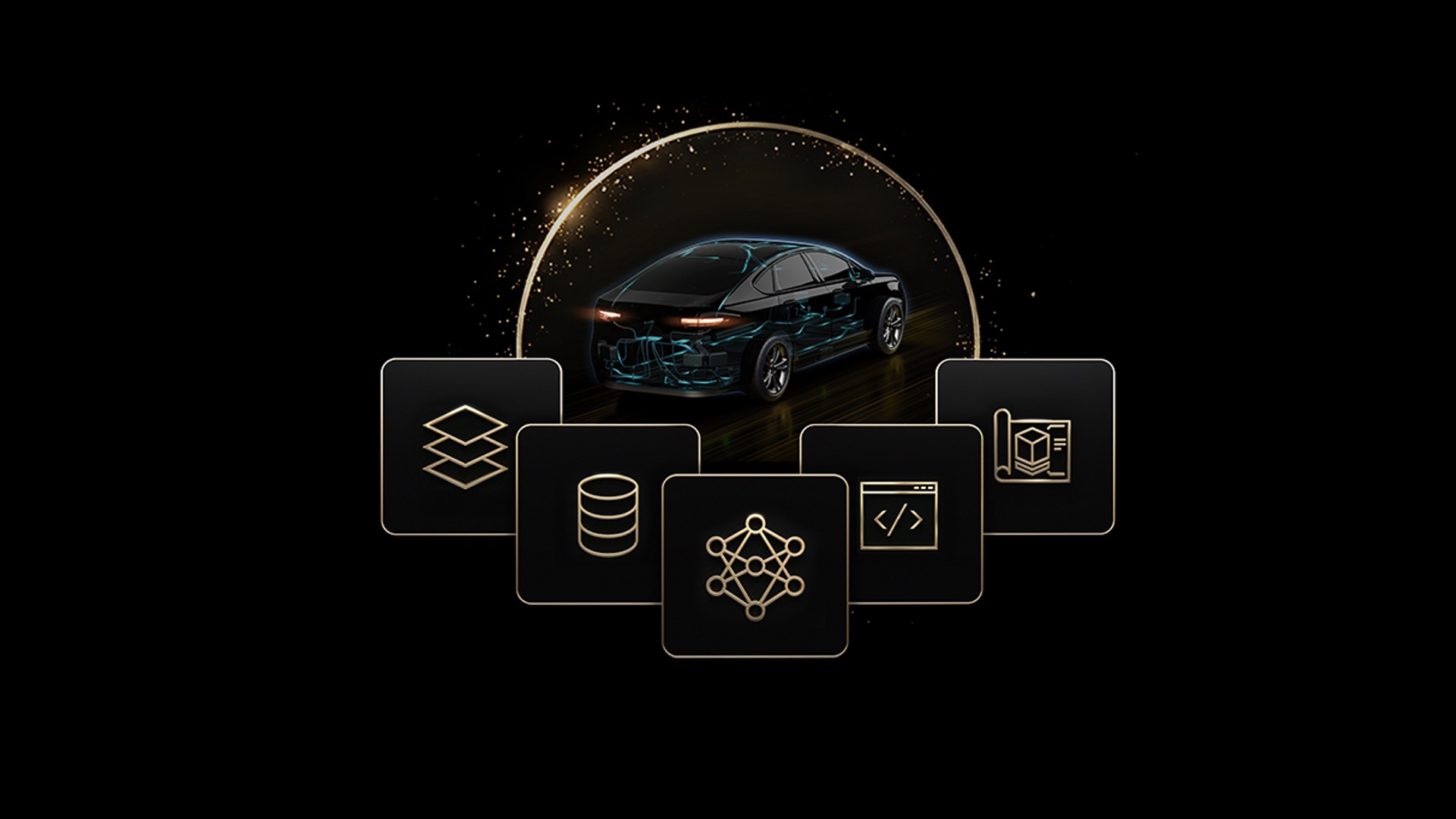
NVIDIA's largest open vision-language-action model yet, aimed at production robotaxis.
Key specs
| Parameters | 34B |
|---|---|
| Vlm backbone | 32B |
| Action decoder | 2.3B |
| Lingo qa | 79.2 |
Quick facts
| Maker | NVIDIA |
|---|---|
| Total params | 34B (32B VLM + 2.3B diffusion decoder) |
| Base model | NVIDIA Cosmos 3 Super Reasoner, RL post-trained |
| License | OpenMDW-1.1 (weights), Apache-2.0 (code) |
| Inputs | Up to 7 surround-view cameras, text, egomotion history |
| Availability | Hugging Face + GitHub, free for commercial use |
What is it?
Alpamayo 2 Super is a 34B vision-language-action model that turns multi-camera video and vehicle state into a driving plan. It reads up to seven surround-view cameras and outputs 64 trajectory waypoints across the next 6.4 seconds, plus a short natural-language explanation of why the car is doing what it does. Weights ship under the Linux Foundation's OpenMDW-1.1 license, so any automaker can fine-tune and ship it.
How does it work?
Under the hood, Alpamayo 2 Super pairs a 32B vision-language backbone built on NVIDIA Cosmos 3 Super Reasoner with a 2.3B diffusion action decoder. The VLM is post-trained with reinforcement learning on driving data, then hands its reasoning tokens to the diffusion head, which produces smooth waypoint trajectories at 10 Hz. The same model also does visual question answering, 2D grounding, and auto-labelling of new driving footage.
Why does it matter?
This is the first frontier-scale open model built specifically for self-driving. Alpamayo 2 Super ranks first on the LingoQA driving benchmark with a score of 79.2, beating Qwen2.5-VL 72B by 17 points and Gemini 2.5 Pro by 15. That lets smaller AV teams start from a real reasoning stack instead of pretraining a 30B model themselves, and lets safety teams inspect the chain-of-causation traces the model emits.
Who is it for?
AV developers, robotaxi operators, autonomy researchers
Frequently asked questions
- What license does Alpamayo 2 Super use?
- Alpamayo 2 Super weights are released under the Linux Foundation's OpenMDW-1.1 license, and the source code is Apache-2.0. Together they cover inspection, fine-tuning, derivative models, and commercial redistribution, so automakers can ship the model in production vehicles without a separate NVIDIA deal.
- How does it compare to Alpamayo 1?
- Alpamayo 2 Super scales the family from about 10B parameters in Alpamayo 1 Nano to a 32B vision-language backbone plus a 2.3B diffusion action head. NVIDIA reports that the new model beats Qwen2.5-VL 72B by 17 points and GPT-4o by 23.2 on LingoQA, so the extra scale plus RL post-training translate into a real reasoning gap on driving tasks.
- What hardware do I need to run it?
- NVIDIA validates Alpamayo 2 Super on a single H100 80GB, running PyTorch 2.8, Transformers 4.57.1, and DeepSpeed 0.17.4 on Linux. The reference configuration ingests six cameras with four historical frames each; teams can scale down cameras and history for lighter setups.
- Who is already using the Alpamayo family?
- The Alpamayo family has crossed 500,000 downloads on Hugging Face, and NVIDIA lists BYD, Geely, Isuzu, and Nissan among adopters of earlier versions. The new Super release is compatible with NVIDIA Halos safety-validation workflows and ISO/PAS 8800 AI safety requirements, which is what production AV programs actually gate on.
Try it
huggingface.co/nvidia/Alpamayo2-Super