Simon Willison · 2026-09-12 · notable
Simon Willison — GPT-6 Astra plans running routes, then loses its code
Simon Willison asked ChatGPT Work with GPT-6 Astra to plan 5K and 10K running routes from his house using OpenStreetMap data. The run took 27 minutes and produced maps plus GPX files, but the code behind them was lost to compaction.
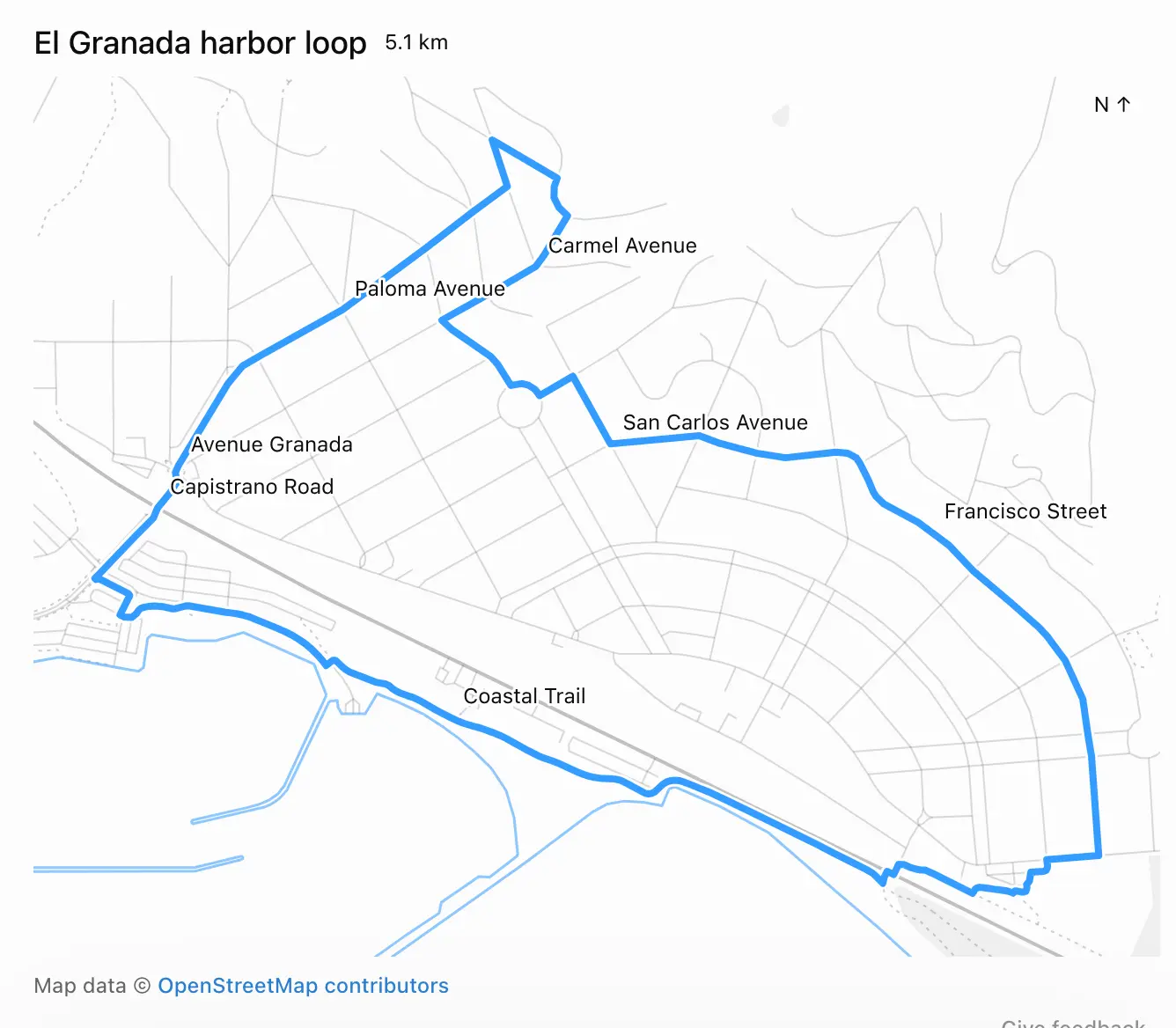
A 27-minute agent run turned one address into mapped 5K and 10K routes, then lost the code that built them.
What is it?
GPT-6 Astra, running inside ChatGPT Work, turned a one-line request into finished running routes. Simon Willison gave it his home address and asked for 5K and 10K loops that start and end at his house, using OSM data. Twenty-seven minutes later it returned an interactive map, a 5.1 km route it called the 'El Granada harbor loop', and downloadable GPX and GeoJSON files.
How does it work?
Nominatim geocoded the address, and the Overpass API pulled nearby roads and trails out of OpenStreetMap. Python written during the run stitched those segments into loops of the right length. GPT-6 Astra then drew the result through Willison's visualize skill, which writes a standalone HTML page using the D3 library.
Why does it matter?
The transparency gap is the real finding: once the thread was compacted, ChatGPT Work could no longer hand back the Python it had written, so there was no way to check how the routes were built. Willison argues that any system doing compaction should keep the pre-compaction text and let agent tools read it back.
Who is it for?
developers evaluating agentic coding tools
Try it
https://gist.github.com/simonw/ea652573c8ff5378b218cb10c8c5a480