
US Department of Commerce · 2026-11-15 · major
US remote-access chip rule — overseas data centers need a license to serve China
In short
The US Commerce Department issued an interim rule that closes the cloud loophole on advanced AI chips. Data centers anywhere need a license to rent large amounts of compute to companies based in China, Macau or other D:5 countries.
US Department of Commerce · 2026-11-15 · 3 sources checked
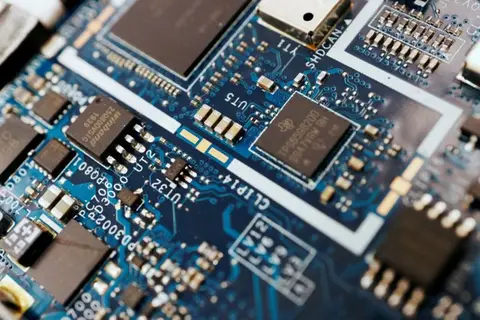
Renting US AI chips through a data center abroad now needs the same license as buying them, if the customer is Chinese.
Quick facts
| Issued by | US Commerce Department, BIS |
|---|---|
| Rule | Interim final rule, RIN 0694-AK50 |
| Covers | Data centers serving Macau or D:5-headquartered firms |
| Compute threshold | Over 12,000,000 aggregate TPP |
| New license countries | Indonesia, Malaysia, Singapore, Thailand, Brazil |
| Existing customers | License needed within 90 days |
| Comment period | 60 days after Federal Register publication |
What is it?
The Bureau of Industry and Security (BIS), part of the US Commerce Department, released an interim final rule called 'Addressing Remote Access to Advanced Semiconductors' on November 15, 2026. It targets remote computing: until now a company that could not legally buy advanced US AI chips could still rent their power from a data center in a third country. The rule also adds a new license requirement for advanced chip exports to Indonesia, Malaysia, Singapore, Thailand and Brazil, and formally rescinds the Biden-era AI Diffusion Rule, which was never enforced.
How does it work?
A new end-use control (section 744.24 of the export rules) requires a license when advanced chips go to a data center, wherever it is, that will give more than 12,000,000 aggregate TPP of compute to companies headquartered in Macau or a Country Group D:5 country such as China. Linked data centers count together. Data centers, foreign foundries and chip exporters must check who owns and controls their customers. A data center already serving such customers has 90 days after the rule takes effect to get a license. Exports to the five named countries need a license unless the buyer's parent company is based in the US and reporting rules are met.
Why does it matter?
Cloud and GPU-rental providers in Southeast Asia and Brazil now have a compliance job: screen customers for Chinese ownership and apply for licenses, or stop serving them. Chinese AI labs that trained models on rented overseas GPUs lose that route unless a license is granted case by case. Commercial recommender systems, such as those used by online shops and social networks, are exempt.
Who is it for?
Cloud and GPU-rental providers, data-center operators, AI labs that rent compute abroad
Frequently asked questions
- Which countries does the US remote-access chip rule name?
- The BIS interim final rule adds a license requirement for exports of advanced semiconductors to Indonesia, Malaysia, Singapore, Thailand and Brazil, which it calls countries with a higher-than-normal risk of diversion. The Commerce Secretary can add more countries. The remote-access control itself protects against companies headquartered in Macau or Country Group D:5 countries, a group that includes the People's Republic of China.
- Are US cloud companies exempt from the new remote-access chip rule?
- The new license requirement for Indonesia, Malaysia, Singapore, Thailand and Brazil does not apply to chips going to companies headquartered in the United States, or whose ultimate parent company is, provided the exporter meets new reporting requirements in section 743.10. The separate remote-access control still applies to any data center that serves Macau or D:5-headquartered customers above the compute threshold.
- What happens to data centers already renting compute to Chinese companies?
- Under the BIS remote-access rule, a data center that was already giving a significant volume of compute to companies headquartered in Macau or Country Group D:5 before the rule was published must obtain a license within 90 days of the rule's effective date to keep providing that service, or face future export restrictions. License applications are reviewed case by case.
- When does the remote-access chip rule take effect?
- The BIS interim final rule takes effect on the day it is published in the Federal Register, and comments are due 60 days after that publication. Because it is an interim final rule, it applies right away while BIS takes comments. The rule also formally rescinds the regulations of the Biden-era AI Diffusion Rule, which BIS announced it would drop in May 2025.
Try it
Read the rule text: RIN 0694-AK50 on bis.gov