In plain English
Red teaming means deliberately attacking your own AI system to find where it breaks before a real user or attacker does. You poke at the model with tricky, hostile, or deceptive inputs and watch for failures: leaking private data, giving harmful instructions, or being talked out of its own safety rules — a jailbreak.
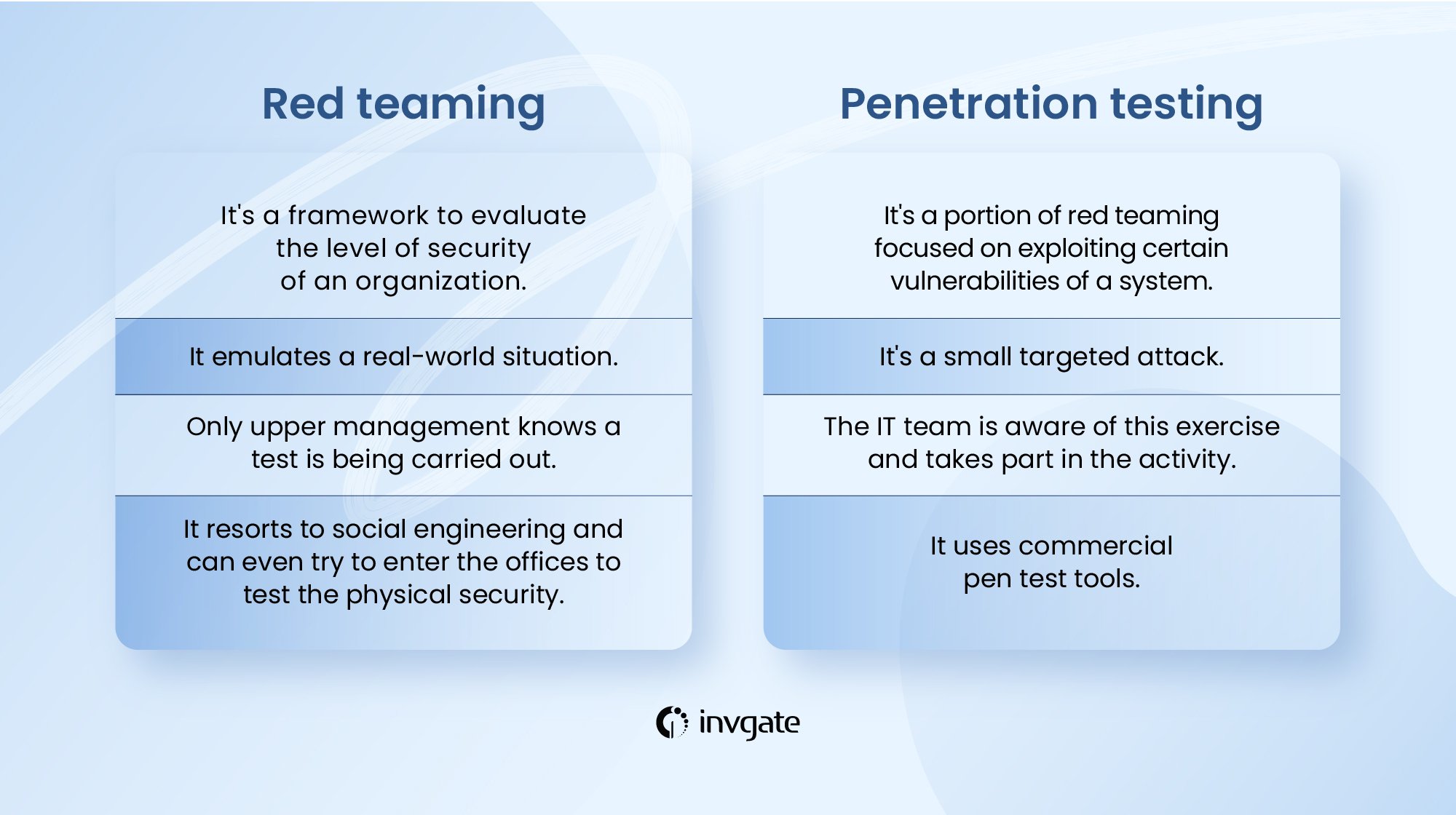
The two ways to do that work are manual and automated red teaming. They differ only in who writes the attacks. In manual red teaming, a human sits down and dreams up clever prompts by hand. In automated red teaming, a program — often another language model — generates thousands of attack prompts on its own and fires them at the target.
A useful analogy is testing a house's security. Manual red teaming is hiring a clever burglar to spend a weekend walking around your house, noticing the unlocked basement window nobody thought about, and improvising. Automated red teaming is a robot that rattles all 200 doors and windows in an hour, every single one, recording which ones give. The burglar finds the surprising way in; the robot guarantees nothing obvious was missed. You want both, and this article is about how they fit together.
Why it matters
A model that behaves perfectly in your demo can still fail badly when a real person phrases a request in an unexpected way. Red teaming is how you discover those failures on your own terms. But the method you choose decides what you'll actually find — and what you'll miss.
The core problem is coverage versus creativity, and no single method gives you both:
- Manual testing is creative but tiny. A skilled human will find the genuinely novel attack — the weird role-play framing, the culturally specific trick, the multi-step social-engineering setup. But one person can only write so many prompts in a day, and they get tired, bored, and predictable.
- Automated testing is broad but shallow. A tool can throw ten thousand variations at the model overnight, catch easy regressions, and give you a repeatable number to track over time. But it rarely invents a truly new class of attack — it mostly remixes patterns it already knows.
- Attackers use both against you. Real adversaries improvise like humans and script attacks like machines. If you only test one way, you're defending against half of them.
For a builder shipping an LLM feature, this matters at two moments. Before launch, you want a human red team to probe for the embarrassing, headline-making failures no checklist would predict. After launch, you want automated red teaming wired into your evals so that every model update, prompt tweak, or new tool is re-tested against thousands of known attacks automatically — catching the regression where last month's patched jailbreak quietly comes back.
How it works
Both approaches share the same loop: craft an attack, send it to the target model, judge whether the response is a failure, and learn from the result. They differ in who does each step and how fast the loop spins.
Manual red teaming
A human (or a small team) runs the loop by hand. They form a hypothesis — "I bet I can get it to ignore its system prompt by pretending to be a developer debugging it" — write the prompt, read the answer, and adapt based on what they saw. The intelligence is entirely in the person's head. Output is small (dozens to a few hundred careful probes) but each one is intentional and context-aware.
Automated red teaming
Here a program runs the loop. There are two common engines. Fuzzers / templates take a library of known jailbreak patterns and mechanically fill in or mutate them — swapping topics, adding encodings, translating to other languages — to produce huge volumes of variations. Attacker models are more advanced: a second LLM is pointed at your target and told "your job is to make this model break its rules," so it writes attacks, reads the target's reply, and rewrites a stronger attack — an automated version of a human's trial-and-error. Crucially, the judging step is automated too, usually by an LLM-as-a-judge that scores each response as safe or unsafe so no human has to read all ten thousand transcripts.
The output of an automated run is a report: which attack categories succeeded, how often, and concrete example transcripts. That report is most valuable as a feedback loop — every prompt that broke the model becomes a permanent test case you re-run on every future version.
Manual vs automated, side by side
The two methods are not competitors; they're tools with opposite strengths. This is the trade-off at a glance.
| Dimension | Manual red teaming | Automated red teaming |
|---|---|---|
| Who writes attacks | Human experts | A tool or attacker model |
| Volume | Tens to hundreds of probes | Thousands to millions |
| Cost per probe | High (human time) | Very low (compute) |
| Creativity / novelty | High — finds new attack classes | Low — remixes known patterns |
| Repeatability | Hard to reproduce exactly | Fully repeatable, same seed = same run |
| Speed | Slow (days) | Fast (hours, overnight) |
| Best for | Discovering unknown unknowns | Regression testing at scale |
| Main weakness | Doesn't scale, gets predictable | Shallow; can miss novel attacks |
A layered strategy that actually works
Mature teams don't pick one method — they sequence them. The pattern below uses each method where it's strongest and feeds the results forward, so manual discovery continuously expands what automation can catch.
- Humans go first. Run a focused manual session aimed at your product's specific risks — what would be most damaging for your app to do wrong? Capture every prompt that breaks it.
- Automation amplifies. Feed each human-found attack into an automated tool that generates hundreds of paraphrases, translations, and encodings. One human idea becomes a whole test family.
- Wire it into CI. Store the full attack set as part of your eval suite and run it automatically on every model or prompt change. Track the pass rate as a number over time.
- Humans return. Automation drifts toward stale patterns, so schedule fresh manual sessions every so often — especially after a major model upgrade — to find the new unknowns.
Common pitfalls
Most red-teaming programs fail not because they pick the wrong method, but because they apply it badly. Watch for these.
- Treating automated volume as coverage. Ten thousand variations of the same three tricks is not broad testing — it's one test repeated. Measure how many distinct attack categories you cover, not raw prompt count.
- Trusting the automated judge blindly. An LLM judge can mislabel a refusal as a success, or a clever-but-safe answer as a failure. Spot-check a sample of its verdicts by hand — see LLM-as-a-judge for why judges drift.
- Letting the human team get predictable. People fall into habits and re-test the same favorite tricks. Rotate red-teamers, bring in outsiders, and give them fresh threat scenarios.
- Never closing the loop. Finding a jailbreak and not turning it into a permanent regression test means you'll rediscover the same hole next quarter. Every confirmed failure should become a saved test case.
- Forgetting the attacker model is a model. An automated attacker only finds what it's been trained or prompted to look for. It inherits blind spots, so it can't be your only line of defense.
Going deeper
Once the basic split makes sense, a few deeper ideas sharpen how you think about coverage and cost.
The diversity problem. The hardest open question in automated red teaming is making the attacks diverse rather than thousands of near-duplicates. Research approaches push the attacker model to explore unusual strategies and penalize it for repeating itself, but it remains genuinely difficult to get a machine to be surprising. This is exactly why humans stay in the loop — novelty is the thing automation is worst at.
Multi-turn and agentic attacks. Single-prompt jailbreaks are the easy case. Harder attacks unfold over a conversation — establishing trust, then slowly steering the model — or target tool-using agents where a malicious instruction hides in a retrieved document or a tool's output. Automating multi-turn attacks is an active frontier; humans still hold a clear edge there because the attack depends on reading the conversation as it develops.
Knowing when to stop. Red teaming never "finishes" — there is always one more attack. The practical move is to define a risk budget: which failures are catastrophic (must be near-zero) versus merely annoying, and how much testing each warrants. Tie your stopping point to a target pass rate on a representative attack set, not to a feeling of being done.
Where it connects. Red teaming is one half of safety testing; the other half is measuring ordinary quality and behavior with evals. The strongest setups treat a passing red-team suite as a release gate sitting alongside their normal eval suite, so a model can't ship if a previously fixed jailbreak has regressed. From here, the natural next steps are studying specific jailbreak techniques so you know what to test for, and building an automated eval pipeline to host your saved attacks.
FAQ
What is the difference between automated and manual red teaming?
The difference is who writes the attacks. In manual red teaming, human experts craft hostile prompts by hand, which finds creative and novel failures but doesn't scale. In automated red teaming, a tool or a second LLM generates thousands of attack prompts cheaply and repeatably, which is great for coverage and regression testing but tends to miss genuinely new attack classes.
Is automated red teaming better than manual red teaming?
Neither is strictly better — they have opposite strengths. Manual red teaming is best for discovering unknown, creative attacks; automated red teaming is best for testing at scale and catching regressions. Mature teams use humans to discover new attack categories and automation to defend those categories continuously.
How does automated red teaming actually work?
A program runs the attack loop instead of a person. Either a fuzzer mutates known jailbreak templates into many variations, or an attacker LLM is prompted to break the target model, reads each response, and refines its next attempt. An automated judge (often an LLM-as-a-judge) scores each response as safe or unsafe so humans don't have to read every transcript.
Can red teaming be fully automated?
Not effectively. Automation excels at volume, repeatability, and regression testing, but it mostly remixes attack patterns it already knows and struggles to invent truly new ones. Humans are still needed to discover novel attacks and to spot-check the automated judge's verdicts, so the realistic answer is a human-plus-automation loop, not pure automation.
How do you combine human and automated red teaming?
Sequence them. Have humans hunt for creative, product-specific attacks first; feed each finding into an automated tool that generates many variations; store the whole set as an eval suite that runs on every model or prompt change; then bring humans back periodically for fresh ideas. Each human discovery becomes a permanent automated test.