
Overview
Claude Sonnet 5.5 is the Sonnet-tier model of Anthropic's Claude 5.5 family, released on September 28, 2026, six days after Claude Opus 5.5. Anthropic describes it as the best combination of speed and intelligence in its lineup, and says it generates output more than 30% faster than Claude Sonnet 5 and costs up to 30% less per task.
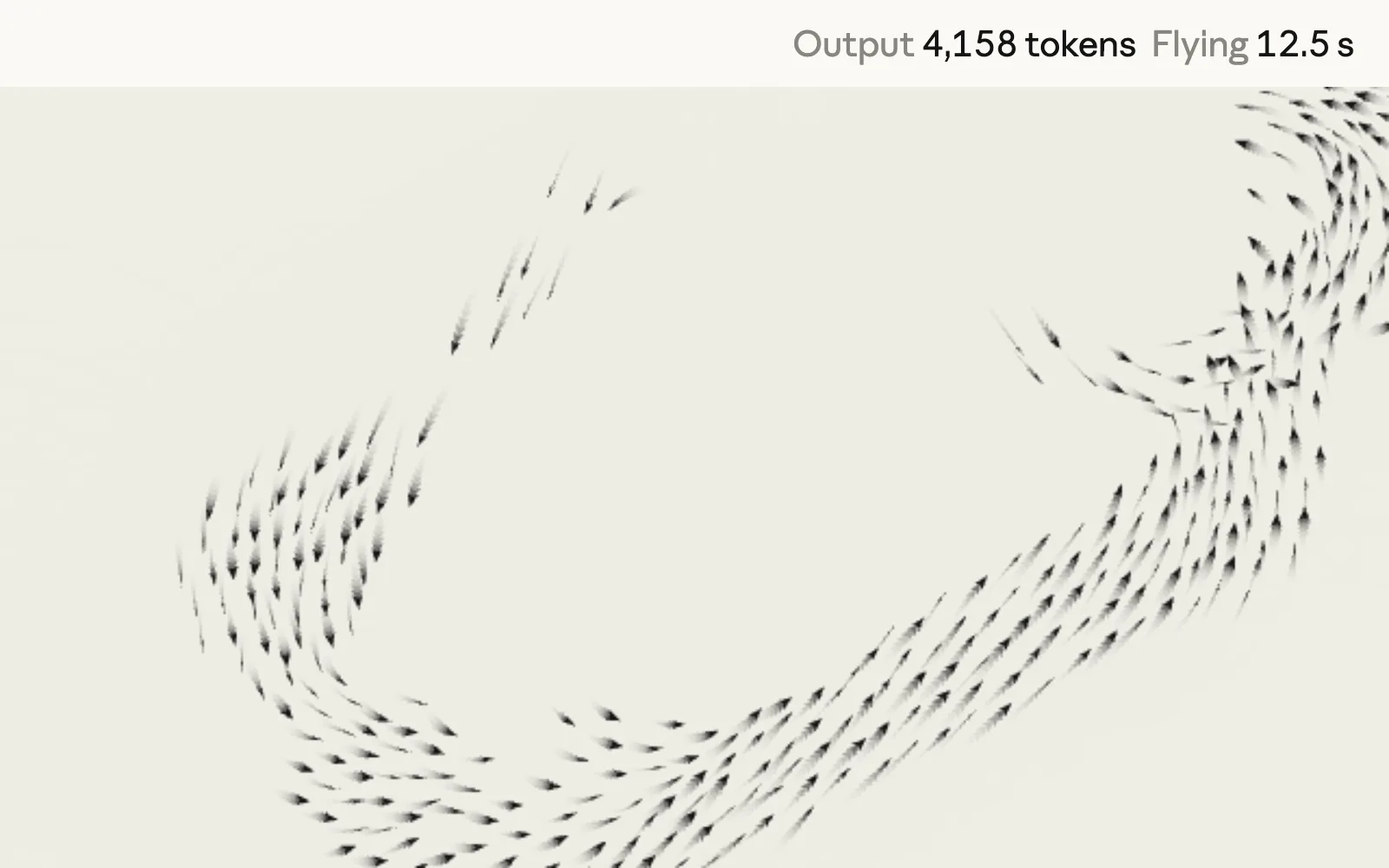
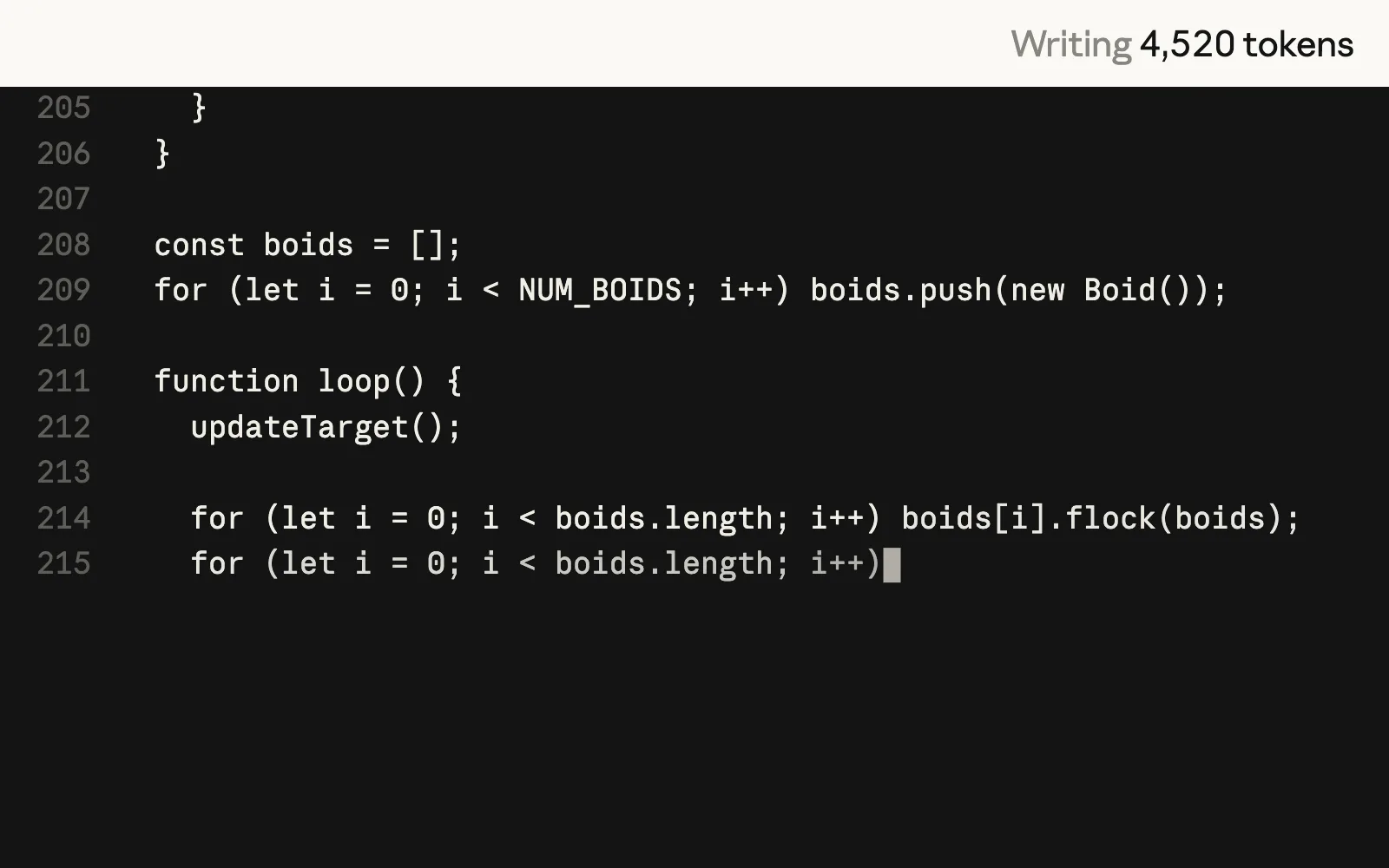
The model has a 1 million-token context window and up to 128K output tokens on the synchronous Messages API, rising to 300K on the Message Batches API with the output-300k-2026-03-24 beta header. It takes text and images in and returns text. Reliable knowledge runs through June 2026. Adaptive thinking is on by default and its depth is set with the effort parameter, which defaults to high; the tokenizer is the same as Claude Sonnet 5's.
Pricing is unchanged from Claude Sonnet 5: $2 per million input tokens and $10 per million output tokens, half the $4/$20 of Claude Opus 5.5. Cache reads cost $0.20 per million, a 5-minute cache write $2.50 and a 1-hour cache write $4; Batch API requests take 50% off both sides. The minimum cacheable prompt is 512 tokens, down from 1,024 on Sonnet 5.
Claude Sonnet 5.5 is the first Sonnet model to launch with the cyber safeguards and fallbacks Anthropic built for its most capable models. Five changes break code written for Claude Sonnet 5: thinking type disabled returns an error (between_tools replaces it), forced tool use is rejected, thinking blocks are tied to the model and conversation that produced them, the computer_20251124 tool is refused on the Claude API and Google Cloud, and Opus 4.8, Opus 4.7 and Sonnet 5 no longer work as advisors.
| Released | 2026-09-28 |
|---|---|
| License | Proprietary |
| Weights | API only |
| Context | 1M |
| Max output | 128K |
| Architecture | Proprietary transformer with adaptive thinking on by default, steered by an effort parameter; the lowest setting, between_tools, turns off up-front thinking. |
| Knowledge cutoff | Jun 2026 |
| Modalities | Text, Vision |
| Status | Generally available |
Benchmarks
Claude Sonnet 5.5 vs Claude Sonnet 5 and Claude Opus 5.5
| Benchmark | Claude Sonnet 5.5 | Claude Sonnet 5 | Claude Opus 5.5 |
|---|---|---|---|
| Terminal-Bench 4.0 | 70.6% | 10.3% | 66.4% |
| FrontierCode 1.1 (Main) | 46.2% | 42.4% | 54.4% |
| CursorBench 4.0 | 55.5% | 34.1% | 57.8% |
| OSWorld 2.1 (partial) | 80.1% | 57% | 81.8% |
| Humanity's Last Exam (with tools) | 64.5% | 54.9% | 67.7% |
| GDPval-AA v2.1 (Elo) | 1844 | 1449 | 1846 |
| AA-Briefcase v1.1 (Elo) | 1811 | 1359 | 1822 |
This model's scores
- Terminal-Bench 4.0 (agentic coding)70.6%
- OSWorld 2.1 (partial)80.1%
- Humanity's Last Exam (with tools)64.5%
- CursorBench 4.055.5%
- FrontierCode 1.1 (Main, Max)46.2%
Scores on a 0–100 scale (25-point gridlines); higher is better. Each benchmark links to its published source.
Pricing
| Input | $2.00 per million tokens |
|---|---|
| Output | $10.00 per million tokens |
Cache reads $0.20/MTok, 5m cache write $2.50/MTok, 1h cache write $4.00/MTok. Batch API takes 50% off input and output.
Strengths
- 70.6% on Terminal-Bench 4.0 in Anthropic's launch comparison, ahead of Claude Opus 5.5 at 66.4% and Claude Sonnet 5 at 10.3%
- Near-Opus computer use: 80.1% partial on OSWorld 2.1 against 81.8% for Opus 5.5 and 57.0% for Sonnet 5
- Same $2/$10 per MTok as Sonnet 5, with output over 30% faster and up to 30% lower cost per task
- 1M-token context with 128K max output, extendable to 300K on the Batch API
- Supports per-message effort (beta), mid-conversation system messages and mid-conversation tool changes, which Sonnet 5 does not
Best for
- Reach for it to run coding and terminal agents at volume, where near-flagship results at half the Opus 5.5 token price matter more than the last few points.
- Reach for it for computer-use automation through the computer_toolset_20260801 toolset, where it scores within two points of Opus 5.5 on OSWorld 2.1.
- Reach for it for latency-sensitive chat and iterative work, starting at medium or low effort as Anthropic recommends.
How to access
| Provider | Model ID |
|---|---|
| Anthropic API ↗ | claude-sonnet-5-5 |
| Amazon Bedrock ↗ | anthropic.claude-sonnet-5-5 |
| Google Vertex AI ↗ | claude-sonnet-5-5 |
| Microsoft Foundry ↗ | claude-sonnet-5-5 |
Claude Sonnet — every version
The full lineage of the Claude Sonnet line, newest first. Every version has its own page — click any to compare specs, benchmarks and pricing.
| Version | Released | Context | License |
|---|---|---|---|
| Claude Sonnet 5.5current | 2026-09-28 | 1M | Proprietary |
| Claude Sonnet 5 | 2026-06-30 | 1M | Proprietary |
| Claude Sonnet 4.6 | 2026-02-17 | 1M | Proprietary |
| Claude Sonnet 4.5 | 2025-09-29 | 1M | Proprietary |
| Claude Sonnet 4 | 2025-05-22 | 200K | Proprietary |
| Claude 3.7 Sonnet | 2025-02-24 | 200K | Proprietary |
| Claude 3.5 Sonnet (new) | 2024-10-22 | 200K | Proprietary |
| Claude 3.5 Sonnet | 2024-06-20 | 200K | Proprietary |
| Claude 3 Sonnet | 2024-03-04 | 200K | Proprietary |
FAQ
When was Claude Sonnet 5.5 released?
Anthropic released Claude Sonnet 5.5 on September 28, 2026, six days after Claude Opus 5.5. It launched on the Claude API, Amazon Bedrock, Google Cloud, Microsoft Foundry and Claude Platform on AWS, and in claude.ai. Anthropic commits to keeping it available until at least September 28, 2027.
How much does Claude Sonnet 5.5 cost?
Claude Sonnet 5.5 costs $2 per million input tokens and $10 per million output tokens, the same as Claude Sonnet 5. Cache reads are $0.20 per million, a 5-minute cache write $2.50 and a 1-hour cache write $4. Batch API requests take 50% off. Anthropic says it still costs up to 30% less per task than Sonnet 5.
How does Claude Sonnet 5.5 compare to Claude Opus 5.5?
In Anthropic's launch comparison Claude Sonnet 5.5 beats Claude Opus 5.5 on Terminal-Bench 4.0, 70.6% to 66.4%, and trails it on OSWorld 2.1 (80.1% to 81.8%), CursorBench 4.0 (55.5% to 57.8%) and Humanity's Last Exam (64.5% to 67.7%). Sonnet 5.5 costs half as much per token: $2/$10 against $4/$20.
Can thinking be turned off on Claude Sonnet 5.5?
Claude Sonnet 5.5 rejects thinking type disabled with a 400 error. Its lowest setting is between_tools, which turns off up-front thinking while keeping short progress notes between tool calls. between_tools works at low, medium and high effort; at xhigh or max effort Claude Sonnet 5.5 requires adaptive thinking instead.
What breaks when migrating from Claude Sonnet 5 to Claude Sonnet 5.5?
Five changes break Claude Sonnet 5 code: thinking type disabled returns an error, forced tool use is rejected, thinking blocks are tied to the model and conversation, the computer_20251124 tool is refused on the Claude API and Google Cloud, and Opus 4.8, Opus 4.7 and Sonnet 5 advisors fail. Anthropic's migration guide covers each change.