
Ankit Gupta · 2026-11-20 · notable
Vibecoding an inference chip — coding agents tune an FPGA to run an LLM
In short
Ankit Gupta used coding agents to program an AWS F2 FPGA to run a ternary-weight LLM. Speed rose from 6.43 to 213.13 tokens per second, about 1.65x a 32-thread CPU twin, for roughly $10,000 in tokens.
Ankit Gupta · 2026-11-20 · 2 sources checked
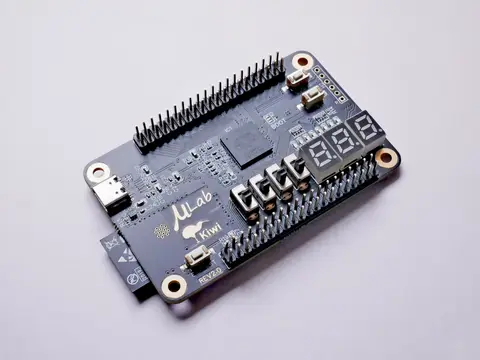
One engineer let coding agents optimize an FPGA design for days until it ran an LLM faster than a 32-thread CPU.
What is it?
Vibecoding an inference chip is a blog post by Ankit Gupta about getting coding agents to write C++ and Verilog that run a ternary-weight LLM on an FPGA. The target was an AWS F2 instance (f2.6xlarge, $1.98 per hour) with 16 GB of FPGA HBM and an 8,192-token context.
How does it work?
A cloud agent hosted in Conductor ran an optimization loop for several days, trying hundreds of experiments. The author says Claude's Astra and Opus models were both capable and interchangeable, and that he used Codex to request the AWS F2 reservation. After a soak test found random faults, he lowered the final clock from 231.25 MHz to 225/425 MHz.
Why does it matter?
The result shows what a single person with agents and a token budget can now do in hardware work. Throughput grew 33.13x over the baseline and matched an exact CPU twin on 24 of 24 test turns. The cost was about $10,000 in Claude and OpenAI tokens, and speed falls from 233 tok/s at short context to 76 tok/s at 6-8k.
Who is it for?
hardware and inference engineers, agent power users