Anthropic · 2026-09-23 · major
Claude finds ART — a new enzyme system with CRISPR-like repeats
About 950 Claude agents searched a DNA sequence database for 21 hours and flagged ART, a phage enzyme system with a CRISPR-like repeat array. Anthropic's own lab has started testing it. Its function is still unknown.
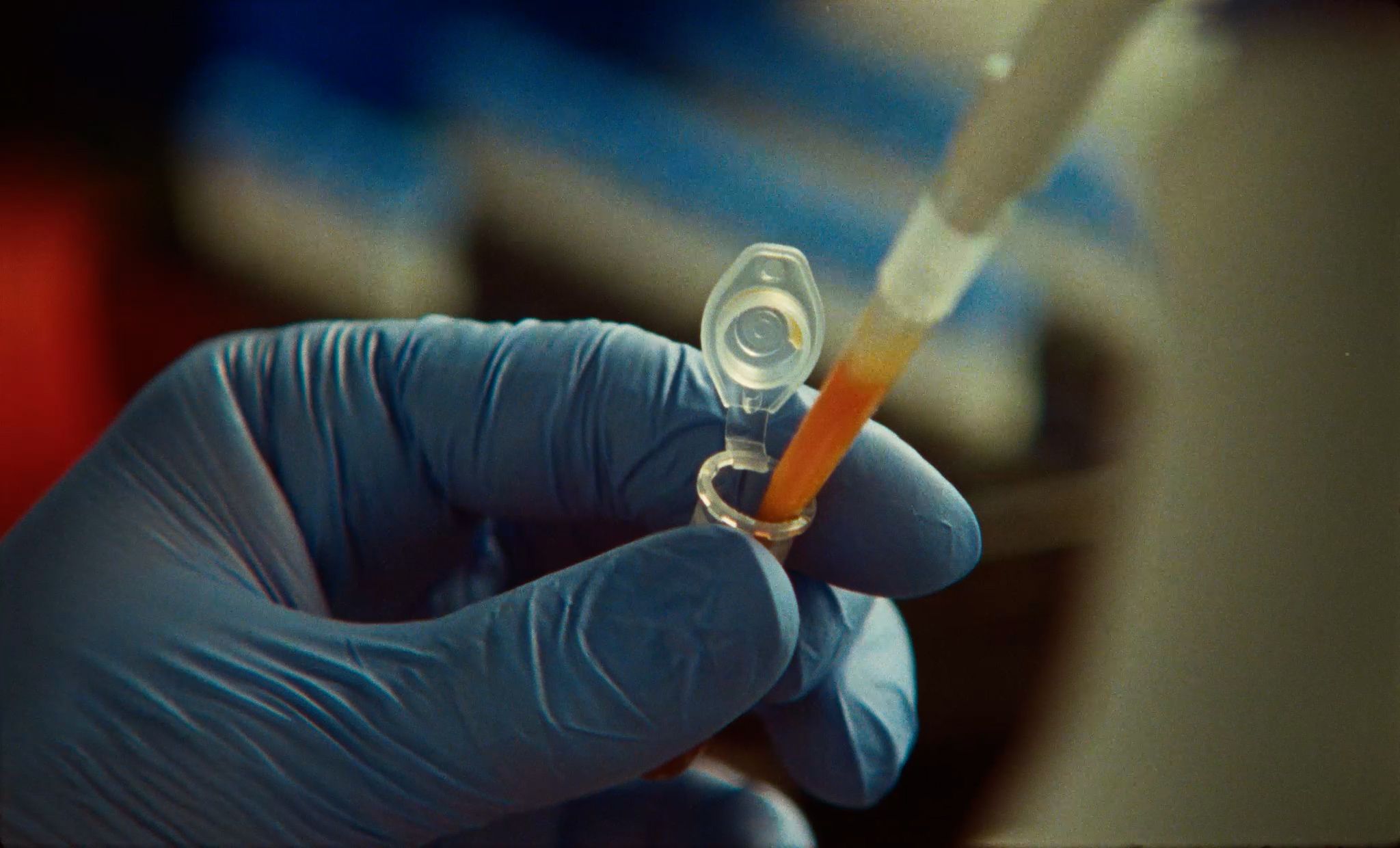
Hundreds of Claude agents combed DNA databases and spotted an enzyme system biologists had missed.
Quick facts
| Maker | Anthropic life sciences research group |
|---|---|
| System found | ART (array-associated reverse transcriptases) |
| Found in | Bacteriophages |
| Search scale | ~950 agents, 21 hours, 210M tokens |
| Funnel | 200,000+ RTs → 3,500 candidates → 20 reports |
| Lab safety level | BSL-1 and BSL-2 only |
| Status | Preprint; function not yet known |
What is it?
Anthropic's life sciences research group reports a previously uncharacterized enzyme system in bacteriophages, which it calls array-associated reverse transcriptases (ART). Claude agents found it. ART has three parts: a reverse transcriptase (RT), a partner gene next to it, and a long array of evenly spaced DNA repeats that looks like a CRISPR array. The RT itself was known from a jumbo phage, but Anthropic says Claude appears to be the first to notice the repeat array and the accessory protein.
How does it work?
The search ran on Claude Science and Claude Code, sometimes inside an Anthropic harness that coordinates many Claude sessions in parallel. Roughly 950 agents used 210 million tokens over 21 hours to gather more than 200,000 RTs, pick out 3,500 new candidate systems and narrow them to 20, each written up as a human-readable report. Humans gave the initial prompt and did all the lab work; early experiments show the ART array is expressed as a set of distinct short RNAs.
Why does it matter?
Finding new enzyme systems in sequence data has so far been slow, expert work, and CRISPR itself began as a strange repeat pattern in bacterial DNA. A result where agents do the database search and scientists only direct and test it is a concrete case of AI speeding up the discovery step of biology. CRISPR pioneer Feng Zhang called the finding 'genuinely intriguing' and said it 'merits further investigation'.
Who is it for?
molecular biologists and AI-for-science researchers
Frequently asked questions
- Does Anthropic know what the ART enzyme system does?
- No. Anthropic says it does not yet know the function of the ART system and that further experiments are underway. The first lab results show the ART repeat array is expressed as a set of distinct short RNAs, which Anthropic compares to how CRISPR arrays work, but that is a hint about the mechanism rather than a confirmed role.
- Did Claude run the lab experiments on ART by itself?
- No. Anthropic states that all lab work was performed by human scientists in its Bay Area lab. Claude's part was the computational search and the candidate reports, with scientists giving high-level direction. Anthropic says the lab only does work at biosafety levels BSL-1 and BSL-2 and does not handle pathogens that can infect humans.
- How is ART different from CRISPR?
- CRISPR systems pair Cas proteins with a repeat array in bacteria and archaea. ART pairs a reverse transcriptase and an accessory protein of unknown function with a repeat array that resembles a CRISPR array, and Anthropic says it is found mainly in bacteriophages, the viruses that infect bacteria. Whether ART is programmable like CRISPR has not been shown yet.
- Which Claude tools did Anthropic use to find ART?
- Anthropic's scientists used Claude Science and Claude Code, and in some runs an in-house harness that coordinates many Claude sessions in parallel. Anthropic does not name the specific Claude model version in the announcement. The full method is in a preprint linked from the post.