Colin Breck · 2026-09-20 · notable
Colin Breck — AI-drafted proposals cost the reader more than they save the writer
Colin Breck argues that a model-written design proposal moves work from the writer to everyone who reads it, because the reader has none of the context that let the author decide what mattered. The post reached 785 points on Hacker News.
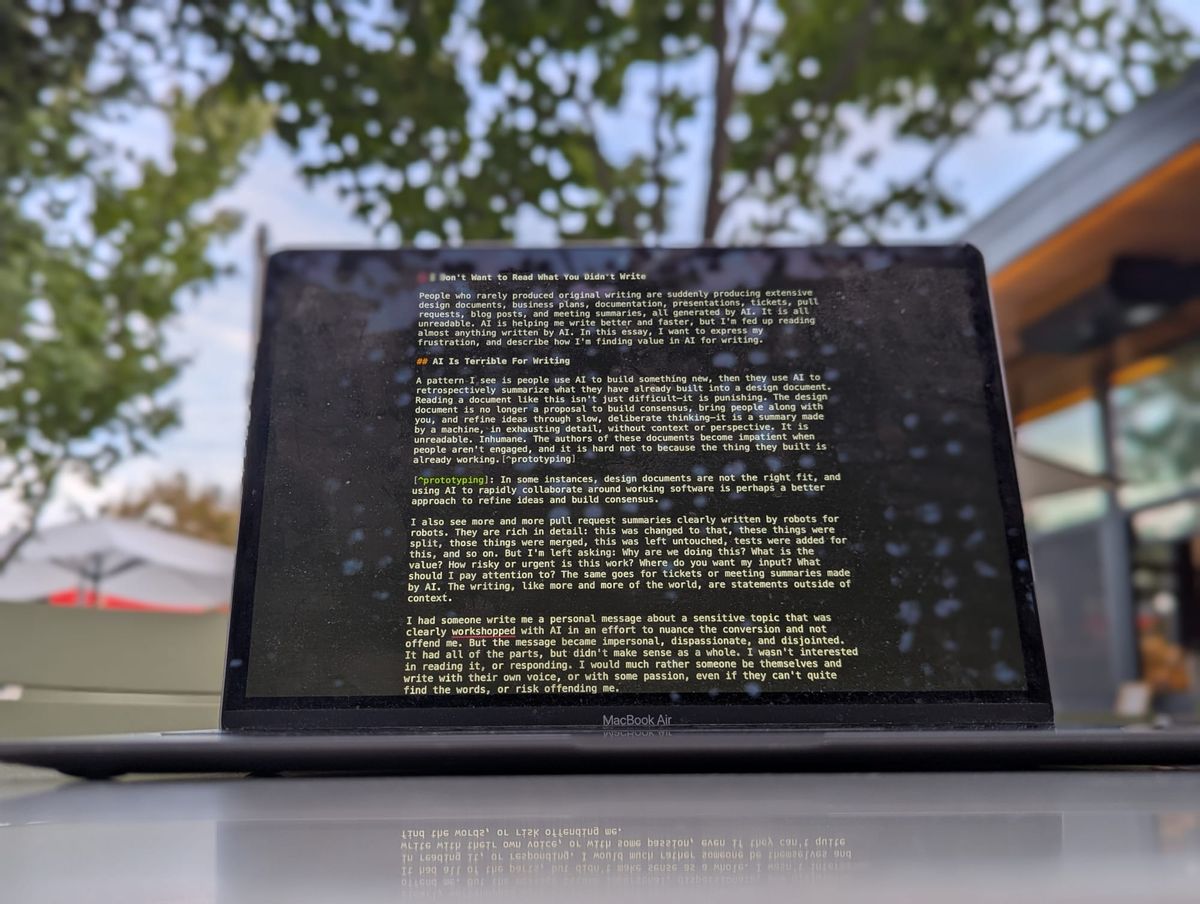
The case that generated prose shifts the cost of thinking from the person writing to every person reading.
What is it?
Colin Breck's argument is about what a reader loses, not about whether a model writes well. He describes colleagues who rarely produced original writing now circulating long AI-generated design proposals, and calls the result unreadable: 'when you send the same text to someone else, they have little to no context' and so cannot tell what is relevant from what is filler.
How does it work?
Breck separates two uses that often get lumped together. Generating a draft is out, because the act of choosing what to say is the thinking itself. Using a model as an editor or a fact-checker is in, as long as the human keeps control of every sentence. He tests the line against his own work: a paper he submitted to CIDR describing a database he built, where 'AI did not write a single line', and where reversing that 'was never valuable. Not once.'
Why does it matter?
This is the reader-side half of an argument the feed has seen from the writer's side. Where Thomas Ptacek gives rules for keeping your voice and Bryan Cantrill reports that readers abandon a post once they spot a model, Breck aims at the internal document — the design proposal, the status update, the thing a team is obliged to read. His proposal is a norm rather than a ban: own the draft, then let the model check it.
Who is it for?
engineers and managers who write or review design documents