Thomas Ptacek · 2026-09-17 · notable
How to Write with an LLM — Thomas Ptacek's rules for keeping your voice
Thomas and Erin Ptacek argue that an LLM makes a good copyeditor and a bad ghostwriter. Their two rules: never keep a phrase the model wrote, and ignore its praise for your first draft.
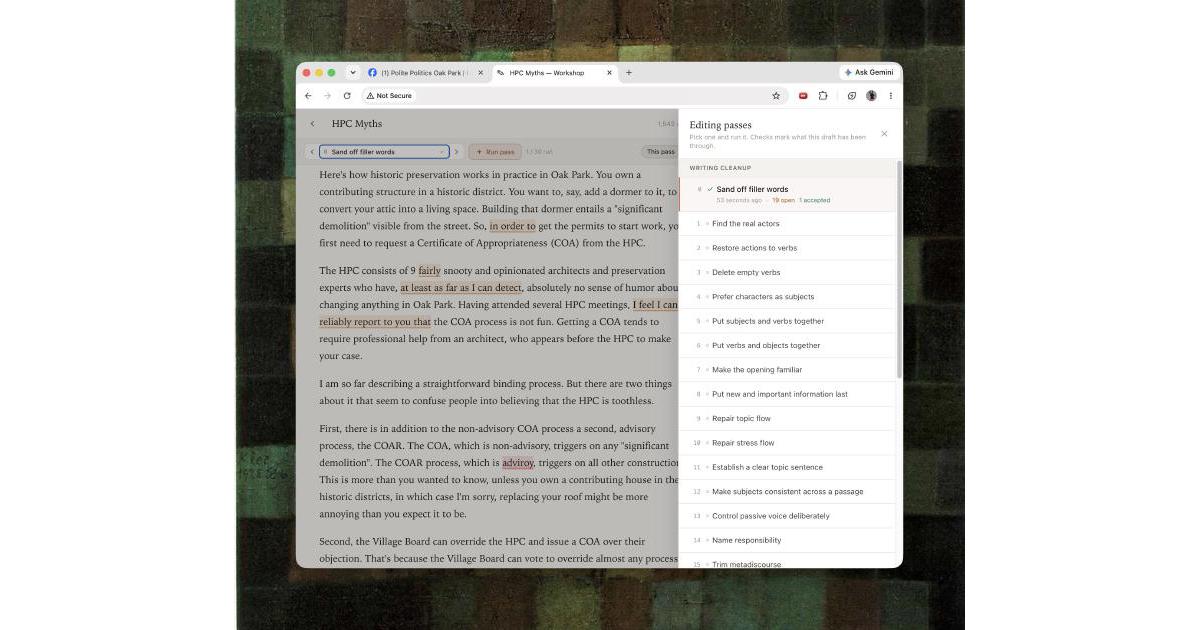
Two hard rules that let you use a model on your prose without ending up sounding like one.
What is it?
Thomas and Erin Ptacek set out a way to write with a language model that keeps the writing yours. Rule one: any specific turn of phrase the model suggests is off limits, because a borrowed phrase is what makes a piece read as output rather than as a person. Rule two: reject the model's encouragement, since heavy praise for a first draft locks you into your weakest instincts.
How does it work?
The workflow in the post is write first, then bring the model in to find problems rather than to fix them. Ptacek points it at mechanical faults an editor would catch: overused passive voice, repeated phrasing, filler words like 'very' and 'actually', and paragraphs that belong in a different order. You then rewrite those sections yourself and, as a last step, show a fresh model both versions without telling it which edits were yours.
Why does it matter?
Most advice about writing with AI is either 'never touch it' or a prompt that hands over the whole draft. This is a middle path with a test you can actually apply, and it comes from someone whose essays have repeatedly reached the top of Hacker News. For teams worried that AI assistance flattens everyone's writing into the same register, the no-borrowed-phrases rule is a concrete policy rather than a feeling.
Who is it for?
engineers and technical writers who publish