NVIDIA · 2026-05-31 · major
NVIDIA RTX Spark Unveiled at Computex 2026 — Arm-Based Superchip Pairs a 20-Core Grace CPU With a 6,144-Core Blackwell GPU, Up to 128 GB Unified Memory, and 1 Petaflop of FP4 Compute for Slim Windows Laptops
Jensen Huang's Computex keynote unveils RTX Spark — a Grace+Blackwell superchip with up to 128 GB unified memory that NVIDIA pitches as the foundation for an 'agentic AI OS' on Windows. Ships fall 2026 from Dell, HP, Lenovo, ASUS, Microsoft, and MSI.
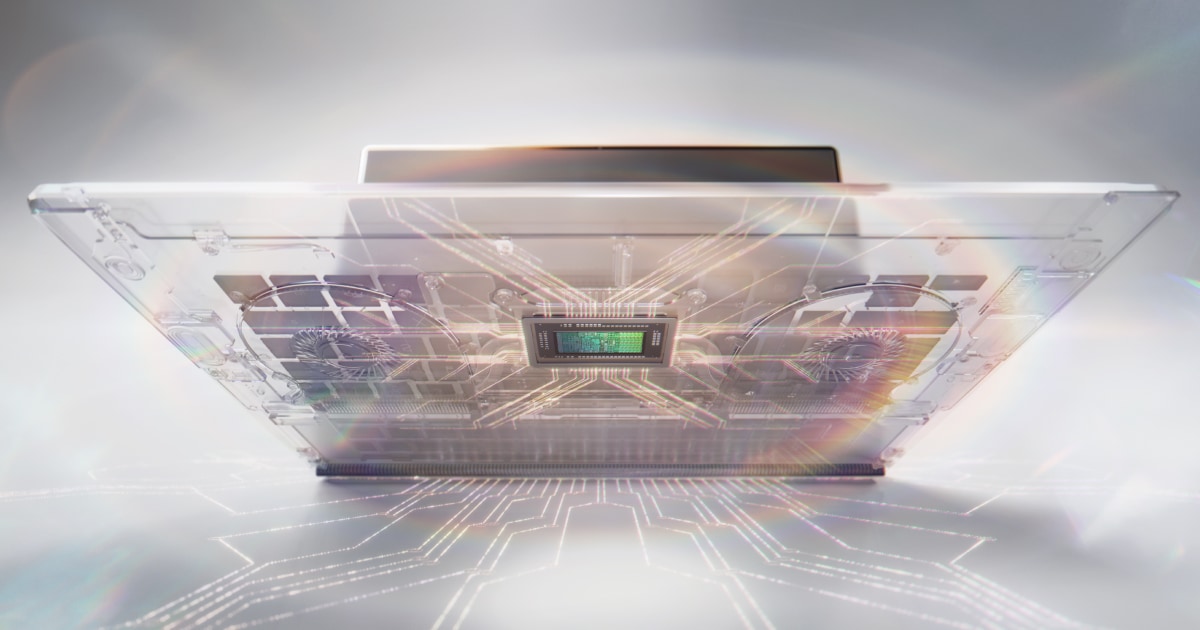
NVIDIA finally builds its own PC chip — a Grace Arm CPU bonded to a Blackwell RTX GPU with 128 GB of shared memory and a petaflop of FP4 throughput.
Key specs
| Gpu cuda cores | up to 6144 |
|---|---|
| Cpu cores | up to 20 (Arm) |
| Unified memory | up to 128 GB |
| Ai performance | up to 1 PFLOPS FP4 |
| Local llm support | 120B params, up to 1M tokens |
| Ship window | Fall 2026 |
What is it?
RTX Spark is a single-package superchip aimed at slim Windows laptops, mini-PCs, and developer desktops. It fuses a 20-core Arm-based Grace CPU with a Blackwell-class RTX GPU carrying 6,144 CUDA cores and fifth-generation Tensor Cores, joined by an NVLink-C2C silicon bridge so both sides see one unified pool of up to 128 GB of LPDDR5X memory.
How does it work?
The chip-to-chip interconnect runs at 600 GB/sec, letting the GPU sip from LPDDR5X over a 256-bit bus instead of a discrete VRAM. FP4 precision and the new Tensor Cores yield about 1 petaflop of AI compute; NVIDIA cites 120B-parameter local LLMs with up to 1M tokens of context, 12K 4:2:2 video editing, 4K AI video generation, and 90 GB-plus 3D scenes running off the same memory pool. TDP scales from 45 W to 80 W, with PCIe Gen5 connectivity.
Why does it matter?
RTX Spark is NVIDIA's first head-on assault on the personal-computer SoC market — competing with Apple Silicon, Qualcomm Snapdragon X, and Intel Lunar Lake. The pitch is an 'agentic AI OS' built into Windows: enough local memory to keep a frontier-class open model resident next to apps, files, and gaming, with the full CUDA software stack already in place.
Who is it for?
AI developers, on-device agent builders, content creators, and gamers who want a single device to run 100B-parameter models and AAA games.