
What is Lemo-Opuscar?
Lemo-Opuscar is a toolbox of film styles for coding agents, published by Lemomo (LemoLab) as a Claude Code plugin and skill. Each of its 59 styles is a style prompt (`STYLE.md`) plus a demo film made entirely in code, and you pick one, bring a story, and let the agent direct. It sits in the Video Generation category of the Multimodal Generation tools and is open-source, written in JavaScript and licensed MIT.
Overview
Lemo-Opuscar is a toolbox of film styles for coding agents, published by Lemomo (LemoLab) as a Claude Code plugin and skill. Each of its 59 styles is a style prompt (`STYLE.md`) plus a demo film made entirely in code, and you pick one, bring a story, and let the agent direct. The picture is canvas and WebGL pages rendered frame by frame, the music is an original score built from free sample libraries, and the voice is text-to-speech narration; the README stresses that no video generation model and no stock footage are involved.
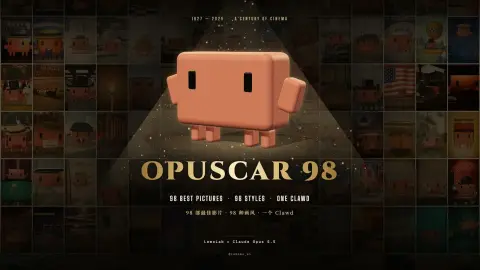
The agent works from three guides: `DIRECTOR.md` covers story, sound, rhythm, camera, performance and self-checks, `TECHNIQUE.md` covers frame-by-frame rendering, voice, music and mixing, and each `styles/<style>/STYLE.md` describes what that style looks and sounds like while leaving the story to you. Before starting it asks once about anything it cannot decide, whether you have your own voice, music or material, and whether you want to see a storyboard of key shots first. The styles are grouped into families such as Edit & Documentary, Evidence Films (built from real footage, documents and data, every number sourced), Hand-drawn & Painting, East Asian Traditions, Print & Printmaking and Graphic & Type.

A "make a style your own" flow turns a library style into a personal one, or builds a new one from a description or a reference picture: the agent plans the changes one question at a time, renders a style frame beside the original, then makes a 15 to 30 second demo film, and kept styles live in `~/lemo-my-styles/` where updates never touch them. The README warns that the styles are tuned for Claude Opus 5.5 and other models may not reproduce them well, and that a film takes an agent about 30 to 60 minutes and a fair amount of tokens. Code and docs are MIT; the demo films and their stills are CC BY 4.0, apart from three voice tracks the README excludes.
What it does
- 59 ready-made film styles, each a STYLE.md style prompt plus a demo film made in code, browsable in an online gallery
- Director and technique guides that make the agent plan story, camera, rhythm and sound and check its own work
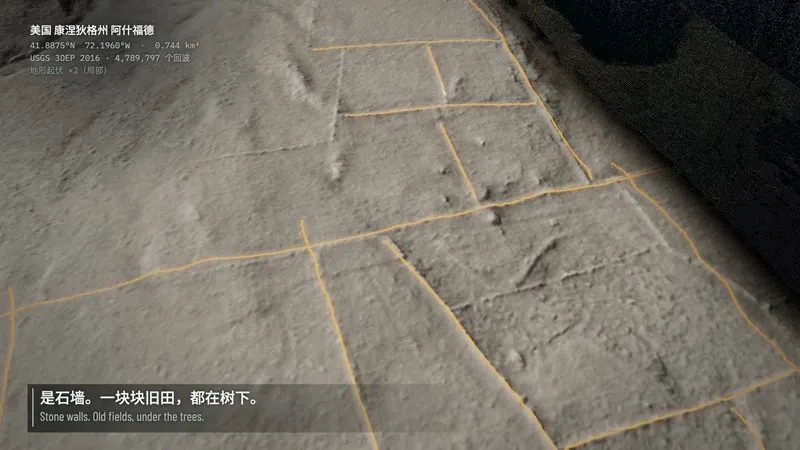
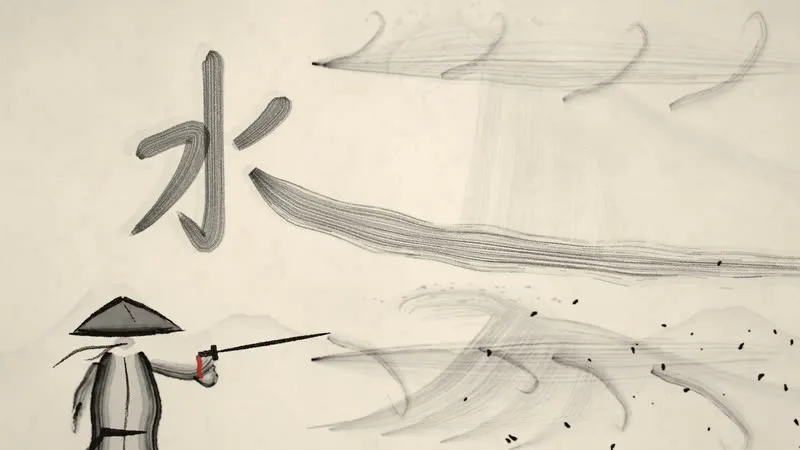
- Picture, music and narration all produced by code: canvas and WebGL frames, scores from free sample libraries, and text-to-speech voices
- An optional storyboard stop that renders the key shots in the real style before the full film
- A make-it-your-own flow that adapts a library style or starts from a blank page, shows a side-by-side style frame and a demo film, and saves the result to ~/lemo-my-styles
- Installs as a Claude Code plugin; the skill folder can be copied into other agents' skills directories
Getting started
You need Node 20+, ffmpeg and Python 3.11+ (or uv); the agent installs the rest. Default output is 1920×1080 at 24 fps, with other sizes on request.
Install the plugin (recommended)
Add the LemoLab marketplace and install the plugin from your terminal. On first use it downloads the guides, tools and style prompts to `~/lemo-opuscar`, and each film's project goes in the folder you started from. For other agents, copy `plugin/skills/lemo-opuscar/` into their skills folder.
claude plugin marketplace add lemomo-ai/lemo-opuscar
claude plugin install lemo-opuscar@lemolab
Or clone the repository
Working inside a clone, films go into `films/<name>/` in the repo.
git clone https://github.com/lemomo-ai/lemo-opuscar.git
cd lemo-opuscar
claude
Ask for a film in a named style
Name a style in English or Chinese (the style index lists them all) and describe the film. Typing `/lemo-opuscar:lemo-opuscar` on its own starts a guided menu instead: a film in a library style, making a style your own, or a film in a saved style.
Make a 45-second film in the watercolor style about the coffee farm my family runs. Warm female narrator.Update or uninstall
Update the plugin and restart Claude Code; the library in `~/lemo-opuscar` updates itself on the next film. Your own styles in `~/lemo-my-styles/` survive updates and uninstalls.
claude plugin marketplace update lemolab && claude plugin update lemo-opuscar@lemolab
claude plugin uninstall lemo-opuscar@lemolab
Commands and code are distilled from the project's own documentation — always check the official repo for the latest.
When to use it
- Turn a topic or story into a narrated short film in a distinct visual style without a video generation model
- Make data-driven explainers in the Evidence Films styles, built from real footage, documents and public data
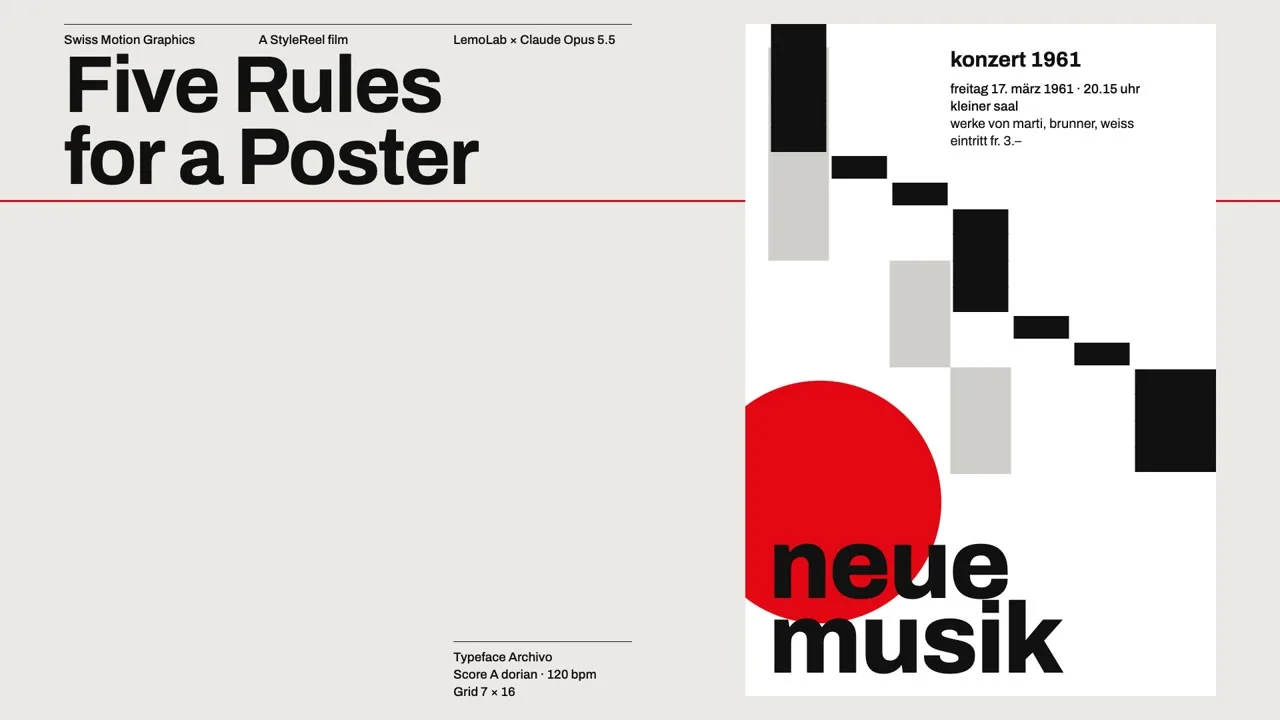
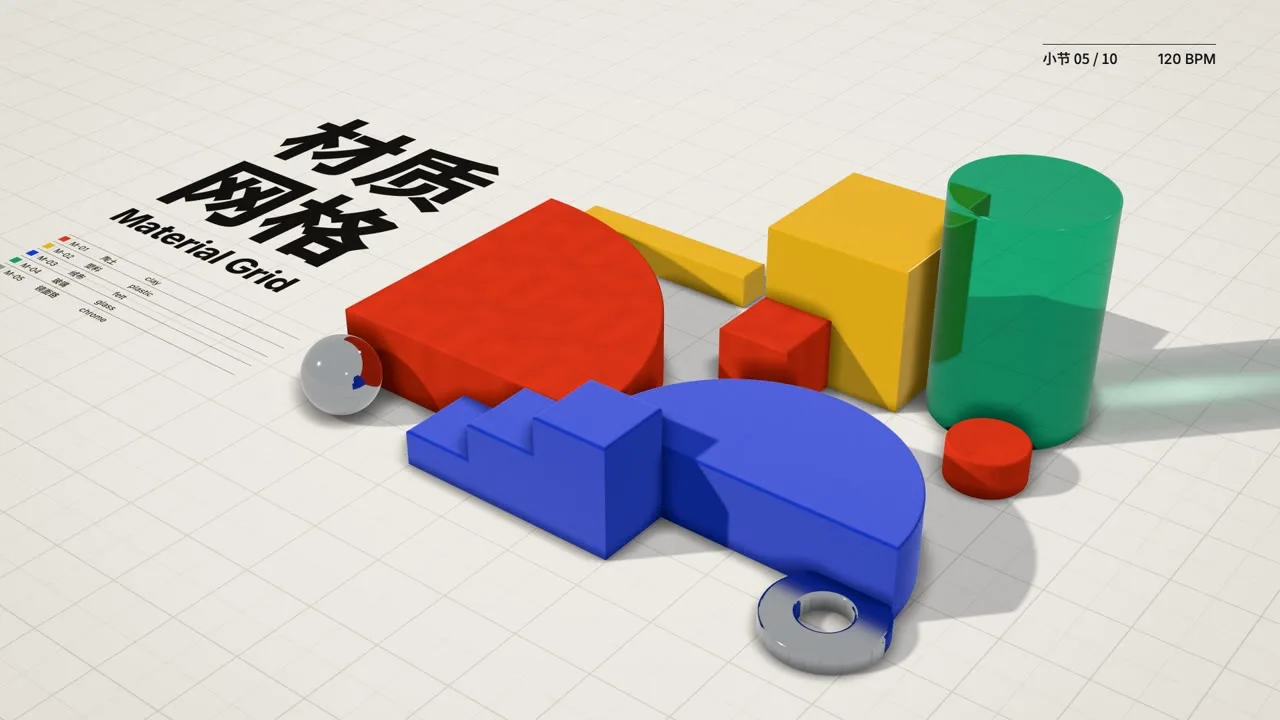
- Build a channel or brand look of your own from a library style and reuse it for every later film
How Lemo-Opuscar compares
Lemo-Opuscar alongside other open-source video generation tools AI/TLDR tracks, ranked by GitHub stars.
| Tool | Stars | What it does |
|---|---|---|
| MoneyPrinterTurbo | ★ 143k | A self-hosted WebUI, API and CLI that turns one topic or keyword into a finished short video — script, stock or generated footage, voiceover, subtitles and music. |
| HyperFrames | ★ 83.2k | HeyGen's HTML-to-video renderer: author a composition in HTML, CSS and JS, preview it in a browser, then render the same input to a deterministic MP4 locally or on AWS Lambda. |
| OpenMontage | ★ 79.9k | An agentic video production system that gives a coding assistant 12 pipelines and 100+ tools to research, script, generate and render a video end to end. |
| Open Generative AI | ★ 34.2k | MIT-licensed desktop and web studio for AI image, video and lip-sync generation that runs hosted models through the Muapi.ai API, with optional local image models in the desktop app. |
| Hypit | ★ 29.5k | A markup language and compiler that lets a coding agent rebuild a reference video as an editable workflow — footage, captions, B-roll and effects anchored to words rather than timestamps — and render variants in one command. |
| Toonflow | ★ 21.5k | Infinite-canvas workbench for AI short-drama production, taking a novel through chapter events, script, storyboards and video nodes. |
| Lemo-Opuscar | ★ 15.1k | A Claude Code skill and library of 59 film styles that has a coding agent direct, draw, score and render a short film entirely in code, with no video model |
| waoowaoo | ★ 14.8k | Self-hosted creative workspace for AI image and video: a canvas holding references and generated assets, a side Assistant that develops the brief, and model-aware controls over your own OpenRouter key. |