In plain English
To do semantic search, you first have to turn text into embeddings — lists of numbers that capture meaning. The usual way to do that locally is to load an embedding model with a deep-learning framework like PyTorch. That works, but PyTorch is heavy: gigabytes of dependencies, slow cold starts, and a GPU it would love to use. For a small service whose only job is "text in, vector out," that is a lot of luggage to carry.
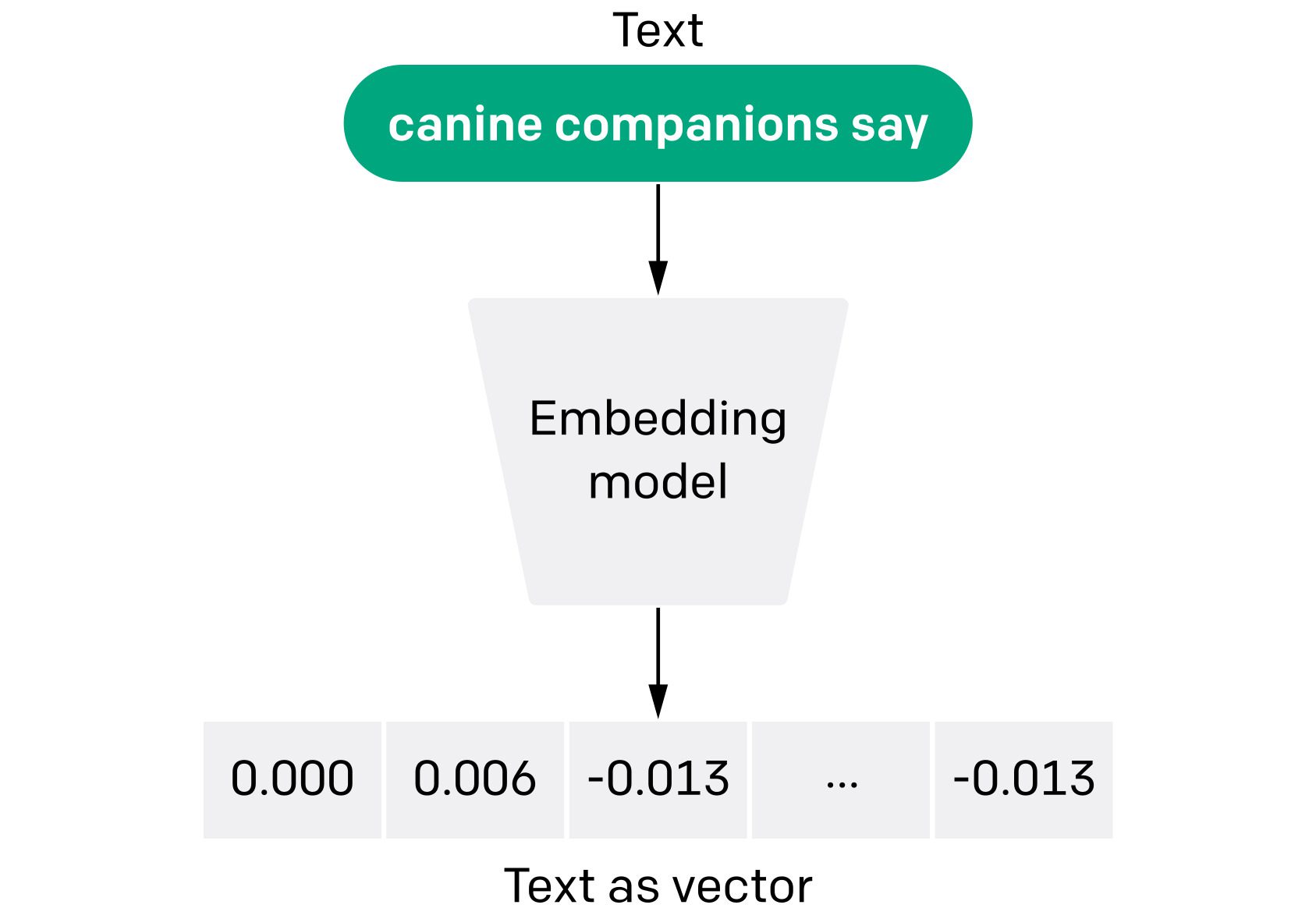
FastEmbed is a lightweight Python library from Qdrant that does exactly that one job — embeddings (and reranking) — without dragging in PyTorch. Instead of a full training framework, it runs the model through ONNX Runtime, a small, fast engine built only for running already-trained models. You get the same vectors, with a fraction of the install size and a much quicker startup.
Think of it like the difference between a full professional kitchen and a good electric kettle. PyTorch is the kitchen: it can cook anything, including training brand-new models, but you have to install and power the whole thing. FastEmbed is the kettle: it does one task — boil water, i.e. produce embeddings — and it does it instantly, on a tiny counter, with no special wiring. When all you need is hot water, you don't install a kitchen.
Why it matters
Generating embeddings is one of the most common operations in modern AI apps — every RAG pipeline embeds documents during ingestion and embeds every query at search time. How you run that step decides how cheap, fast, and portable your whole service is. FastEmbed exists to make that step small.
- Tiny install footprint. A PyTorch-based embedding stack can pull in several gigabytes of dependencies. Replacing the framework with ONNX Runtime cuts that down to a small, dependency-light install — which matters when your container image, build time, and disk all cost money.
- Fast cold starts. Heavy frameworks are slow to import. A lighter library imports and is ready in a flash, which is the difference between a serverless function that responds quickly and one that times out on its first request.
- Good CPU performance. ONNX Runtime is heavily optimized for CPU inference. You don't need a GPU to embed text at a reasonable speed, so you can run embeddings on ordinary, cheap compute.
- Serverless-friendly. Small + fast-starting + CPU-only is exactly the profile that fits inside an AWS Lambda, a Cloud Function, or an edge container — places where a multi-gigabyte PyTorch install simply won't fit or won't start in time.
Who should care? Anyone shipping embeddings to production who does not want to operate a GPU or babysit a heavyweight ML stack. If you call a hosted embedding API (OpenAI, Voyage, Cohere), you already avoid this problem — but you pay per token, send your text to a third party, and depend on their uptime. FastEmbed is the middle path: run a solid open embedding model yourself, locally, cheaply, without the framework tax. You trade the absolute top-tier model quality of a frontier API for control, privacy, and near-zero marginal cost.
How it works
The key idea is a clean split between training a model and running it. Training needs a flexible, heavy framework (PyTorch, TensorFlow). But once a model is trained, running it forward — taking input, producing an output — is a fixed sequence of math operations. ONNX (Open Neural Network Exchange) is a standard file format for that frozen, ready-to-run model, and ONNX Runtime is a lean engine that executes it efficiently. FastEmbed ships embedding models in ONNX form and runs them through ONNX Runtime, so PyTorch never enters the picture.
- Full training framework installed
- Multi-gigabyte dependencies
- Slow import / cold start
- Wants a GPU to shine
- Great for training + research
- Inference-only runtime
- Small, light install
- Fast import / cold start
- Optimized for CPU
- Great for serving in production
What happens on each call
When you ask FastEmbed to embed text, it runs a short pipeline. The model files are downloaded and cached the first time, then reused. Your text is tokenized (split into the integer tokens the model expects), fed through the ONNX model, and the output vectors are returned — ready to store in a vector database or compare for similarity.
In code, that whole pipeline is a few lines. You pick a model by name, create the embedder once, and call embed() — which streams back one vector per input. The first run pulls the ONNX model from the hub and caches it locally; later runs are instant.
from fastembed import TextEmbedding

# Model is downloaded + cached on first use; no PyTorch involved.
embedder = TextEmbedding(model_name="BAAI/bge-small-en-v1.5")

docs = [
    "Refunds on physical items are accepted within 30 days.",
    "Digital goods are non-refundable once downloaded.",
]

# embed() returns a generator of numpy vectors, one per input.
vectors = list(embedder.embed(docs))

print(len(vectors), "vectors")
print(vectors[0].shape) # e.g. (384,) for a small modelMore than plain text embeddings
FastEmbed is not only dense text embeddings. The same lightweight ONNX approach covers several model types you reach for in a real search system, which is why it slots so cleanly into a hybrid search pipeline.
| Model type | What it produces | Used for |
|---|---|---|
| Dense text embeddings | One vector per text capturing meaning | Semantic similarity search |
| Sparse embeddings | A few weighted term scores (e.g. SPLADE) | Keyword-aware hybrid retrieval |
| Reranking (cross-encoder) | A relevance score for a query+doc pair | Re-ordering the top candidates |
| Image / multimodal | Vectors for images alongside text | Image and cross-modal search |
That mix matters because the strongest production retrieval rarely uses dense vectors alone. A common pattern is: retrieve broadly with dense + sparse embeddings, merge the candidates, then run a reranker to sharpen the final order. FastEmbed can supply all three stages from one small library — no separate PyTorch service for the reranker, no third-party API call in the loop.
When to reach for FastEmbed (and when not to)
FastEmbed is a sharp tool for a specific shape of problem, not a universal default. The decision usually comes down to where the work runs and how good the embeddings must be.
Good fits
- Serverless and edge functions where install size and cold-start time are strict limits.
- Cost-sensitive batch ingestion — embedding millions of chunks locally on CPU instead of paying an API per token.
- Privacy-sensitive data that should never leave your own infrastructure.
- Offline or air-gapped environments where calling a hosted API isn't an option.
- Anyone already on Qdrant, since FastEmbed is the path-of-least-resistance way to feed it vectors.
Reach for something else when…
- You need the absolute best retrieval quality and a frontier hosted embedding model measurably beats the open models FastEmbed offers — quality can outweigh the framework savings.
- You require a specific model not available in ONNX form — FastEmbed supports a curated set, not every model on the hub.
- You already run a GPU-backed serving stack for other models; adding embeddings there may be simpler than a second runtime.
- You want zero infrastructure at all — a fully hosted embedding API removes even the small operational surface FastEmbed has.
Going deeper
Once the basics click, a few nuances separate a quick demo from a solid production setup.
Model selection is the real tradeoff. The library is light, but the model you pick decides everything: vector dimension, language coverage, speed, and accuracy. A small model embeds quickly and stores cheaply but captures less nuance; a larger model is more accurate but slower and produces bigger vectors that cost more to store and search. Pick the smallest model that passes your retrieval evaluation — don't just grab the biggest one. Whatever you choose, you must use the same model for ingestion and for queries; mixing models produces vectors that aren't comparable. Switching later means re-embedding your whole corpus, an embedding-model migration.
ONNX has limits. A model has to be exported to ONNX before FastEmbed can serve it, so support is a curated list, not the entire model hub. Some exotic architectures don't convert cleanly. If your must-have model isn't available as an ONNX build, FastEmbed can't run it — that's the price of skipping the general-purpose framework.
Squeeze the CPU. ONNX Runtime supports execution providers and quantization — running the model in lower numeric precision (such as 8-bit integers) to shrink it and speed it up further, usually with only a small accuracy cost. For high-throughput batch ingestion this can meaningfully cut both time and memory. There is also a GPU-enabled variant if you do have accelerators and want maximum throughput.
Batch, don't loop. Calling the embedder once per document in a Python loop wastes the runtime's ability to process many inputs together. Pass a list (or stream a generator) and let it batch internally. For very large corpora, embed in chunks and write to your store as you go, rather than building one giant in-memory list.
The durable lesson: FastEmbed wins by removing weight, not by being a smarter model. It runs the same open embedding models other tools do, just through a lean inference engine instead of a training framework. So treat it as plumbing — choose the right model and evaluate retrieval quality with the same care you'd give any embedding pipeline, then enjoy the small footprint as a bonus.
FAQ
What is FastEmbed used for?
FastEmbed turns text (and images) into embedding vectors for semantic search, RAG ingestion, and reranking. It is a lightweight Python library from Qdrant that runs embedding models through ONNX Runtime, so you can generate vectors locally and cheaply without installing PyTorch.
Why does FastEmbed not need PyTorch?
It runs models through ONNX Runtime, a small engine built only to run already-trained models, instead of PyTorch, which is a full training framework. The embedding models are shipped in the ONNX format, so all FastEmbed has to do is execute them — which is why the install is small and CPU inference is fast.
Is FastEmbed only for Qdrant?
No. It is built by the Qdrant team and pairs naturally with the Qdrant vector database, but it is a standalone library. The vectors it produces are plain numbers you can store in any vector store or compare yourself.
Does FastEmbed run on CPU or do I need a GPU?
It is optimized for CPU and runs well without any GPU, which is the main point — that is what makes it serverless-friendly. There is also an optional GPU-enabled variant if you have accelerators and want higher throughput for very large batches.
How does FastEmbed compare to a hosted embedding API?
A hosted API (like OpenAI, Voyage, or Cohere) offers top-tier models with zero infrastructure, but you pay per token, send your text to a third party, and depend on their uptime. FastEmbed runs open models yourself: lower marginal cost, full privacy, and offline use, in exchange for managing a small local runtime and possibly slightly lower model quality.
Can FastEmbed do reranking, not just embeddings?
Yes. Alongside dense text embeddings it supports sparse embeddings and cross-encoder rerankers, all through the same ONNX approach. That lets one small library cover a full hybrid-search pipeline: dense plus sparse retrieval, then reranking the top results.