In Plain English
Voice cloning is an AI technique that captures the unique acoustic fingerprint of a person's voice — pitch, cadence, accent, breathiness, resonance — from a short audio sample, and uses it to synthesise new speech that sounds like that person saying anything you type.
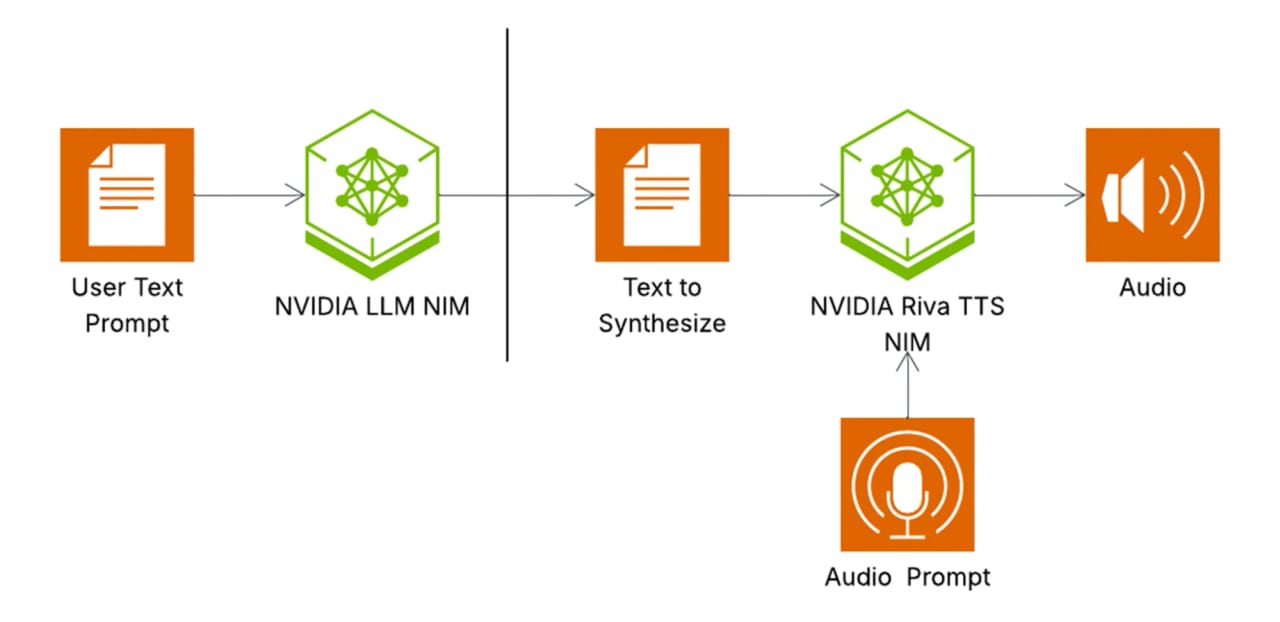
Think of it like a really good impressionist. A skilled human impressionist listens to a celebrity for a few minutes, internalises the way they shape vowels and run their words together, then can ad-lib new sentences in that style. An AI voice cloner does the same thing, but computationally, in seconds, and with far higher accuracy.
The key word today is zero-shot. Older systems needed hours of recordings and a dedicated fine-tuning run for every new speaker. Modern zero-shot models see a voice for the first time at inference and adapt on the fly — no retraining required. ElevenLabs Instant Voice Cloning, for example, works from as little as one to five minutes of audio and has no training step at all; the reference clip is used as a live conditioning signal during generation.
Why It Matters
Before zero-shot cloning, voice content had two modes: expensive studio recording, or robotic TTS. Neither scaled. The arrival of fast, few-shot cloning opened a third option: high-quality, human-sounding speech derived from a small reference sample, generated programmatically.
Legitimate use-cases that weren't previously feasible
- Accessibility and voice banking: people with ALS, throat cancer, or progressive conditions can record their voice while it is still healthy, then speak through that synthetic voice later via an AAC device.
- Dubbing and localisation: film studios are cutting dubbing costs by keeping an actor's voice identity across 30+ languages without re-hiring or re-recording the original talent.
- Content creators and e-learning: a course author clones their own voice once, then generates all narration by typing — updates take seconds instead of booking a studio.
- Post-production reshoots: a director can insert a corrected line of dialogue without recalling the actor for a new session.
- Gaming and interactive media: one real actor's performance powers thousands of procedurally generated NPC lines.
At the same time, the same capability that makes voice cloning genuinely useful also makes it the engine behind a surge of fraud. The FTC reported AI voice scams cost Americans an estimated $2.7 billion in 2023, a figure that ballooned in 2024 as tools became cheaper and more accessible. Understanding how the technology works is the first step to using it responsibly — and to building defences against misuse.
How It Works
A voice cloning pipeline has three conceptual stages: speaker encoding (extract what makes this voice unique), acoustic modelling (generate the sound pattern for new text in that voice), and vocoding (convert that pattern into audible audio). Modern end-to-end architectures blur these boundaries, but the three jobs remain.
Stage 1 — Speaker encoding
The speaker encoder listens to the reference clip and compresses it into a compact vector — typically 256 dimensions — that captures pitch range, formant frequencies, spectral envelope, and prosodic tendencies. Early systems used LSTM stacks trained with a generalised end-to-end (GE2E) loss to make same-speaker embeddings cluster together while different-speaker embeddings push apart. More recent models use Transformer encoders. The critical property is generalisation: the encoder must produce a useful embedding for speakers it never saw during training.
Stage 2 — Acoustic modelling
The acoustic model takes the text (as phonemes or character tokens) and the speaker embedding, and predicts a mel-spectrogram — a 2D heatmap of frequency over time that is a compact representation of the intended audio. Classic approaches used Tacotron 2 or FastSpeech 2 as the backbone. Contemporary systems split into two camps:
- Autoregressive (AR) — predict one frame at a time using an LLM-style decoder (e.g., VALL-E, XTTS v2 with its GPT2-based token predictor). Highly expressive but slower and sometimes unstable on long utterances.
- Non-autoregressive with flow matching — generate the full spectrogram in a small number of denoising steps using a Diffusion Transformer backbone (e.g., F5-TTS, E2-TTS). Faster, more stable, strong zero-shot quality. F5-TTS uses the DiT architecture together with HiFi-GAN for decoding.
- End-to-end variational — VITS combines a VAE and normalising flows to unify acoustic and vocoder stages in one model, learning a latent space that jointly represents speaker identity and content.
Stage 3 — Vocoding
The vocoder converts the intermediate mel-spectrogram (or audio tokens) into a playable waveform. HiFi-GAN is the current workhorse — it uses a generative adversarial network to produce near-transparent quality at real-time speeds. WaveRNN and BigVGAN are alternatives used in some production systems. The vocoder is often speaker-agnostic; all voice identity is encoded upstream, so a single vocoder can serve any cloned voice.
Tools and Tradeoffs
The landscape splits roughly into commercial APIs (fast, polished, consent-gated, per-character pricing) and open-source models (self-hosted, no ongoing cost, more effort to operate).
| Tool | Type | Min. reference audio | Zero-shot? | Notable trait |
|---|---|---|---|---|
| ElevenLabs Instant Clone | Commercial API | ~1 min | Yes | 32+ languages; strict consent verification |
| ElevenLabs Professional Clone | Commercial API | 30+ min | No (fine-tune) | Near-broadcast quality for audiobooks/ads |
| F5-TTS | Open source (MIT) | ~10 sec | Yes | Flow matching DiT; strong naturalness benchmarks |
| XTTS v2 (Coqui) | Open source (CPML) | ~6 sec | Yes | GPT2 decoder; good streaming support |
| OpenVoice v2 | Open source (MIT) | ~10 sec | Yes | Flexible tone/style control |
| Resemble AI | Commercial API | ~3 min | Yes | Built-in watermarking + detection tools |
The instant vs. professional cloning tradeoff
Instant cloning uses the reference audio as a conditioning signal at inference time — the model weights never change. This is fast and requires minimal audio, but the ceiling is lower because the model must generalise. Professional (fine-tuned) cloning updates a subset of model weights on the speaker's audio, which can produce near-indistinguishable results for a single speaker. The tradeoff is cost (more audio, more compute) and latency (results take minutes to hours, not seconds).
For most developer use-cases — narrating articles, multilingual dubbing, accessibility tools — instant cloning is more than sufficient. Professional cloning makes sense for brand voice assets, audiobooks, and situations where you will generate millions of characters from one identity.
Ethical and Legal Lines
Voice cloning is one of the clearest examples of a technology that is simultaneously a powerful assistive tool and a dangerous weapon, depending entirely on whether consent was obtained.
The consent rule
Using voice cloning with explicit, informed consent from the voice owner — for purposes the person agreed to — is generally legal in most jurisdictions. Cloning someone's voice without their consent is increasingly a criminal or civil matter. There is no grey area in the middle: if the person whose voice you are cloning did not agree, do not do it.
Legal landscape (2024-2026)
- Tennessee ELVIS Act (effective July 1, 2024) — the first U.S. law specifically targeting AI voice cloning. It extends personality rights to AI-generated voice replicas, prohibits unauthorised digital replication of a person's voice for commercial purposes, and makes violations a Class A misdemeanour. Named after Elvis Presley, it was designed to protect musicians from deepfake covers.
- FCC robocall ban (February 2024) — the FCC ruled that AI-generated voices in robocalls violate the Telephone Consumer Protection Act. A political operative was fined $6 million for commissioning fake Biden robocalls sent to New Hampshire voters.
- FTC impersonation rule (2024) — the FTC expanded its impersonation rules to explicitly prohibit using AI voices to impersonate individuals, businesses, or government agencies for fraudulent purposes.
- NO FAKES Act (proposed federal) — bipartisan legislation that would create a federal civil right against producing nonconsensual digital replicas of a person's voice or likeness in sound recordings or audiovisual works, with First Amendment carve-outs for commentary, parody, and criticism.
The fraud problem
Voice cloning is the engine behind two of the fastest-growing fraud categories: family emergency scams (a cloned voice of a relative calls claiming to be in trouble and asking for money) and CEO fraud / business email compromise (a cloned voice of an executive calls a finance team member to authorise a wire transfer). Deepfake fraud surged 3,000% in 2024. The FTC launched a public voice cloning challenge to find detection and watermarking solutions.
Platform-level safeguards
Responsible commercial platforms implement several mitigations. ElevenLabs requires users to record a live consent phrase before cloning any voice that is not their own. Resemble AI embeds an inaudible cryptographic watermark in every generated clip to enable provenance tracing. Some platforms apply automated deepfake detection to flag suspicious outputs. These measures do not eliminate risk — open-source models have no such controls — but they raise the barrier for casual misuse.
Going Deeper
If you are building with voice cloning rather than just using it, a few advanced topics become important quickly.
Emotion and prosody control
Early cloning models reproduced a speaker's average emotional state from the reference clip. Newer architectures add explicit emotion or style conditioning — you can pass a vector or a label (cheerful, sad, urgent) to shift prosody while keeping identity. OpenVoice v2 separates tone, emotion, accent, and rhythm into independently controllable style axes. This matters for use-cases like audiobook narration or interactive NPCs where a single voice must cover a wide dramatic range.
Real-time and streaming cloning
Live conversation use-cases — voice agents, real-time dubbing, assistive communication — require low latency. Autoregressive models struggle here because each token depends on the last. Non-autoregressive models with streaming chunk output (generate the first 200ms, send it while generating the next) can achieve end-to-end latency under 300ms. XTTS v2 has built-in streaming support; ElevenLabs offers a websocket streaming API for real-time generation.
Detection and watermarking
As voice cloning improves, so does the detection arms race. Acoustic forensics tools look for spectral artefacts left by vocoders, unnatural micro-pause distributions, and phase discontinuities that human voices do not produce. Watermarking approaches (like Resemble AI's or AudioSeal from Meta) embed imperceptible patterns at generation time that survive compression and light editing, providing cryptographic provenance even after the audio is processed. The FTC's voice cloning challenge (2024) focused specifically on identifying these detection and watermarking approaches at scale.
Multilingual transfer
One of the most commercially compelling properties of modern voice cloning is cross-lingual transfer: the cloned voice speaks a language the original speaker does not know, while retaining their vocal identity. ElevenLabs supports 32+ languages from a single English reference clip. The model disentangles linguistic content from speaker identity, substitutes the target-language phoneme sequence, and re-synthesises with the original voice's embedding. The result sounds like the person speaking that language fluently — though with a slight accent drift that improves as models get larger.
FAQ
How much audio do you need to clone a voice?
With modern zero-shot models, as little as 10–30 seconds of clean audio can produce a recognisable clone. One to five minutes gives noticeably better results. Professional fine-tuned cloning (which actually updates model weights) benefits from 30 minutes or more of studio-quality recordings.
Is AI voice cloning legal?
It depends on consent and use. Cloning your own voice, or a voice you have explicit written consent to clone, for agreed purposes is generally legal. Cloning someone else's voice without consent is increasingly illegal — Tennessee's ELVIS Act (2024) makes it a misdemeanour, and the FCC banned AI voices in robocalls. Federal legislation (the NO FAKES Act) is pending. Always obtain written consent and consult local law for commercial uses.
Can I tell if audio has been voice-cloned?
Often, but not reliably with the human ear alone. Forensic tools look for vocoder artefacts, unnatural spectral patterns, and micro-timing anomalies. Watermarking systems (like Meta's AudioSeal or Resemble AI's watermark) embed machine-readable provenance signals. For high-stakes verification, use specialised deepfake detection software rather than trusting your ears.
What is the difference between instant and professional voice cloning?
Instant cloning uses the reference audio as a real-time conditioning signal — no model weights change, results are available in seconds, and quality is high but not perfect. Professional cloning fine-tunes a subset of model weights on your specific speaker, producing near-broadcast quality but requiring more audio (30+ minutes) and a training run that can take minutes to hours.
Can voice cloning reproduce emotion and accent?
Yes. Speaker encoders capture prosodic patterns including typical pitch range and emotional colouring from the reference clip. Modern systems like OpenVoice v2 add explicit emotion and style controls on top of identity, letting you shift between cheerful, neutral, and dramatic delivery while keeping the same voice. Accent is also largely preserved, and cross-lingual models can carry a speaker's characteristic resonance into other languages.
What should I do if I receive a suspicious call that might be a cloned voice?
Hang up and call the person back on a number you already have stored. Agree on a safe-word or challenge question with close family members in advance. The FTC recommends never wiring money or sharing sensitive information based solely on a voice call you did not initiate, no matter how convincing the voice sounds.