In plain English
A world model is an AI system that learns an internal simulation of how some environment behaves — how it looks, and crucially how it changes when something acts on it. Give it the current state of the world plus an action, and it predicts the next state. Do that over and over and you can roll the world forward in your head, like a daydream you can steer.
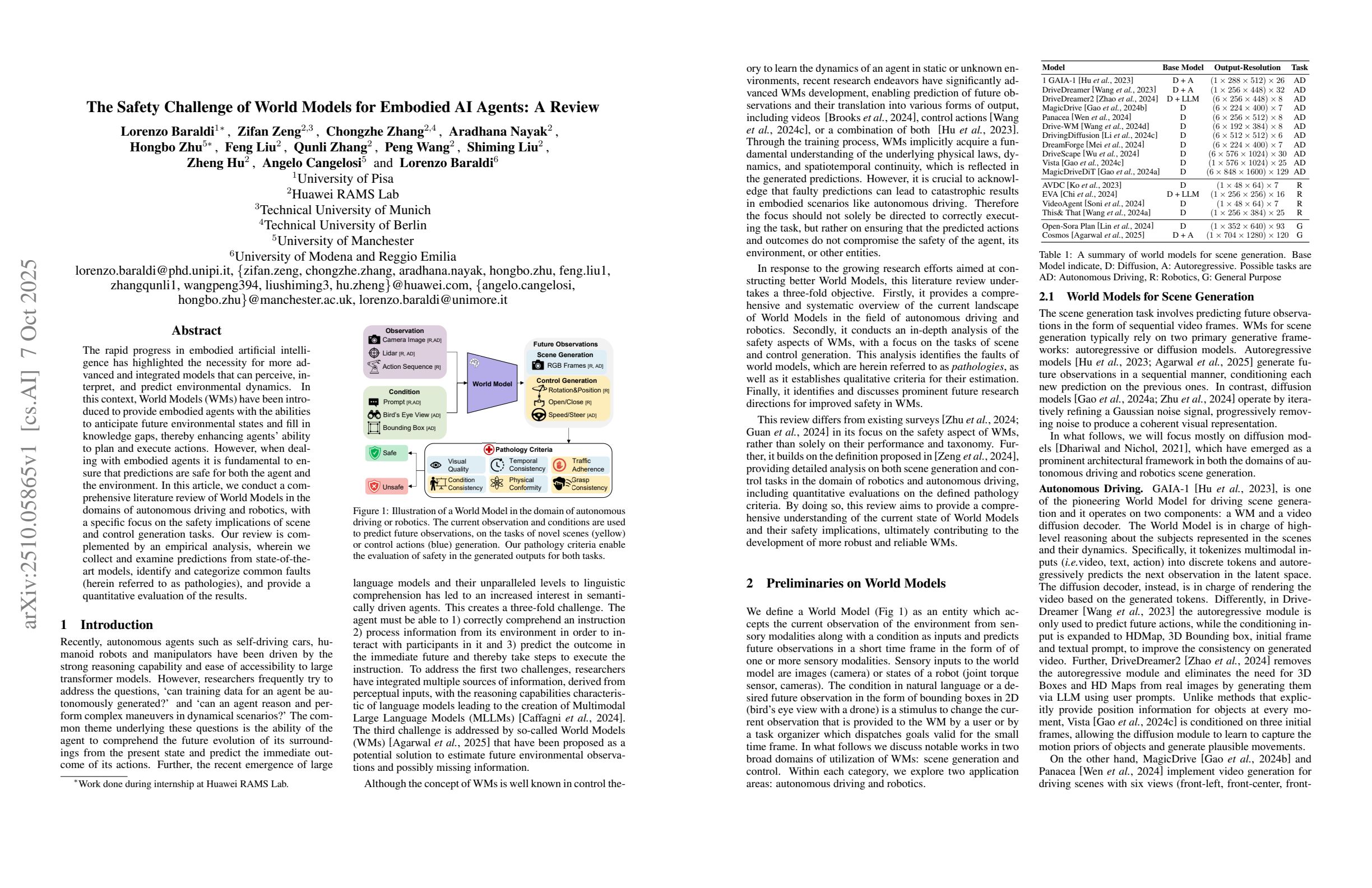
Here is the everyday version. When you reach for a coffee cup, your brain runs a tiny prediction first: if I move my hand here, the cup ends up there. You don't physically try every possible motion — you imagine a few and pick the one that works. That mental "if I do X, then Y happens" engine is a world model. AI researchers build the same thing in software: a model that has watched enough of an environment to guess what comes next.
The key word is controllable. A plain video generator produces a clip and hands it to you finished — pretty, but fixed. A world model is something you can act inside: at each step you feed in an action (turn left, push the block, accelerate) and it returns the next moment that follows from that action. It is less like a movie and more like a playable, learned game engine that nobody hand-coded.
Why it matters
A world model matters because planning needs a place to think. If an AI can simulate consequences before acting, it can try a hundred imagined futures, keep the good one, and only then move in the real world. That is the difference between an agent that blunders forward and one that looks before it leaps.
- Robotics. Real robots are slow, fragile, and expensive to crash. A world model lets a robot rehearse a grasp or a step thousands of times in simulation, then attempt the best plan once for real — far cheaper than learning by breaking things.
- Sample efficiency. Pure trial-and-error learning needs millions of real interactions. An agent that learns a world model can generate its own practice data by imagining rollouts, so it learns useful behaviour from far less real experience.
- Planning and reasoning. Search and planning algorithms need a function that answers "what happens if I do this?". A world model is that function, learned from data instead of written by hand — so it works in messy environments nobody could hand-code.
- Generalization beyond seen frames. Because it captures the rules of an environment (objects persist, things fall, momentum carries) rather than memorizing clips, a good world model can predict situations it never saw exactly, the way you can imagine a chair you've never sat in.
Who cares? Anyone building agents that act in the world: robotics teams, self-driving researchers, game-AI developers, and the labs chasing systems that plan rather than just react. It also reframes a hot debate — whether today's video generators have quietly started learning physics. A model that can render water splashing and shadows moving correctly has, in some partial sense, absorbed a world model, even if that was never the goal.
How it works
Most world models share a three-part shape, made famous by the 2018 paper: compress what you see, predict what comes next, and let a small controller act on those predictions. Think of it as perception → imagination → decision.
1. Encode the world into a latent state
Raw pixels are huge and full of irrelevant detail. The first component is an encoder that squeezes each observation into a small vector — a latent state — that keeps the meaningful bits (where the car is, which way it faces) and throws away the rest. This is the same idea behind embeddings: turn a rich input into a compact list of numbers a model can reason over.
2. Learn the dynamics: predict the next state
The heart of a world model is the dynamics model. It is trained on sequences — state, action, next state — to answer one question: given where things are now and what I do, where do things end up? Train it on enough recorded experience and it learns the environment's rules implicitly. Crucially it predicts in the compact latent space, not in pixels, so rolling many steps forward is cheap.
3. Plan or act inside the imagination
Once you can roll the world forward, planning becomes search over imagined futures. A controller (or a search algorithm) proposes actions, the dynamics model predicts the outcomes, and the agent keeps whichever imagined trajectory scores best — then executes the first real action and repeats. In the 2018 paper the agent trained its controller entirely inside the learned model and only later transferred to the real game, because practising in imagination is essentially free.
World model vs video generation
This is the comparison the hype usually blurs. A video generator and a world model can look identical on screen — both produce realistic, physics-respecting frames. The difference is control and purpose.
| Aspect | Video generator | World model |
|---|---|---|
| Main goal | Produce a beautiful clip | Predict how a world evolves |
| Your input | A prompt, then watch | An action at every step |
| Steerable mid-stream? | No — clip is rendered whole | Yes — you act and it responds |
| Used for | Content, film, marketing | Planning, robotics, agents |
| Success measure | Looks realistic to a human | Predicts the right next state |
| Reward / action signal | Usually none | Central — you can act and score |
Put simply: a video generator is a director that hands you a finished scene; a world model is a sandbox you can poke. Many modern systems blur the line — a controllable, action-conditioned video model that lets you steer frame by frame is edging toward a world model. The honest test is whether you can act inside it and get a sensible, consistent response, not just whether the pixels look good.
Where world models show up
World models are not one product — they are a pattern that recurs wherever an agent must act under uncertainty. A few concrete settings make the idea less abstract.
- Game environments. Learn a playable model of a game from frames and controller inputs, then train or test agents inside it without the real game running. This is the cleanest demonstration: the model literally becomes a neural game engine.
- Robotics and manipulation. A robot learns how its own body and nearby objects move, then plans grasps and motions in imagination before touching anything fragile or costly.
- Self-driving and navigation. Predict how other cars, pedestrians, and the road will evolve over the next few seconds so the planner can choose a safe action now.
- Model-based agents. General agents that combine a world model (for what will happen) with a policy (for what to do) — a recipe that often learns far faster than pure trial and error. See how this connects to AI agents.
Notice the common thread: in every case the value comes from predicting consequences cheaply. The environment is expensive, slow, or dangerous to interact with for real, so the agent builds a fast learned stand-in and does its expensive thinking there.
Common misconceptions
Because the term is hyped, it collects misunderstandings. Clearing these up is most of what it means to actually understand world models.
- "A world model is just a fancy video generator." No — the defining feature is that you can take actions inside it and it responds consistently. Visual realism is a nice side effect, not the point.
- "It contains a true physics engine." Not literally. It learns statistical regularities that often match physics, but it can be confidently wrong, especially in situations far from its training data. Treat it as a learned approximation, never ground truth.
- "Bigger and prettier means better." For planning, what matters is predictive accuracy of the next state, not photorealism. A blurry model that predicts the right outcomes beats a gorgeous one that drifts off the rails after a few steps.
- "World models are brand new." The core idea — learn a model of the environment, then plan inside it — is decades old in control theory and reinforcement learning. What is new is doing it at scale, from raw pixels, with deep networks.
Going deeper
Once the basics click, the interesting questions are about what to model, how far to roll forward, and how to keep imagination honest. A few directions worth knowing.
Latent vs pixel prediction. Predicting in a compact latent space (rather than reconstructing every pixel) is what makes long imagined rollouts affordable and stable. Modern model-based agents lean hard on this: the model never bothers to draw the world in full detail, it only tracks the variables that matter for deciding what to do next.
Recurrence and memory. Real environments have hidden state — things you can't see this frame but that still matter (a ball behind a wall). Strong world models carry a recurrent memory so the latent state summarizes history, not just the current image. This is why the 'Memory' component sits at the center of the classic design.
The connection to LLMs. Some researchers argue a large language model trained to predict the next token has, in effect, learned a world model of text and the concepts behind it — an internal simulation of how described situations unfold. Whether next-token prediction yields a genuine world model or a shallow imitation of one is among the liveliest open debates in AI, and it sits right next to the broader question of what multimodal models truly understand.
Open problems. Three hard ones persist. Compounding error limits how far ahead you can plan. Distribution shift means the model is reliable only near states it has seen — novel situations break it quietly. And evaluation is genuinely hard: a world model can look stunning frame by frame while being useless for planning, because looking right and predicting right are different things. The durable lesson is the one from the very first paper: the win comes from being able to practise in imagination, so the value of a world model is measured by how well decisions made inside it survive contact with the real world.
FAQ
What is a world model in AI, in simple terms?
A world model is an AI that learns an internal simulation of an environment — given the current situation and an action, it predicts what happens next. It lets an agent imagine the consequences of actions before taking them, so it can plan instead of just react.
What is the difference between a world model and a video generator?
A video generator produces a finished clip you watch but can't steer step by step. A world model is action-conditioned: at every moment you feed in an action and it returns the next state, so you can act inside it. The video model optimizes for looking realistic; the world model optimizes for predicting the right next state.
Do world models actually understand physics?
Not in the sense of running a real physics engine. They learn statistical patterns from data that often line up with physics — objects fall, momentum carries — but they can be confidently wrong, especially in situations far from their training data. Treat the output as a useful learned approximation, never as ground truth.
Why are world models important for robotics?
Real robots are slow, costly, and easy to damage. A world model lets a robot rehearse a motion thousands of times in a fast learned simulation, keep the plan that works best, and attempt it for real only once. That makes learning dramatically cheaper and safer than trial and error on real hardware.
Are large language models world models?
It's debated. Some argue that predicting the next token forces an LLM to build an internal simulation of the situations described in text — a kind of world model. Others see a shallow imitation rather than true understanding. There's no settled answer; it's one of the open questions in AI research.
What is the classic world-model architecture?
The 2018 'World Models' paper used three parts: a Vision encoder that compresses observations into a compact latent state, a Memory (dynamics) model that predicts the next latent state from the current state plus an action, and a small Controller that chooses actions. Perception, then imagination, then decision.