
Meta · 2026-11-05 · major
Muse voice and avatars — Meta's AI agent now talks back with a face in the US
In short
Meta is rolling out real-time voice chats and expressive avatars in the Muse app, starting in the US on mobile, web and Mac. The features run on Muse Realtime Voice and Muse Realtime Avatar, first shown at Connect 2026.
Meta · 2026-11-05 · 4 sources checked
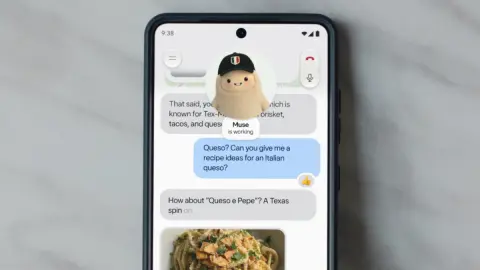
Meta's Muse agent gets live voice calls and an animated avatar that reacts while you talk.
Quick facts
| Maker | Meta |
|---|---|
| Availability | Rolling out in the US |
| Platforms | Muse app on mobile, web and Mac |
| Models | Muse Realtime Voice, Muse Realtime Avatar |
| Avatar video | 448x768 portrait, 25 fps |
| Response latency | About 870 ms |
| Coming later | AI Glasses and Muse Charm |
What is it?
Meta launched voice conversations and expressive avatars in its Muse app on 5 November 2026. Users tap the phone icon in the top-right corner to start a call, and can pick voice only, an avatar next to the chat, or a full-screen avatar. Meta says there are hundreds of voices to choose from, and users can interrupt Muse mid-answer.
How does it work?
Two models power the feature. Muse Realtime Voice handles the conversation and outputs a stream of speech tokens that carry both the words and how they are said. Muse Realtime Avatar, an audio-driven Diffusion Transformer, reads that same token stream to generate 448x768 portrait video at 25 fps in short chunks, so lips and expressions stay in sync with the voice. Meta measures about 870 ms from the end of the user's turn to the first byte of the response.
Why does it matter?
Meta moves its Muse agent from a research demo to a product that US users can try today, putting it alongside other assistants that already offer voice chat. In Meta's own tests, raters preferred Muse Realtime Avatar over Runway Characters (78% vs 22%) and HeyGen LiveAvatar (88% vs 12%). Muse can also keep working on tasks in the background while the user talks.
Who is it for?
US users of the Muse app
Frequently asked questions
- Where can I use Muse voice and avatars?
- Meta's Muse voice and expressive avatars are rolling out in the Muse app in the United States, on mobile, web and Mac. Meta has not given a date for other countries. The company says the same real-time conversations are coming soon to its AI Glasses and to Muse Charm, its upcoming wearable device.
- Can the Muse avatar see me during a video chat?
- No. TechCrunch reports that Muse cannot see the user during a call; it only hears what the user says and responds to it. The avatar on screen is generated by Meta's Muse Realtime Avatar model, which matches its expressions and gestures to the tone of the conversation rather than to a camera feed.
- How does Muse Realtime Avatar compare to Runway Characters and HeyGen LiveAvatar?
- In Meta's own study, raters held two- to three-minute live chats with each system using matched avatar identities. They preferred Muse Realtime Avatar overall by 78% to 22% against Runway Characters and by 88% to 12% against HeyGen LiveAvatar. Meta notes that its mannerisms score against Runway was not statistically different from parity.
- How is Muse avatar video marked as AI-generated?
- Meta's research post says video generated by Muse Realtime Avatar carries an invisible watermark from Meta Video Seal. The same post explains that the model was distilled from a 120-evaluation teacher down to two evaluations per chunk, which lets a single GB200 serve 12 live avatar sessions at once.
Try it
Open the Muse app (mobile, web or Mac) and tap the phone icon in the top-right corner