OpenAI · 2026-07-22 · major
OpenAI Presence — enterprise platform to build, guard, and improve AI agents
OpenAI Presence gives enterprises a Codex-powered platform to deploy voice and chat AI agents behind policies, guardrails, and simulations. It already resolves 75% of calls on OpenAI's own English phone support line.
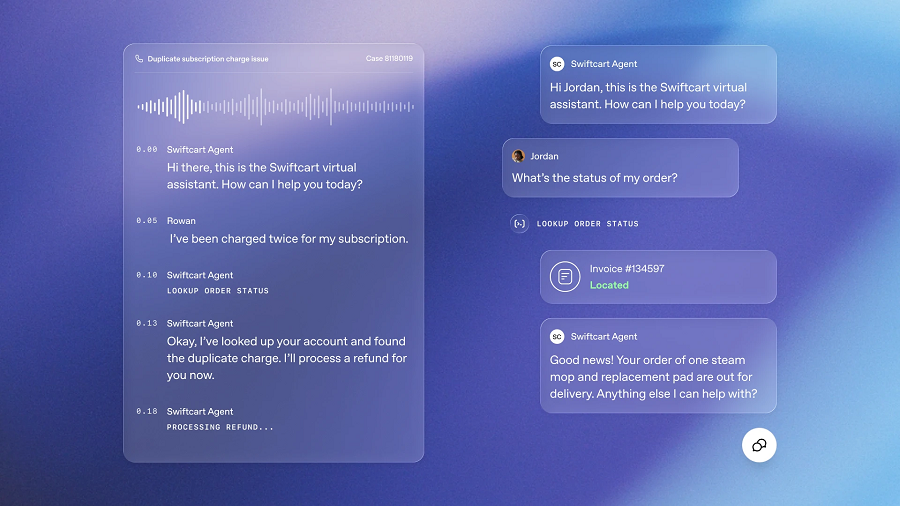
OpenAI Presence is a managed platform for putting voice and chat agents in front of real customers, with guardrails, evaluations, and a Codex-powered improvement loop.
Quick facts
| Maker | OpenAI |
|---|---|
| Product type | Enterprise agent platform (voice + chat) |
| Availability | Limited GA, enterprise-only |
| Delivery | OpenAI Forward Deployed Engineers + select integrators |
| Launch customers | BBVA Mexico, SoftBank Corp., IAG |
| In production at OpenAI | 75% call resolution on English phone line |
| Codex feedback loop | 15pp fewer handoffs in 10 days |
What is it?
OpenAI Presence is a deployed enterprise product for running trusted AI agents across voice and chat. Presence bundles policies, guardrails, approved actions, simulations, evaluations, and a Codex-powered improvement loop into one platform. Launch customers include BBVA Mexico, SoftBank Corp., and Insurance Australia Group (IAG).
How does it work?
Under the hood, Presence starts each deployment with an agent scoped to a single job, connects it to company knowledge and systems, and gates every action behind stated policies and permissions. Simulations and graders test the agent against common requests, edge cases, and higher-risk scenarios before it ships. After launch, OpenAI's Codex coding agent watches production sessions, flags where humans still had to step in, and proposes updates a human then approves.
Why does it matter?
Presence is OpenAI's direct move into the customer-experience stack held by Salesforce, ServiceNow, and Zendesk. It also gives enterprises a repeatable path from prototype agent to production agent with the reliability, evaluation, and governance layers most in-house builds skip. On OpenAI's own phone line, Presence resolves 75% of inbound calls without a human, and its Codex feedback loop cut handoffs by 15 percentage points inside 10 days.
Who is it for?
enterprise CX, support, and operations teams
Frequently asked questions
- Is OpenAI Presence self-serve?
- OpenAI Presence is not self-serve. It ships as a limited general-availability program for eligible enterprises, with rollouts led by OpenAI's Forward Deployed Engineers and a small group of systems integrators. Companies request access through their OpenAI account team, which then helps connect Presence to internal systems, set guardrails, and test the agent before it takes real traffic.
- How is OpenAI Presence different from ChatGPT or the Assistants API?
- OpenAI Presence is not a chatbot or an SDK — it is a managed platform for putting a narrow-task agent in front of customers on voice and chat. Presence adds the pieces most teams bolt on themselves: policies, permissions, guardrails, simulated evaluations, approved actions, and a Codex-powered post-launch improvement loop, so the same agent can run under real governance.
- Who has already deployed OpenAI Presence?
- OpenAI Presence is already running BBVA Mexico, SoftBank Corp., and Insurance Australia Group (IAG) workloads at launch. OpenAI also uses Presence internally to power its own English-language phone support line, where the platform resolves 75% of inbound calls without human intervention — the flagship reference for how it behaves in production.
- What does the Codex-powered improvement loop actually do?
- OpenAI Presence's improvement loop is driven by Codex, OpenAI's coding agent, which watches live sessions after launch. Codex looks at how often the agent hands off to a human, where its answers fall short, and which policies get tripped. It then proposes concrete updates — new instructions, tools, or guardrails — that a human at the customer approves. On OpenAI's own phone line, that loop cut handoffs by 15 percentage points inside 10 days.
- Which channels does OpenAI Presence support?
- OpenAI Presence targets voice and chat as its first channels, positioned as one shared foundation for company context, policies, permissions, guardrails, actions, and evaluations across those surfaces. That is what lets a Presence agent handle a phone call, a web chat, or an internal help request while behaving consistently — the same rules and connectors travel with the agent instead of being rebuilt per channel.
Try it
openai.com/index/introducing-openai-presence