
What is evo?
evo is an open-source plugin for agentic coding tools that optimizes a codebase through experiments. It sits in the Autonomous Coding Agents category of the AI Coding tools and is open-source, written in Python and licensed Apache-2.0. To get started: install the evo CLI.
Overview
evo is an open-source plugin for agentic coding tools that optimizes a codebase through experiments. You point it at a repository, and it discovers what to measure, sets up the evaluation, then runs experiments in a loop: trying changes, keeping what improves the score and throwing away what does not. The project describes itself as inspired by Andrej Karpathy's autoresearch, where an LLM runs training experiments autonomously to beat its own best score.
Where autoresearch is a single-branch hill climb, evo adds structure. Experiments form a tree, so several directions can fork from any committed node; the orchestrator dispatches parallel subagents, each in its own isolated workspace, that read failure traces, form a hypothesis, edit and run the benchmark. Failure traces, annotations and discarded hypotheses are shared state every subagent reads before deciding what to try, and between rounds scan subagents look across trace batches for compound failure patterns. After each round a frontier strategy (argmax, top_k, epsilon_greedy, softmax or pareto_per_task) picks which branch to extend.
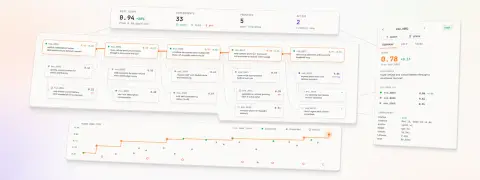
The safety mechanism is gates: pass/fail commands such as a test suite, an invariant script or a score floor on a held-out slice that run on every experiment, so a change that beats the score but breaks correctness is discarded. evo runs on Claude Code, Codex, Cursor, Kimi, OpenClaw, Hermes, Opencode and Pi, executes experiments in local git worktrees by default or on SSH hosts, Modal, E2B, Daytona, AWS or Azure, and ships a local dashboard for monitoring runs. It is Apache-2.0 licensed and written in Python, and it sends anonymous telemetry unless you turn it off.
What it does
- Benchmark discovery: the discover skill explores the repo, asks what to optimize, the benchmark command and the metric direction, and instruments the evaluation
- Tree search over experiments instead of a greedy hill climb, with parallel subagents each working in an isolated git worktree
- Gates: any command that exits zero on pass acts as a regression or safety check, inherited down the experiment tree; a held-out-slice score floor is attached automatically when discover builds a benchmark from scratch
- Configurable frontier strategies (argmax, top_k, epsilon_greedy, softmax, pareto_per_task) and cross-cutting scans that surface shared root causes between rounds
- Pluggable execution backends: local worktree or workspace pool, SSH, Modal, E2B, Daytona, AWS and Azure, chosen in the dashboard
- A local web dashboard that starts with discovery and shows scores, the experiment tree and each experiment's details
Getting started
evo is a CLI plus a plugin for an agent host you already use. The steps below follow the README: install the CLI, install the plugin into your host, then run discovery and the optimization loop from inside an agent session.
Install the evo CLI
The CLI is published on PyPI as evo-hq-cli. For remote experiment backends, install the matching extra, for example 'evo-hq-cli[modal]' (or [e2b], [daytona], [aws], [azure], [all]).
uv tool install evo-hq-cliInstall the plugin into your agent host
Supported hosts are claude-code, codex, cursor, hermes, kimi, opencode, openclaw and pi. Install the host CLI first if you do not have it; evo install adds the plugin and its hooks. evo doctor <host> checks the result.
npm install -g @anthropic-ai/claude-code
evo install claude-code
Discover a benchmark
Inside a session, run discovery once. It asks what to optimize, the benchmark command and the metric direction, or you can seed the goal inline. The syntax is /evo: on Claude Code, $evo on Codex, the / skill menu on Cursor and natural language on Hermes, Opencode, OpenClaw and Pi. The dashboard starts automatically and prints its URL (http://127.0.0.1:8080 by default).
/evo:discover make the JSON parser at src/parser.py fasterRun the optimization loop
evo sizes each round to the benchmark's resource profile and keeps going until the score stops improving, running unattended with parallel subagents by default. Say in plain language if you want it to pause after each round or run one experiment at a time.
/evo:optimizeKeep evo up to date, or opt out of telemetry
evo update keeps the CLI and every installed host plugin on the same version. Anonymous telemetry can be turned off globally or per command with EVO_TELEMETRY=0.
evo update
evo telemetry off
Commands and code are distilled from the project's own documentation — always check the official repo for the latest.
When to use it
- Let a coding agent speed up a hot path, such as a parser or a data pipeline, against a benchmark while a test-suite gate rejects changes that break behaviour
- Improve an agent's or prompt pipeline's score on an eval set by exploring several hypotheses in parallel rather than one greedy branch
- Run long unattended optimization searches on cloud sandboxes (Modal, E2B, Daytona, AWS, Azure) and review the experiment tree in the dashboard
- Bring autoresearch-style experimentation to an existing repository that has no benchmark yet, letting discover propose and instrument one
How evo compares
evo alongside other open-source autonomous coding agents tools AI/TLDR tracks, ranked by GitHub stars.
| Tool | Stars | What it does |
|---|---|---|
| opencode | ★ 229k | OpenCode is an open source AI coding agent that runs in your terminal, with built-in build and plan agents and an optional desktop app. |
| Claude Code | ★ 157k | Anthropic's agentic coding tool for the terminal, IDE and GitHub: it understands your codebase, executes routine tasks, explains code and handles git workflows from natural-language commands. |
| Orca | ★ 140k | Open-source desktop workspace that runs Claude Code, Codex, OpenCode and other CLI coding agents in parallel, each in its own git worktree, with a mobile companion app. |
| OpenAI Codex | ★ 137k | OpenAI's cloud and CLI coding agent that writes features, fixes bugs, and proposes code changes across a repo, running tasks in parallel. |
| Pi | ★ 124k | Minimal terminal coding agent harness with four built-in tools, extended through TypeScript extensions, skills and prompt templates instead of forks. |
| Gemini CLI | ★ 109k | An open-source command-line AI agent from Google that connects your terminal to Gemini models for reading code, editing files, running shell commands, and searching the web. |
| autoresearch | ★ 101k | Karpathy's minimal harness that hands a coding agent a single-GPU LLM training script and lets it run fixed five-minute experiments, keeping or discarding each change on its own. |
| evo | ★ 1.5k | Autoresearch plugin for coding agents: discovers a benchmark, then tree-searches code changes with parallel subagents |