In plain English
Most LLM benchmarks give you a single number: this model got 87% on that test. That number answers exactly one question — how often was it right? — and stays silent on everything else. Is the model fair across different groups? Does it stay accurate when you rephrase the question? How much does it cost to run? Does it produce toxic text? One score can't tell you.
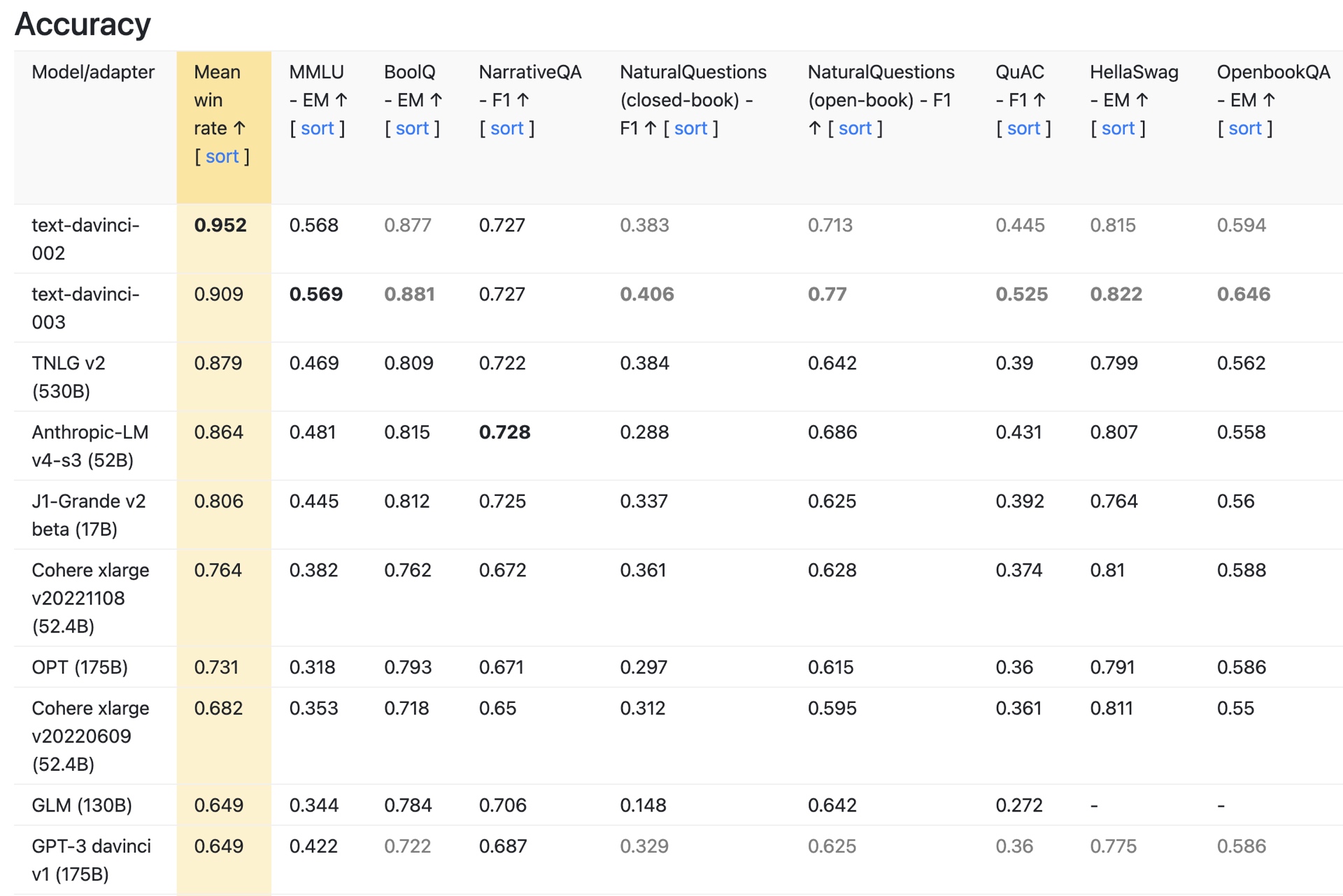
Stanford HELM — short for Holistic Evaluation of Language Models — is a framework built on a simple idea: stop judging a model by one number, and measure it across many aspects at once. Instead of a single accuracy score, HELM reports a grid of results: how well a model does on a range of tasks, and how robust, fair, biased, toxic, and efficient it is along the way. It comes from Stanford's Center for Research on Foundation Models (CRFM).
Think of buying a car. A single-number benchmark is like choosing one purely on top speed. HELM is the full spec sheet plus the safety crash-test ratings: speed, yes, but also fuel economy, braking distance, reliability, and how it protects you in a crash. A car that wins on top speed alone might be a death trap — and a model that wins on raw accuracy alone might be biased, brittle, or ruinously expensive to serve.
Why it matters
Before HELM, the field had a messy problem: every model was tested on a different patchwork of benchmarks, each lab reported the numbers that flattered its model, and a single accuracy figure quietly hid everything that score didn't cover. HELM set out to fix three things at once.
- One metric is misleading. A model can ace a knowledge test while being unfair to certain groups, falling apart on slightly reworded prompts, or generating toxic text under pressure. Accuracy alone can't surface those problems — and the things it hides are often exactly what gets a real product in trouble.
- Comparisons weren't apples-to-apples. When two labs each pick their own tasks, prompts, and scoring, you can't honestly compare the results. HELM runs every model through the same scenarios with the same setup, so differences reflect the models, not the test conditions. This is the same fairness problem a shared benchmark runner like lm-evaluation-harness solves.
- Trade-offs were invisible. The most accurate model might be the slowest and most expensive to run. By reporting efficiency alongside quality, HELM makes those trade-offs explicit, so you can choose the model that fits your constraints, not just the top of one leaderboard.
Who cares? Anyone choosing a model for something that matters. A team picking a model for a hiring or lending tool needs the fairness and bias columns, not just accuracy. A company serving millions of requests needs the efficiency numbers. A safety reviewer needs the toxicity results. HELM's contribution was to make all of these visible at the same time, in one transparent, reproducible place — and to publish the raw prompts and outputs so anyone can check the work.
How it works
HELM's design rests on three building blocks: scenarios, metrics, and the matrix that combines them. Understanding these three is enough to read any HELM leaderboard with confidence.
Scenarios: what you ask the model to do
A scenario is a concrete use case — question answering, summarization, reasoning, information retrieval, and so on — each paired with a dataset and a way to turn examples into prompts. HELM defines a broad set of scenarios so a model is tested across many kinds of work, not just one narrow skill. Every model under test sees the same scenarios in the same way.
Metrics: the many aspects you measure
For each scenario, HELM doesn't record just accuracy. It measures a family of aspects. The headline ones include accuracy, robustness (does the answer survive small changes to the prompt?), fairness (does performance hold across different groups or dialects?), bias and toxicity (does the output stereotype or turn harmful?), and efficiency (how much compute, time, and cost did the answer take?). These run side by side, so a single run produces a rich profile rather than one figure.
The matrix: scenarios × metrics
The genius of HELM is the grid. Run every metric on every scenario and you get a matrix — rows of scenarios, columns of aspects — filled in for each model. This is why HELM can say not only "Model A is more accurate than Model B," but "Model A is more accurate but less robust and more expensive." The same model is run through the whole grid under identical conditions, which is what makes cross-model comparison meaningful.
Because the prompts, model outputs, and scoring are all published, a HELM result isn't a black box. You can drill from a top-line number down to the exact examples behind it — which is the transparency the project was built to provide.
HELM vs a single-score benchmark
It helps to put HELM next to the kind of benchmark it reacts against — a classic single-metric test like MMLU. They aren't enemies; they answer different questions.
| Aspect | Single-score benchmark | HELM |
|---|---|---|
| Output | One number per model | A matrix of scenarios × metrics |
| Question it answers | How often was it right? | How does it behave across many aspects? |
| Covers fairness, bias, toxicity? | Usually no | Yes, as first-class metrics |
| Covers cost and speed? | Rarely | Yes — efficiency is reported |
| Best for | A quick headline ranking | Choosing a model on real trade-offs |
A single-score benchmark is a fast, legible signal — great for a quick "who's ahead" glance. HELM is the slower, fuller read you reach for when the choice carries real consequences and a single number could hide the flaw that bites you later.
How to read and use HELM
Over time HELM grew from one leaderboard into a family of them — HELM has spun off focused leaderboards for areas like classic language tasks, safety, medicine, and more, each applying the same holistic, multi-metric philosophy to a domain. When you open one, a few habits make it far more useful.
- Don't read only the first column. The accuracy ranking is the obvious one, but the value of HELM is in the other columns. Scan robustness, fairness, and efficiency before you decide.
- Match the leaderboard to your job. Building a medical assistant? The general leaderboard is the wrong lens — look for the domain-specific one. The right scenario set matters more than the headline rank.
- Weight metrics by what you'll ship. A high-throughput product cares about efficiency; a public-facing chatbot cares about toxicity and fairness. There is no universal "best" — only best for your constraints.
- Use the transparency. Because prompts and outputs are published, you can inspect why a model scored as it did on a scenario you care about, instead of trusting the aggregate blindly.
Going deeper
Once the scenarios-metrics-matrix model clicks, a few nuances separate a casual reader from someone who can use HELM well.
Holistic isn't free — there's a cost trade-off. Measuring a dozen aspects across many scenarios for every model is far more expensive than running one accuracy test. That cost is the price of completeness, and it's part of why a single-metric benchmark still has a place: it's cheap and fast, even if it's narrow. HELM trades speed for breadth on purpose.
Project status, read honestly. The HELM leaderboards are published and genuinely useful for comparing models across aspects. The underlying open-source code framework, however, is best treated as in maintenance mode rather than under heavy active development — so lean on the published leaderboards as the live, maintained product, and treat the codebase as a stable reference rather than a fast-moving tool. This is a normal lifecycle for influential research infrastructure.
Benchmarks still age. Holistic doesn't mean immune. Any fixed benchmark can leak into training data over time — see benchmark contamination — and models can quietly overfit to well-known public tests. HELM's breadth makes gaming harder (you'd have to game many aspects at once), but no static evaluation is permanently future-proof.
Where it sits in the landscape. HELM is the holistic, automatic-metric end of the spectrum. At the other end sit human-preference systems like LMArena, where people vote on which answer they prefer. Each catches what the other misses: HELM measures defined aspects rigorously and reproducibly; preference arenas capture the fuzzy "which felt better" signal that's hard to formalize. Mature evaluation uses both — plus task-specific tests like agentic coding benchmarks — rather than betting everything on one. The durable lesson HELM taught the field: never let a single number stand in for a model's whole character.
FAQ
What does HELM stand for?
HELM stands for Holistic Evaluation of Language Models. It's a framework from Stanford's Center for Research on Foundation Models (CRFM) that scores models across many aspects — accuracy, robustness, fairness, bias, toxicity, and efficiency — instead of reducing a model to a single number.
How is HELM different from a benchmark like MMLU?
A benchmark like MMLU gives one accuracy score for one kind of task. HELM runs many scenarios and reports a grid of metrics for each, so you see not just whether a model is accurate but whether it's robust, fair, toxic, and efficient. HELM is a holistic framework; MMLU is a single test.
What aspects does HELM measure?
Its headline aspects include accuracy, robustness (does the answer survive reworded prompts?), fairness across groups, bias and toxicity in the output, and efficiency (compute, time, and cost). The exact set depends on the scenario, but the philosophy is always multi-metric rather than single-score.
Is HELM still maintained?
The HELM leaderboards are published and useful for comparing models. The underlying open-source code framework is best treated as being in maintenance mode rather than under heavy active development, so rely on the published leaderboards as the live product and the codebase as a stable reference.
Can I use HELM to pick the best model for my product?
Yes, and that's its strength — but don't read only the accuracy column. Decide which aspects matter for your use case (efficiency for high volume, fairness for sensitive decisions, toxicity for public chat), match your job to the right domain leaderboard, and weight the metrics accordingly. There's no single "best" model, only best for your constraints.