In plain English
To fine-tune or align a language model, you need training data: lots of example inputs paired with the outputs you want, or pairs of answers marked better and worse. Collecting that data by hand is slow and expensive. You either pay people to write thousands of examples, or you scrape and clean data of unknown quality. For most teams, this data bottleneck is the real reason a fine-tune never happens.
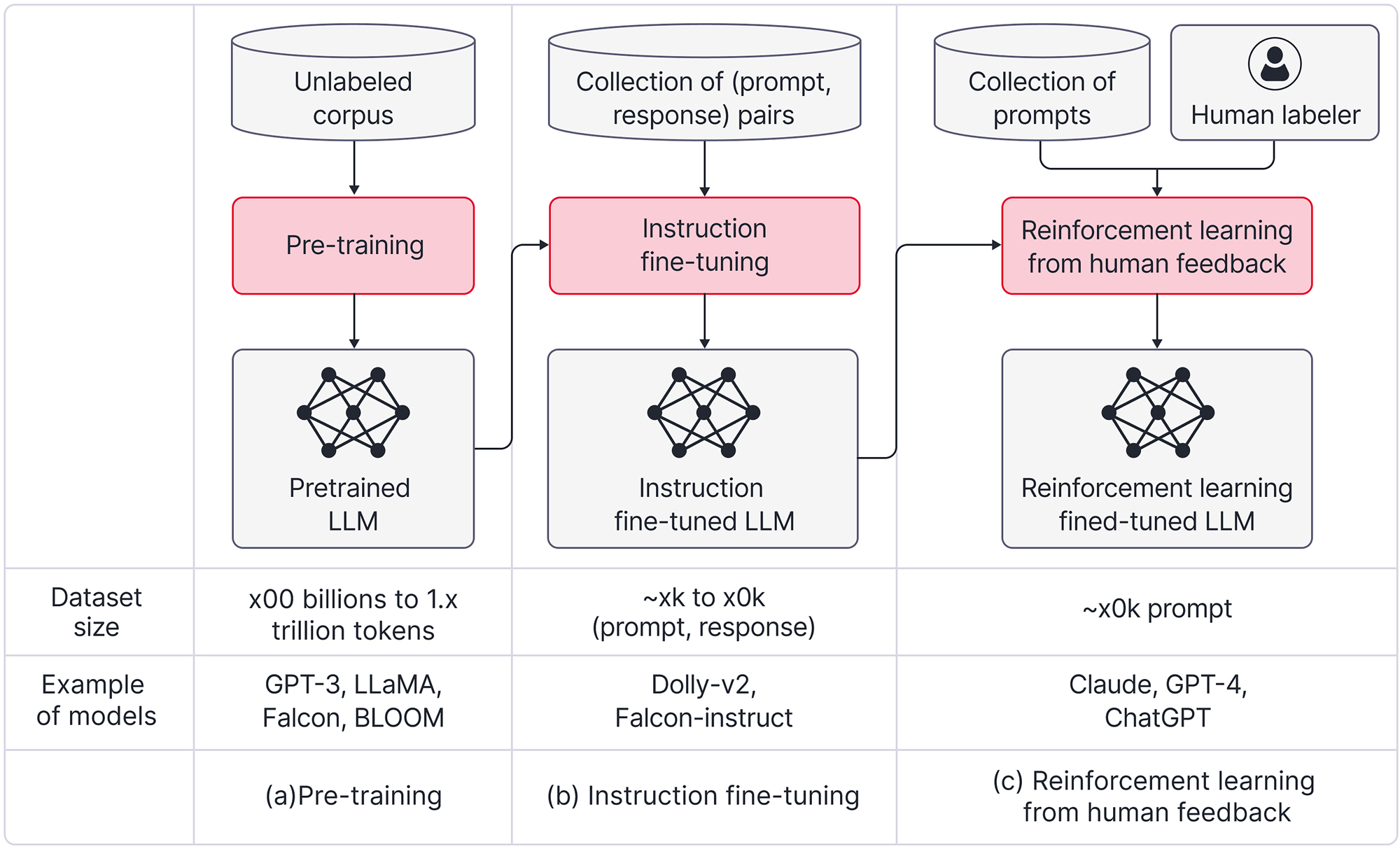
Distilabel is an open-source Python framework from Argilla for building synthetic-data and AI-feedback pipelines. Instead of hiring annotators, you wire up a small assembly line where LLMs do the work: one step generates candidate examples, another rephrases or expands them, another rates or ranks them, and the result is a clean dataset ready for fine-tuning or preference training.
Think of it as a factory line for training data. Raw material (a topic list, a few seed prompts, or existing rows) enters at one end. Each station along the belt is a worker LLM with one job — draft an answer, critique it, score it, label it. What rolls off the other end is structured, labeled data. You design the line once, then run it over thousands of items without sitting at the keyboard for each one.
Why it matters
Modern fine-tuning and alignment recipes are hungry for data, and the data is what decides the result far more than the training code. Distilabel exists because producing that data is the painful part.
- Human labeling does not scale. Writing or rating 50,000 examples by hand is unaffordable for most teams. An LLM can draft and score that many in hours, for the price of API calls or some GPU time.
- You often have no dataset at all. For a niche task — your product's support tone, a domain like legal or biotech, a new language — clean training pairs simply do not exist. Synthetic data lets you manufacture them from a handful of seeds.
- Preference data is expensive to collect. Methods like DPO need pairs of a chosen and a rejected answer. Having a model generate two responses and an AI judge pick the better one (AI feedback, the AIF in RLAIF) produces those pairs cheaply.
- Reproducibility. A hand-curated dataset is a one-off artifact nobody can rebuild. A Distilabel pipeline is code — versioned, re-runnable, and easy to tweak and regenerate when your recipe changes.
Who should care? Anyone fine-tuning or aligning a model who doesn't already have a large, clean dataset — which is almost everyone. It also matters for distillation: a frontier teacher model can generate high-quality answers that train a small, cheap model to imitate it. Distilabel is one of the well-known, actively maintained tools for exactly this synthetic-data workflow, and it pairs with the broader Hugging Face ecosystem most fine-tuners already live in.
How it works
Distilabel models your data process as a pipeline made of steps. A step is one unit of work — load some rows, call an LLM with a prompt template, parse the output, score a pair. Steps are connected with the right-shift operator so data flows from one to the next, and each step passes structured rows (dictionaries of columns) down the line. Steps that call a model are a special kind called a task; plain steps just move or transform data.
The three building blocks
- Steps — the nodes of the pipeline. A generator step seeds the data (from a Hugging Face dataset, a file, or a list). Global or normal steps transform, combine, filter, or save rows.
- Tasks — steps backed by an LLM and a prompt template. Examples in spirit: generate an instruction, answer a question, critique an answer, or judge which of two responses is better. A task wraps the prompt, the model call, and the parsing of the result into columns.
- LLMs — pluggable backends a task talks to. The same pipeline can run against a hosted API (such as Claude or another provider), a local server like vLLM or Ollama, or Hugging Face Inference, so you swap models without rewriting the pipeline.
When you call pipeline.run(), Distilabel executes the steps in order, streaming rows through in batches. Tasks run in parallel where they can, and the framework handles retries, caching, and rate limits so a long run doesn't collapse on the first transient API error. Because runs are cached, re-running a pipeline after a small change reuses the steps that didn't change instead of regenerating everything — which matters a lot when each row is a paid model call.
What a pipeline looks like in code
The shape below is illustrative — it shows the mental model (load → task → save, wired with >>), not an exact API you should copy verbatim. The point is that the whole data process is a short, readable Python file you can version and re-run.
from distilabel.pipeline import Pipeline
# (step / task / LLM imports omitted — see the docs for current paths)

with Pipeline(name="synthetic-qa") as pipeline:
    # 1) GENERATOR: seed the line with topics / instructions.
    seeds = LoadDataFromHub(repo_id="my-org/seed-instructions")

    # 2) TASK: an LLM drafts an answer for each instruction.
    answer = TextGeneration(llm=SomeLLM(model="a-strong-teacher-model"))

    # 3) TASK: a second LLM scores each answer (AI feedback).
    judge = QualityScorer(llm=SomeLLM(model="a-judge-model"))

    # Wire the line: data flows left to right.
    seeds >> answer >> judge

if __name__ == "__main__":
    dataset = pipeline.run()          # runs all steps, with caching + retries
    dataset.push_to_hub("my-org/synthetic-qa")
That is the entire idea: a generator at the front, one or more model-backed tasks in the middle, and a sink that saves the result. Everything else — evolving prompts into harder ones, deduplicating, building preference pairs — is just more steps slotted into the same line.
Common pipelines you can build
Distilabel is a framework, not a single recipe, but a few patterns show up again and again. Each is the same pipeline skeleton with different tasks.
| Goal | What the pipeline does | Output feeds |
|---|---|---|
| Instruction dataset | Seed with topics, have an LLM write instructions, then have an LLM answer them | Supervised fine-tuning (SFT) |
| Harder instructions | Take simple prompts and 'evolve' them into more complex, multi-step versions | SFT on tougher tasks |
| Preference pairs | Generate two answers per prompt, let an AI judge pick chosen vs rejected | DPO / preference tuning |
| Quality filtering | Score every existing row and drop the low-rated ones | Cleaning any dataset |
| Teacher distillation | A strong teacher answers prompts; keep its outputs as targets | Training a small student model |
Notice that judging and scoring are themselves LLM tasks. This is the AI-feedback idea: rather than asking humans to rank thousands of answers, you ask a capable model to do it against a rubric. It is the same principle as LLM-as-a-judge evaluation, applied to building data instead of measuring a system. The judge's verdicts become the labels that train the next model.
Distilabel, Argilla, and human review
Distilabel generates and labels data automatically, but full automation is rarely the whole story. The riskiest part of a synthetic pipeline is trusting the AI judge blindly. That is where Argilla, the sister project from the same team, comes in: it is an annotation and curation UI where humans review, correct, and rate dataset rows.
- Code-first Python pipelines
- LLMs generate + label data
- Runs unattended at scale
- Output: a raw synthetic dataset
- A UI for human reviewers
- People inspect + fix rows
- Catches what the AI judge missed
- Output: a curated, trusted dataset
The natural workflow is a loop: Distilabel mass-produces candidate data, you push a sample into Argilla so humans can spot-check and correct it, and the cleaned data (plus any rules you learned) flows back into the next pipeline run. This human-in-the-loop pass is how you keep the quality multiplier pointing the right way. Both tools live in the Hugging Face / Argilla ecosystem, so datasets move between them and the Hub easily.
Pitfalls and practical tips
Most synthetic-data failures are not Distilabel bugs — they are design mistakes in the pipeline. A few worth knowing before you scale a run up to tens of thousands of rows.
- Garbage in, garbage at scale. A vague prompt template produces vague data — multiplied by 10,000. Prototype on 20 rows, read the outputs with your own eyes, and tighten the prompt before you run big.
- Mode collapse and low diversity. A model asked for many examples tends to repeat the same patterns and phrasings. Vary the seeds, raise temperature, use 'evolve' steps, and deduplicate so your dataset isn't a thousand paraphrases of three ideas.
- Trusting the AI judge too much. Model judges carry biases — they can favor longer answers or their own style. Sample the judge's decisions, check them against a few human labels, and don't assume a high AI score means a good example.
- Cost blowups. Every row may be several model calls (generate, evolve, judge). Estimate calls × price before a full run, lean on Distilabel's caching, and start with a cheaper model for drafting if you can.
- Skipping review entirely. The biggest mistake is shipping raw synthetic data straight into training. Always keep a human spot-check — a small curated sample tells you whether the whole batch is usable.
Going deeper
Once the load → generate → judge → save loop clicks, the interesting work is in how each stage is designed. A few directions worth exploring.
Instruction evolution. A famous technique (popularized by the Evol-Instruct line of work) takes a simple instruction and uses an LLM to rewrite it into harder, deeper, or more constrained variants — automatically growing a dataset's difficulty range. In Distilabel this is just an extra task in the line, and it is a common way to push a model past easy questions.
Preference and AI feedback at scale. Beyond simple chosen/rejected pairs, you can have a judge produce scores or critiques per answer, build ranked lists, or use a panel of judges to reduce single-model bias. This is the data engine behind synthetic training data for preference methods like DPO, and the AIF half of RLAIF — reinforcement learning from AI feedback instead of human feedback.
Distillation as a first-class goal. When the explicit aim is to compress a big teacher into a small student, the pipeline's job is to capture the teacher's behavior as a dataset: its answers, its reasoning traces, its preferences. The student then trains to imitate those. Distilabel is one tool for producing that transfer data; the concept is covered in model distillation.
Where it fits in your stack. Distilabel produces the dataset; a separate training toolkit consumes it. After generating data you would hand it to a fine-tuning library or a hosted fine-tuning API, and you'd watch for issues like catastrophic forgetting once training begins. Keeping data generation and model training as separate, swappable stages is exactly what makes the whole recipe reproducible.
The honest takeaway: Distilabel makes it cheap to generate enormous amounts of training data, which means the bottleneck moves from quantity to quality and design. The pipeline is easy; choosing good seeds, good prompts, a fair judge, and a real review step is the craft. Synthetic data is a force multiplier on whatever judgment you put into the pipeline — so put the effort there.
FAQ
What is Distilabel used for?
Distilabel is used to build synthetic-data and AI-feedback pipelines for training LLMs. You compose steps where models generate, label, and rate data, producing datasets for supervised fine-tuning, preference tuning (like DPO), and teacher-student distillation — without hand-labeling everything.
Is Distilabel free and open source?
Yes. Distilabel is an open-source Python framework from Argilla, available on GitHub. It's free to use; your costs come from the LLMs it calls (API usage or your own GPU time), not from the framework itself.
What is the difference between Distilabel and Argilla?
Distilabel is a code-first framework that generates and labels data with LLMs at scale. Argilla is a UI where humans review and curate that data. They're sister projects from the same team and are commonly used together: Distilabel produces the data, Argilla helps people clean it.
Is synthetic data from Distilabel good enough to train on?
It can be, but quality depends entirely on your pipeline design — the seeds, prompts, and judging steps. Synthetic data is a multiplier, so a weak setup produces lots of confidently wrong examples. Always prototype on a few rows, spot-check with a human, and mix in real data where you can.
What is AI feedback in Distilabel?
AI feedback means using an LLM as a judge to rate or rank generated answers instead of asking humans. In Distilabel, a judging task scores candidate outputs against a rubric, and those scores become labels — for example, turning two answers into a 'chosen' and 'rejected' pair for preference training.
Do I need a GPU to use Distilabel?
Not necessarily. If your pipeline calls hosted model APIs, you need no local GPU at all. You only need GPUs if you choose to run open models locally (for example through vLLM) as the generators or judges inside your pipeline.