In plain English
You will see four labels thrown around for the same family of models: VLM, multimodal LLM, omni-model, and any-to-any. People use them as if they were synonyms, and most of the time the difference doesn't bite you. But the labels do mean different things, and once you're choosing a model or reading a model card, the differences start to matter.
Think of it like vehicles. "Vehicle" is the broad word — anything that moves people or goods. A "car" is a specific kind of vehicle. Saying "car" when you mean "vehicle" is usually fine in conversation, but if you're buying a truck to move furniture, the precision suddenly counts. The model labels work the same way: some are broad umbrella terms, some are narrow and specific, and they nest inside each other.
Here's the short version. A VLM (vision language model) takes images plus text in, and gives text out. A multimodal LLM is a broader term: a language model that can handle more than one kind of input — which may include images, but also audio, video, or documents. An omni-model goes a step further: it can both read and produce several modalities, for example listening to your voice and replying with spoken audio. So a VLM is one specific type of multimodal LLM, and an omni-model is a multimodal LLM that also outputs non-text.
Why it matters
If the words were truly interchangeable, this article wouldn't exist. The reason to get them straight is that they make different promises about what the model can actually do — and you'll get burned if you assume capabilities the label never claimed.
- "Multimodal" doesn't tell you which modalities. A model card that says "multimodal" might mean vision only, or vision plus audio, or full any-to-any. The word alone is almost content-free. You have to read the supported inputs and outputs to know what you're getting.
- Input modalities ≠ output modalities. Most so-called multimodal models can take in images or audio but still only write text back. If you need the model to speak or generate an image, "multimodal" is not enough — you need an omni or any-to-any model. This is the single most common confusion.
- Pricing and tokens differ by modality. Images, audio, and PDFs are converted into tokens differently from text, and each modality has its own cost. Knowing whether your model is processing your file as vision tokens or audio tokens affects your bill — see how images become tokens.
- Marketing blurs the lines on purpose. Vendors love the word "omni" because it sounds powerful. Always check the actual supported-modality table in the docs rather than trusting the headline name.
Who cares in practice? Anyone choosing a model for a real feature. Building "chat with a screenshot"? A VLM is plenty. Building a voice assistant that talks back? You need audio output, so a VLM won't cut it. Knowing the vocabulary turns a vague shopping decision into a precise checklist of inputs and outputs.
How the terms nest
The cleanest mental model is a set of nested circles. "Multimodal LLM" is the big outer circle — any language model that handles more than just text. Inside it sit narrower types defined by which modalities they support and which direction (in, out, or both) each modality flows.
Read that stack from the top down as "each layer can do everything the one above it can, plus more." A VLM is a multimodal model that happens to support exactly one extra input (vision). An omni-model is a multimodal model that also emits non-text outputs. The thing that separates the tiers is two questions: which modalities go in, and which modalities come out.
The two axes that actually define a model
Forget the marketing names for a second. Every model in this space is pinned down by a simple input/output grid. Fill in this grid for any model and you know exactly what it is, regardless of what the brochure calls it.
- Text — always
- Images — VLM and up
- Audio — multimodal+
- Video / PDF — broadest models
- Text — almost all
- Audio (speech) — omni only
- Images — image-gen models
- Video — rare, frontier only
So a VLM has image + text on the input side and text only on the output side. A typical "multimodal LLM" adds maybe audio or PDF on the input side, still text out. An omni-model lights up cells on both sides — it can hear you and speak back. "Any-to-any" is the most ambitious claim: in principle any supported modality in, any supported modality out.
Putting real models in their box
The fastest way to make the vocabulary stick is to classify a few familiar production models. The exact capabilities of any specific model change over time, so always confirm in the current docs — but the categories themselves are stable, and these examples show the shape of each tier.
| Category | Inputs | Outputs | Example use case |
|---|---|---|---|
| Plain LLM | Text | Text | Summarize an article, write code |
| VLM | Text + image | Text | Describe a photo, read a chart, OCR a receipt |
| Multimodal LLM | Text + image (+ audio/PDF) | Text | Analyze a PDF, transcribe-and-reason |
| Omni-model | Text + image + audio | Text + audio | Real-time voice assistant that talks back |
Notice the pattern in the Outputs column. The first three tiers all output text — the difference is purely on the input side. The jump to omni is the one place where the output column changes. That is the boundary most people miss: a model can be impressively multimodal at understanding and still only ever reply in text.
"Is this model a VLM?" — answering the common case
A frequent question is whether a given frontier model "counts" as a VLM. The honest answer is usually: it contains a VLM's abilities, but it's bigger than that. Modern flagship models from the major labs accept images and text, so they do everything a VLM does. But many also accept audio and reply with audio, which makes them omni-models — a superset of a VLM.
So calling such a model "a VLM" is not wrong — it can do vision-and-language — it's just incomplete. It's like calling a smartphone "a camera." True, but it undersells the device. The precise statement is: "it has VLM capabilities, and also audio I/O, which makes it an omni-model." When in doubt, describe the capability you're using rather than arguing over the noun.
Going deeper
Once the basic boundaries click, a few finer points are worth knowing — they explain why the labels are fuzzy in the first place and where the field is heading.
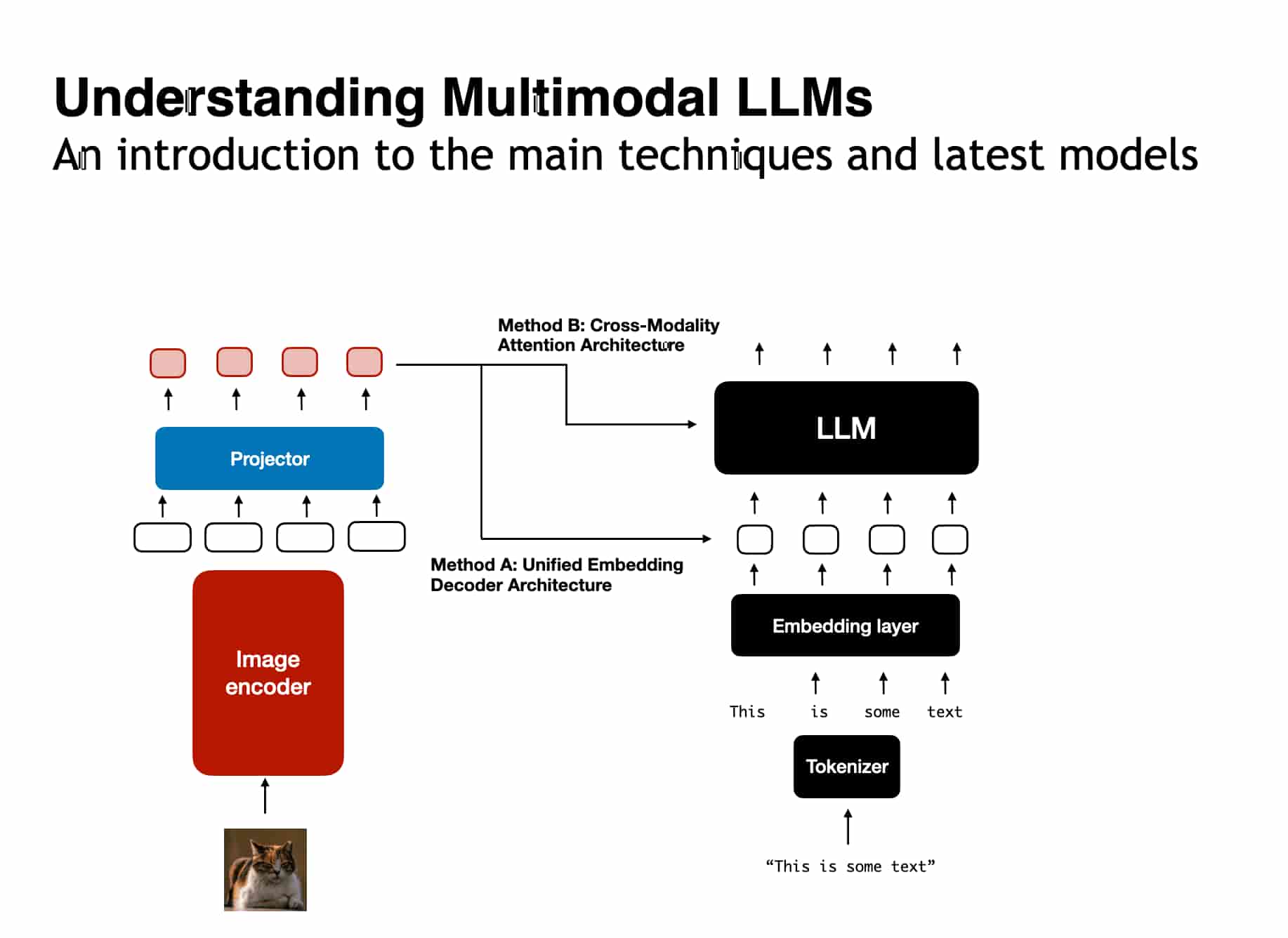
"Native" vs "bolted-on" multimodality. Some models are trained from the start on text and images together, so vision is native — the same network reasons over pixels and words jointly. Others are really a text LLM with a separate vision encoder stapled to the front, feeding image features in as if they were tokens. Both get labeled "multimodal," but native models tend to reason about images and text more tightly. For the mechanics of how pixels even reach a language model, see how vision models see.
Pipelines that fake omni. A system can appear to be an omni voice assistant while actually being three separate models chained together: speech-to-text → text LLM → text-to-speech. That speech-to-text front end and a text-to-speech back end sandwich an ordinary text LLM in the middle. A true omni-model does it in one model, which usually means lower latency and the ability to hear tone, pauses, and emotion that text transcription throws away. From the outside both feel like "voice in, voice out" — under the hood they're very different.
Where the vocabulary is going. As more models add audio and image output, the practical line between "multimodal LLM" and "omni" keeps blurring, and "any-to-any" is becoming the aspirational target. The labels will keep shifting, which is exactly why the durable skill is not memorizing names but reading the input/output grid. A model is defined by the modalities it accepts and the modalities it emits — everything else is branding.
If you want the foundations under all of this, start with what a vision language model is and what multimodal AI means more broadly, then look at the practical side of sending images to an API.
FAQ
What is the difference between a VLM and a multimodal LLM?
A VLM (vision language model) is a specific kind of multimodal LLM that takes images plus text as input and produces text output. "Multimodal LLM" is the broader umbrella term for any language model that handles more than one modality — which might be vision, but could also include audio, video, or documents. Every VLM is a multimodal LLM, but not every multimodal LLM is a VLM.
Is GPT-4o a VLM?
It has VLM capabilities — it accepts images and text and can reason over them — so calling it a VLM isn't wrong. But it's more accurately an omni-model, because it also handles audio input and output, which goes beyond a VLM's vision-in/text-out scope. Saying "VLM" undersells it, a bit like calling a smartphone "a camera."
What does omni-model mean?
An omni-model can both take in and produce several modalities — for example, hearing your voice and replying with spoken audio, not just text. The key difference from a regular multimodal LLM is the output side: omni-models emit non-text outputs like speech, whereas most multimodal models only write text back.
Does multimodal mean the model can generate images?
Not necessarily. "Multimodal" usually refers to the inputs a model accepts, and most multimodal models still only output text. Generating images is a separate capability found in image-generation models or in true any-to-any models. Understanding a modality and producing it are different skills — always check the output side specifically.
What is the difference between omni and any-to-any models?
They're closely related and often used loosely. "Omni" generally signals a model that works across several modalities on both input and output. "Any-to-any" is the most ambitious framing: in principle, any supported modality in can map to any supported modality out. In practice the terms overlap heavily, and the only reliable check is the model's documented input/output table.