Overview
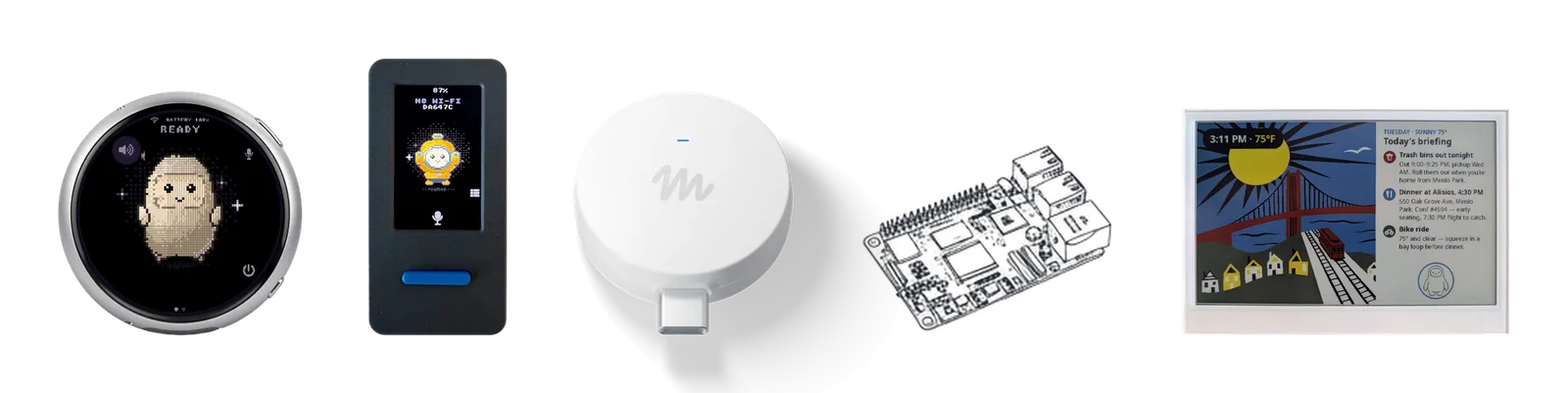
Muse Gadgets is Meta's open-source kit for connecting home-built hardware to Muse, its personal AI agent. The repository ships two device SDKs: an ESP32 Device SDK that runs on off-the-shelf ESP32 boards and can drive screens, audio in and out and other sensors, and a Linux Device SDK that turns a spare Raspberry Pi or Linux box into a gadget Muse can send commands to. Meta describes it as "built by hackers, for hackers, just for fun" and warns that tinkering may brick boards or void warranties.
Every gadget needs an SDK token from gadgets.muse.ai before it can pair, and builders agree to the Gadget SDK Terms. Pairing runs through the Muse app on iOS and Android: turn on Developer mode under Settings > Devices, then pick a device whose name starts with "MuseGadget". Each SDK directory carries a README.md for people and an AGENTS.md for coding agents such as Meta's Muse Code, so you can ask an agent to build and flash the firmware for a given board.
The first Meta-built gadget is Muse Home Link, a USB-C dongle on an Espressif ESP32-C5 chip with Wi-Fi 6 whose firmware is based on the open-source ESP32 Device SDK. It joins your home Wi-Fi so Muse can reach compatible devices that expose a local HTTP API, with community skills for products such as Philips Hue, Sonos and Apple TV. Home Link is free with an active Muse subscription in the United States, one per subscriber, shipping in October 2026. The SDKs are Apache-2.0, except for a few third-party files and the Jollybot avatar.
What it does
- ESP32 Device SDK: open-source firmware for fifteen supported boards, from a simple status light to full touch UIs with push-to-talk, including Waveshare AMOLED displays, M5Stack devices and the Home Assistant Voice Preview Edition
- Linux Device SDK: a systemd service for Raspberry Pi 3B+, 4, 5 and Zero 2 W or other Linux machines on Raspberry Pi OS Bullseye+, Debian 11+ or Ubuntu 22.04+
- Built-in Linux commands for Muse: system.run, file.read, file.write and device.health, plus room to add your own commands in the source
- musegadget send-user-msg lets outside systems such as webhooks push a message into Muse through the gadget
- Bluetooth pairing through the Muse mobile app, gated by a per-builder SDK token
- AGENTS.md files in each SDK so a coding agent like Muse Code can build and flash firmware for your board
Getting started
Get an SDK token at gadgets.muse.ai/settings/sdk-tokens first, and turn on Developer mode in the Muse app (Settings > Devices). The Linux SDK is the quickest start; the ESP32 SDK needs a board, a data-capable USB cable and a macOS or Linux computer — the README recommends the ESP32-C5 DevKitC-1 for beginners.
Install the Linux Device SDK on a Raspberry Pi
Download the installer, read it, then run it with your SDK token.
curl -fsSL https://raw.githubusercontent.com/facebookincubator/muse-gadget-sdk/main/linux/install.sh -o install.sh
less install.sh
bash install.sh --sdk-token mgst_…
Check and pair the Linux gadget
The service runs under systemd. Use these commands to inspect it, follow its logs or start pairing again; then pick the "MuseGadget" device in the Muse app.
musegadget info
sudo systemctl status musegadget
sudo journalctl -u musegadget -f
sudo musegadget pair
Or let Muse Code build the ESP32 firmware
Install Meta's Muse Code agent, open the esp32 directory and ask it: "Build this firmware for my ESP32-C5 DevKitC-1 and flash it."
curl -fsSL https://dev.meta.ai/install.sh | sh
git clone https://github.com/facebookincubator/muse-gadget-sdk
cd muse-gadget-sdk/esp32
muse --disable-sandbox
Build the ESP32 firmware by hand
Install ESP-IDF v6.0.1, then configure, build and flash from the esp32 directory (change the serial port to match your board).
git clone -b v6.0.1 --recursive https://github.com/espressif/esp-idf.git ~/esp/esp-idf-v6
~/esp/esp-idf-v6/install.sh esp32c5,esp32s3,esp32c6,esp32
. ~/esp/esp-idf-v6/export.sh
idf.py menuconfig
idf.py build
idf.py -p /dev/cu.usbmodem1101 flash monitor
Commands and code are distilled from the project's own documentation — always check the official repo for the latest.
When to use it
- Reach for it when you want a desk display, e-ink dashboard or push-to-talk button that talks to your Muse agent
- Reach for it when you want Muse to run sysadmin chores on a Raspberry Pi or home server through your own commands
- Reach for it when bridging Muse to Home Assistant or other devices with a local HTTP API
- Reach for it when you want webhooks or other systems to send messages into Muse via send-user-msg
How Muse Gadgets compares
Muse Gadgets alongside other open-source assistants & chatbots tools AI/TLDR tracks, ranked by GitHub stars.
| Tool | Stars | What it does |
|---|---|---|
| OpenClaw | ★ 391k | OpenClaw is a self-hosted personal AI assistant that answers you on WhatsApp, Telegram, Slack, Discord, and many other channels, with voice and a live visual canvas. |
| Hermes Agent | ★ 251k | A self-improving personal AI agent from Nous Research that builds skills from experience, remembers across sessions, and reaches you on Telegram, Discord, Slack, and more. |
| Odysseus | ★ 88.9k | A self-hosted AI workspace that puts chat, agents, deep research, documents, email, notes, tasks and calendar behind one Docker Compose stack, over local or API models. |
| CowAgent | ★ 47.2k | A self-hosted assistant that plans and executes tasks with built-in file, terminal, browser and search tools, and answers across a web console plus a dozen messaging platforms. |
| AstrBot | ★ 41.3k | An all-in-one agent chatbot platform that puts LLM conversations, tools, knowledge bases and a plugin marketplace inside messaging apps like Telegram, Slack, Discord, QQ and Feishu. |
| OpenHuman | ★ 40.5k | A local-first desktop personal AI for macOS, Windows and Linux that keeps a compressed memory tree on your machine and orchestrates checkpointed research and automation workflows. |
| MindsHub | ★ 39.8k | An agent workspace for knowledge work and software development that runs swappable open-source agent harnesses against your choice of frontier or open models. |
| Muse Gadgets | ★ 591 | Meta's open-source SDKs for building ESP32 and Raspberry Pi hardware that pairs with the Muse agent |