In plain English
Midjourney is an AI image generator: you type a description in plain language, and it paints a picture to match. "A lighthouse at dusk in heavy fog, oil painting" goes in; a few finished images come back. You don't draw anything yourself — you describe what you want, and the model invents the pixels.
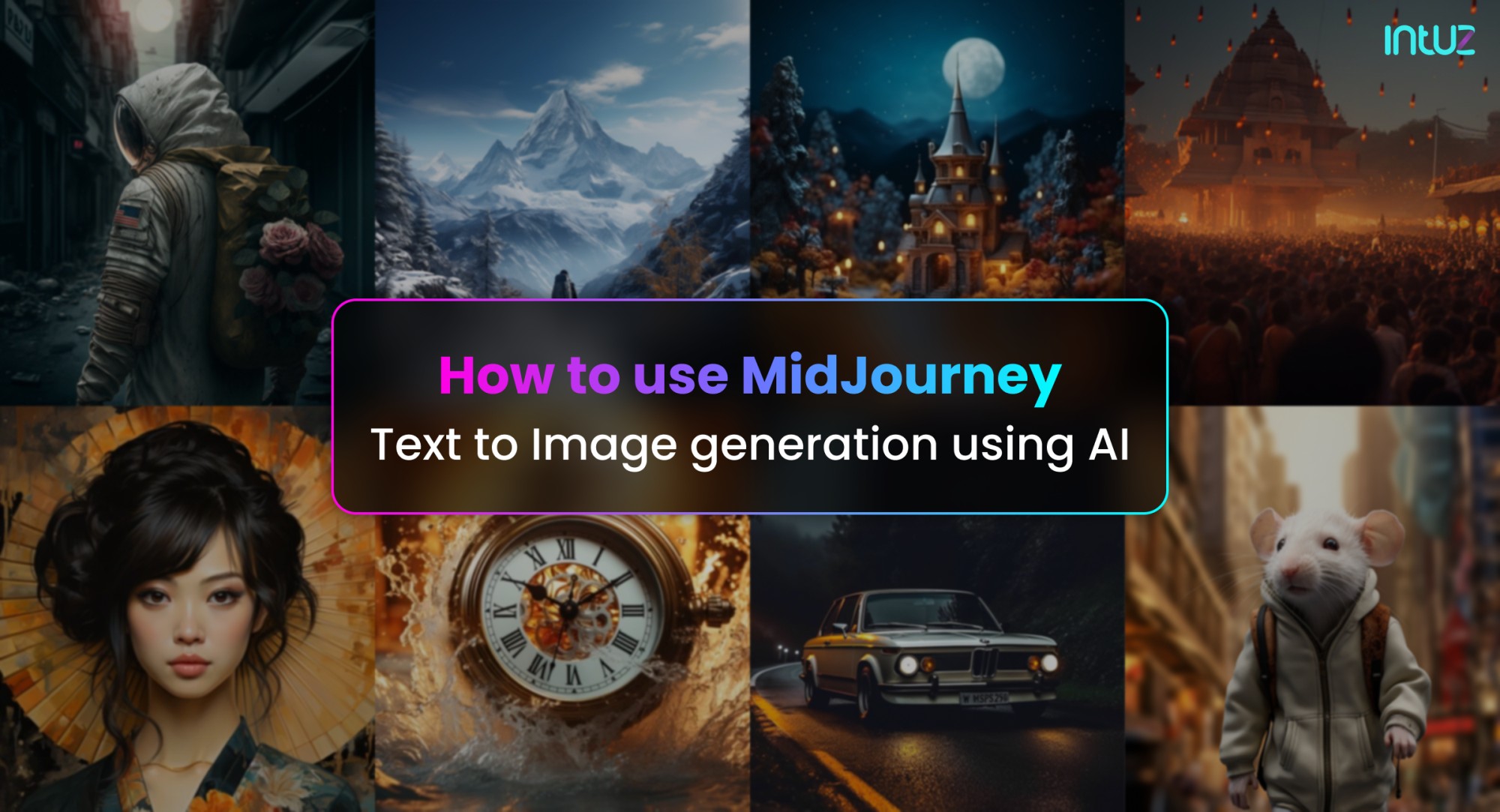
What sets Midjourney apart from other text-to-image tools is its look. It is famous for output that arrives already polished — cinematic lighting, rich color, a confident artistic style — without you asking for any of it. Many tools hand you a technically correct but flat image. Midjourney tends to hand you something that looks like a magazine cover. That opinionated, built-in good taste is the whole brand.
Think of the difference between a blank canvas and a talented illustrator with strong instincts. An open tool you run yourself is the blank canvas: total freedom, but you supply all the skill. Midjourney is the illustrator who already has a house style — you give a brief, they fill in the artistry. You get less control over every knob, but the default result usually looks great.
Why it matters
Midjourney matters because it set the bar for what "good" looks like out of the box. When most people first saw AI art that was genuinely beautiful rather than just interesting, it was often a Midjourney image. It proved that a text prompt could produce work people actually wanted to frame, print, or ship — and it did so for users who had never touched a creative tool in their lives.
The real problem it solves is the gap between having an idea and having an image. Hiring an illustrator is slow and expensive; learning Photoshop takes years; running open models yourself takes technical setup. Midjourney collapses all of that into a sentence. The cost of trying a visual idea drops to almost nothing, so you can explore ten directions in the time it used to take to brief one.
Who reaches for it
- Concept artists and designers brainstorming mood boards, characters, environments, and styles before committing to a final piece.
- Marketers and content creators who need eye-catching visuals for posts, ads, thumbnails, and decks without a photo shoot.
- Writers and game makers visualizing scenes, covers, and worlds to communicate a vibe to a team or audience.
- Hobbyists and curious newcomers who just want to make striking images and don't care how the machine works.
The trade-off is the flip side of its strength. Because Midjourney is hosted and opinionated, you get less fine-grained control and you can't bolt on the deep customization the open ecosystem offers — things like training the model on your own subject, or wiring in precise structural guidance with ControlNet. For polish-by-default, that's a fair trade. For pixel-exact control or private, offline work, it may not be.
How it works
Under the hood, Midjourney is a text-to-image generative model. The exact recipe is proprietary, but it belongs to the same broad family as other modern image generators: it learned from a huge collection of image-and-caption pairs how visual concepts connect to words, and it generates new images with a diffusion-style process — starting from random noise and refining it, step by step, into a picture that matches your prompt.
From your side, though, the mechanism is much simpler. You never see the noise or the math. You see a loop: write a prompt, get a grid of options, then pick one to refine. Here is the everyday flow.
That last step is the part people underrate. Midjourney is built around iteration, not one-shot perfection. You rarely get the final image on the first try. Instead you generate a set, choose the one closest to your vision, then ask for variations (more options like that one) or an upscale (a larger, more detailed version). You circle in on the result by steering, not by writing one perfect prompt.
The prompt is the steering wheel
Almost all of your control comes through the prompt text. Beyond the subject, you add words for style ("watercolor," "cinematic," "isometric"), lighting ("golden hour," "neon"), composition ("wide shot," "close-up"), and mood. You can also attach a reference image so the model borrows its style or subject. Small wording changes can swing the result dramatically — which is why prompting for image models is a skill of its own.
Midjourney vs open-weight models
The clearest way to understand Midjourney is to compare it with the open-weight world it grew up alongside — models like Stable Diffusion that you can download and run yourself. They aren't strictly rivals; they serve different temperaments.
| Midjourney | Open-weight models | |
|---|---|---|
| Access | Hosted subscription service | Download and run yourself |
| Source | Proprietary, closed weights | Open weights you can inspect |
| Default look | Highly polished, opinionated | Neutral; you shape the style |
| Control | Mostly via the prompt | Deep: fine-tune, ControlNet, plugins |
| Setup | None — works in a browser | Needs a capable GPU or cloud |
| Privacy | Prompts go to their servers | Can run fully offline, locally |
| Best for | Fast, beautiful results | Custom, controllable pipelines |
In one line: Midjourney optimizes for the best result with the least effort; open models optimize for control and ownership. A designer chasing a gorgeous concept in five minutes leans toward Midjourney. An engineer building a repeatable, private, heavily customized image pipeline leans toward the open ecosystem. Plenty of people use both — Midjourney to explore a look, an open tool to lock it down.
Getting good results
Because your leverage is the prompt and the iteration loop, a few habits separate frustrating sessions from productive ones. None of these are Midjourney-specific tricks; they're how the tool wants to be used.
- Describe, then decorate. State the subject and scene plainly first, then layer on style, lighting, and mood. A clear core idea beats a pile of adjectives with no anchor.
- Iterate, don't perfect. Generate a batch, pick the closest, then use variations and upscales to home in. Treat the first grid as a starting point, not a verdict.
- Use reference images. Attaching an image to steer style or composition is often faster and more reliable than trying to describe a look in words.
- Change one thing at a time. When tuning a prompt, adjust a single element per round so you can see what actually moved the result.
- Mind aspect ratio early. Composition depends on the frame. Decide square vs. portrait vs. widescreen up front rather than fighting it later.
Going deeper
Once the basics click, a few realities are worth understanding to use Midjourney well over time.
The versions churn — so don't anchor to one. Midjourney releases new model generations regularly, and each can shift the default style, the way prompts are interpreted, and which parameters exist. A prompt that produced a certain look last year may render differently now. The durable skill is the workflow — describe, generate, iterate — not the memorized quirks of any single version.
It's a closed box on purpose. Because the weights and training details are private, you can't fine-tune Midjourney on your own data, run it offline, or inspect how it works. If your project needs any of those — custom training, full privacy, an auditable pipeline, or integration into your own software — that's exactly the gap the open-weight ecosystem fills, often paired with tools for structural control and editing parts of an image.
Style is a feature and a constraint. That opinionated default look is why Midjourney images are so striking — and also why they can feel recognizably "Midjourney." If you need a neutral, generic, or very specific house style, you'll spend effort prompting against its instincts, where a more neutral model might start closer to your target. Knowing which battle you're fighting saves time.
The legal and ethical questions are unsettled. Image generators are trained on enormous datasets, and the questions around training-data rights, copyright of AI-generated images, and imitating a living artist's style are still being debated in courts and policy. Always check the current terms of service for how you're allowed to use the images — especially for commercial work — rather than assuming.
Where to go next: to understand the engine behind the curtain, read what a diffusion model is. To get more out of any image generator, study image prompting and negative prompts. And to see the controllable, self-hostable alternative, start with Stable Diffusion.
FAQ
Is Midjourney free to use?
No. Midjourney is a paid, subscription-based service — you pay for access and generate images on their servers. Because plans and pricing change over time, check the official site for current options. If you want a free or self-hosted route, look at open-weight models like Stable Diffusion that you can run on your own hardware.
What is the difference between Midjourney and Stable Diffusion?
Midjourney is a proprietary hosted service known for polished, opinionated output with little setup, where you mostly steer through the prompt. Stable Diffusion is open-weight: you can download it, run it offline, fine-tune it, and add deep controls, at the cost of more technical effort. Midjourney favors easy beautiful results; open models favor control and ownership.
Do I need any artistic or technical skill to use Midjourney?
No drawing or coding skill is required — you describe what you want in plain language and refine the results. The main skill you build over time is prompting: choosing words for subject, style, lighting, and mood, and iterating through variations and upscales to reach the image you pictured.
Can I use Midjourney images commercially?
It depends on your subscription and the current terms of service, which can change. Generally, paid plans grant broad usage rights, but the details and any restrictions live in Midjourney's official terms. Always read the current terms before using generated images in commercial work rather than assuming.
How is Midjourney different from DALL·E?
Both are proprietary, hosted text-to-image generators you access through a service rather than running yourself. The practical difference is feel: Midjourney is best known for a strong, polished default aesthetic, while other tools may emphasize different strengths like prompt literalness or integration. The best choice depends on the look and workflow you want.
Why do my Midjourney images change when a new version comes out?
Midjourney periodically releases new model generations, and each one can change the default style, how it interprets prompts, and which parameters are available. The same prompt can therefore look different across versions. The reliable approach is to focus on the describe-generate-iterate workflow rather than memorizing the quirks of one version.