In plain English
A plain large language model reads and writes text. It has never seen anything — show it a photo, a scanned invoice, or a chart and it has no way in. Qwen-VL is Alibaba's open-weight family of vision-language models (VLMs) that fixes exactly that: it takes images and video and text as input, and reasons over them together to produce a text answer.
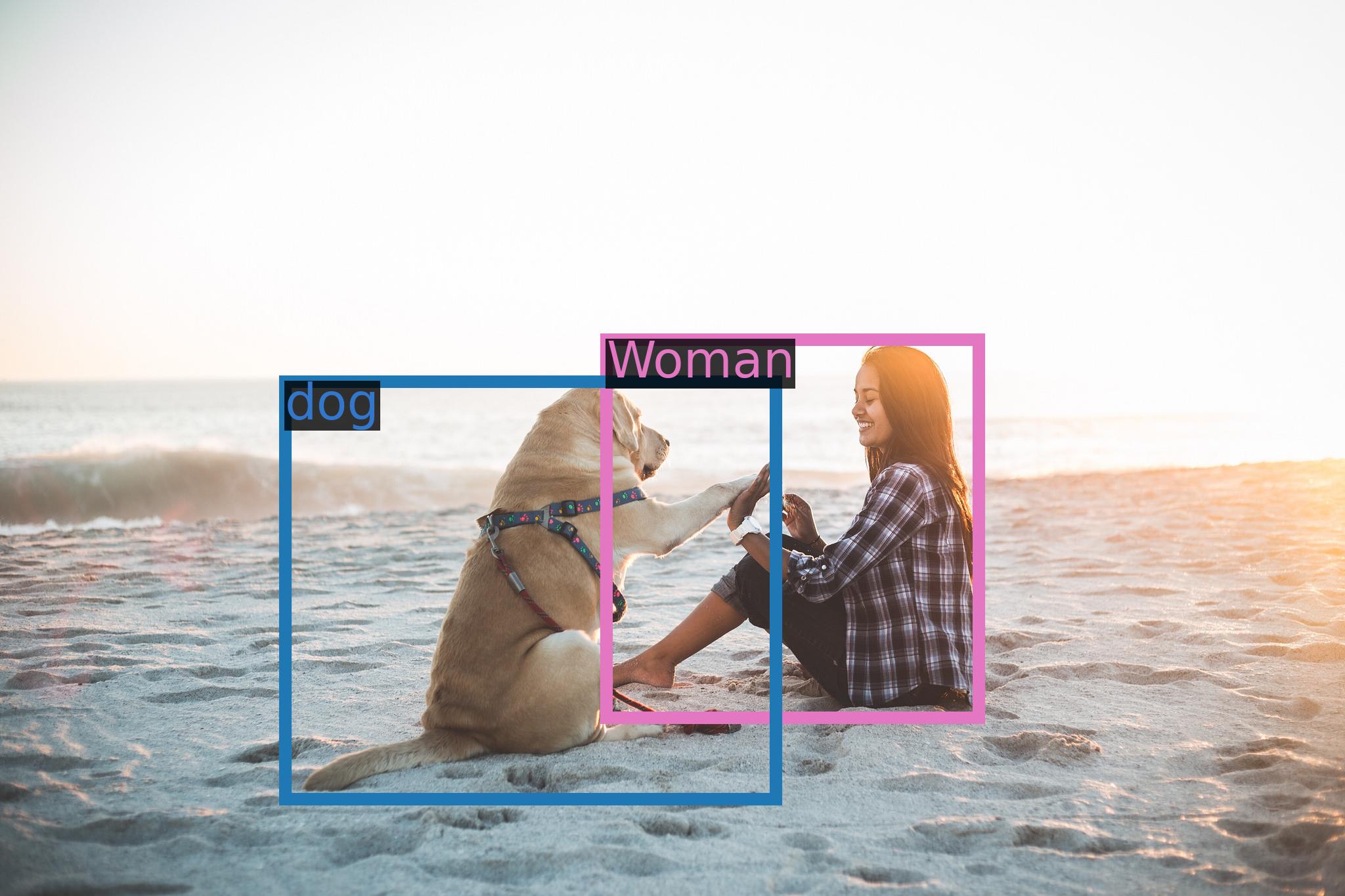
Think of it as hiring a smart reader and giving them working eyes. You can hand the model a receipt and ask "what's the total?", a screenshot and ask "which button do I click?", a diagram and ask it to explain the flow, or a short video and ask what happened. It looks, then it talks back in plain language.
The word open-weight is the other half of the story. Alibaba publishes the model's actual parameters, so you can download Qwen-VL, run it on your own hardware, and fine-tune it for your own task — no permission, no per-call fee to a single vendor. That combination, capable multimodal understanding you can self-host, is why many builders now reach for Qwen-VL as their default open VLM.
Why it matters
A huge share of the world's information is not clean text. It is screenshots, PDFs, photos of forms, product shelves, charts, slides, and video. A text-only model is blind to all of it. A VLM like Qwen-VL turns those pixels into something a model can reason about, which unlocks a long list of practical jobs.
- Document and chart reading. Pull the total off an invoice, read a table inside a scanned PDF, or summarize a slide — closer to understanding the layout than plain OCR, which just transcribes characters.
- Visual question answering. Ask a free-form question about any image ("is this plant healthy?", "how many people are in this photo?") and get a grounded answer.
- Captioning and tagging. Describe images at scale for search, accessibility, or moderation.
- Video understanding. Summarize a clip, find the moment something happens, or describe a sequence of actions across frames.
- UI and agent grounding. Read a screen, locate an element, and feed that to an AI agent that clicks through software.
The open-weight angle is what makes builders care specifically about Qwen-VL rather than a closed API. You can run it inside your own network, which matters when the images are medical scans, legal documents, or anything you cannot ship to a third party. You can fine-tune it on your niche — a specific form layout, a rare language, your product catalog — and you control cost and uptime. A hosted model gives you none of that; you rent it and you send your data away.
Qwen-VL did not invent this architecture. The recipe of attaching a vision encoder to an LLM was popularized by LLaVA, the original open VLM. Qwen-VL is best understood as a well-engineered, heavily-trained descendant of that idea: same core blueprint, far more scale and polish, and an active release cadence that keeps it near the front of the open pack.
How it works
Under the hood, a VLM has to solve one core problem: a language model only understands tokens (its internal units of text), but an image is a grid of pixels. The whole trick is converting pixels into something that lives in the same space as text tokens, so the model can reason over words and pictures with one mechanism — its attention.
Qwen-VL does this with three parts working in sequence.
- Vision encoder. A neural network (a Vision Transformer, or ViT) looks at the image and turns it into a set of feature vectors — one bundle of numbers per small patch of the picture. This is the model's "eye." For a deeper look, see how vision models see.
- Projector (the adapter). A small bridge layer reshapes those vision features so they look like the LLM's own tokens — "image tokens" the language model can read alongside text tokens. This glue is what visual instruction tuning trains.
- Language model. The familiar transformer LLM receives a single stream of mixed image tokens and text tokens, attends across all of them, and generates the answer word by word.
Two design choices are worth knowing because they explain why Qwen-VL handles real-world inputs well. First, dynamic resolution: instead of squashing every image to one fixed small size (which destroys fine print and chart detail), it processes images closer to their native resolution and aspect ratio, producing more tokens for a big detailed page and fewer for a small simple icon. That is why it can read dense documents. Second, native video: it treats a video as an ordered sequence of frames with timing information, so it can reason about what changed over time, not just describe one still.
Qwen-VL vs LLaVA: ancestor and descendant
Beginners often line these two up as rivals. They are better understood as different points on the same family tree. LLaVA proved the recipe; Qwen-VL is one of the families that took that recipe and pushed it hard with more data, more training, and production-minded features.
| Aspect | LLaVA | Qwen-VL |
|---|---|---|
| Role | The original, influential open VLM | A widely-deployed default open VLM today |
| Core idea | Vision encoder + projector + LLM, trained on image instructions | Same blueprint, scaled and refined |
| Image handling | Typically a fixed input resolution | Dynamic native resolution for dense detail |
| Video | Image-focused | Native video understanding |
| Best mental model | The ancestor that defined the architecture | The descendant you actually run in production |
The point of the comparison is not that one is "better." LLaVA matters historically because almost every open VLM, Qwen-VL included, still follows its encoder-projector-LLM blueprint. Qwen-VL matters practically because, for many builders today, it is the open model they download and ship.
A quick example: asking it about an image
Because Qwen-VL is open-weight, you can run it locally, but the easiest way to try the idea is through an OpenAI-compatible chat API (many serving stacks, including ones built on vLLM, expose Qwen-VL this way). You send an image and a text question in the same message; the model returns text. The mental model is identical to a normal chat call — there is just an image part in the content.
from openai import OpenAI

# Point this at any OpenAI-compatible endpoint serving a Qwen-VL model.
client = OpenAI(base_url="http://localhost:8000/v1", api_key="not-needed-locally")

resp = client.chat.completions.create(
    model="Qwen-VL",
    messages=[
        {
            "role": "user",
            "content": [
                {"type": "text", "text": "What is the total amount on this receipt?"},
                {
                    "type": "image_url",
                    "image_url": {"url": "https://example.com/receipt.jpg"},
                },
            ],
        }
    ],
)

print(resp.choices[0].message.content)
That is the whole interaction pattern: text and image go in together, a grounded text answer comes out. The general mechanics of attaching images to a request are covered in sending images to an LLM API; Qwen-VL just happens to be a model you can also host yourself.
Common pitfalls and limits
Qwen-VL is strong, but a VLM is not a camera with a brain. Most disappointments come from expecting pixel-perfect precision where the model only has fuzzy understanding.
- Exact counting and tiny text. Counting many small objects or reading a low-resolution stamp is error-prone. If detail matters, give it a higher-resolution image — but remember that costs more tokens.
- Hallucination still happens. A VLM can confidently describe something that is not in the image, especially for ambiguous or low-quality inputs. Treat its reading as a strong guess, not ground truth, for high-stakes use.
- Precise spatial coordinates. "Where exactly is the button, in pixels?" is harder than "is there a button?" Grounding has improved but is not a measuring tool. See vision model limitations.
- Running it is real work. Open-weight means you handle the GPU memory, serving stack, and scaling. The model is free; the infrastructure is not.
- Video is heavy. Many frames means many tokens. Long videos get expensive fast, so most pipelines sample frames rather than feed every one.
Going deeper
Once the basics click, the interesting parts of Qwen-VL are the details that separate a research demo from a production VLM. A few directions worth knowing.
The whole family, not one model. Qwen-VL ships in multiple sizes, from small models that fit on a single consumer GPU to large ones that need a server. Smaller variants trade some accuracy for speed and cost; this is the same size-versus-quality tradeoff you make with any model, and it is the main lever for fitting a VLM into a real budget.
Grounding and structured output. Beyond plain captions, the family can point at things — returning bounding boxes for objects it names — which is what makes it useful for screen agents and visual search rather than just description. Pair that with a request for JSON output and you can turn a messy photo of a form into clean structured fields, the backbone of document-extraction pipelines.
Fine-tuning is the real superpower. Because the weights are open, you can adapt Qwen-VL to a narrow domain — a specific document layout, a rare language's script, your own product images — with techniques like LoRA that train cheaply on a single machine. A closed API simply cannot be specialized this way; this is the strongest reason teams choose an open VLM at all.
Where it sits in the bigger picture. Qwen-VL is one species in the broader world of multimodal AI. It is a vision-language understanding model — it reads pixels and writes text — which is different from an image generator that writes pixels. If you are choosing tools, the clearest next step is the conceptual overview of what a vision-language model is and how a VLM compares to a general multimodal LLM. The durable takeaway: Qwen-VL packages capable, open, self-hostable multimodal understanding, and its value lives precisely in that openness.
FAQ
What is Qwen-VL used for?
Qwen-VL handles tasks that need a model to understand images or video, such as image captioning, visual question answering, reading documents and charts, OCR-style text extraction, screen and UI understanding, and video summarization. It takes pixels plus a text prompt and returns a text answer grounded in what it saw.
Is Qwen-VL open source and free to use?
Qwen-VL is open-weight: Alibaba publishes the model parameters so you can download, self-host, and fine-tune it. That means no per-call vendor fee, though you do pay for your own compute. Always check the specific model's license on its model card for the exact terms, since they can vary by version.
What is the difference between Qwen-VL and LLaVA?
LLaVA is the original open vision-language model that popularized the architecture — a vision encoder connected to an LLM through a small projector, trained on image instructions. Qwen-VL follows that same blueprint but is far more heavily trained and engineered, with features like dynamic resolution and native video, which is why it is the one many teams actually deploy today.
How does Qwen-VL read an image?
A vision encoder (a Vision Transformer) turns the image into feature vectors for each patch, a projector reshapes those features into image tokens the language model can read, and the LLM then reasons over the image tokens and your text tokens together to write an answer. In short: pixels become tokens that live in the same space as words.
Can Qwen-VL understand video?
Yes. Qwen-VL treats a video as an ordered sequence of frames with timing, so it can summarize clips, describe actions over time, and answer questions about what happens. Because each frame adds tokens, long videos get expensive, so most pipelines sample a subset of frames rather than feeding every one.
Does Qwen-VL do OCR?
It reads text in images well and often does more than classic OCR, because it understands layout and can answer questions like "what's the invoice total?" rather than just transcribing every character. For tiny or low-resolution text it can still make mistakes, so verification matters for high-stakes documents.